
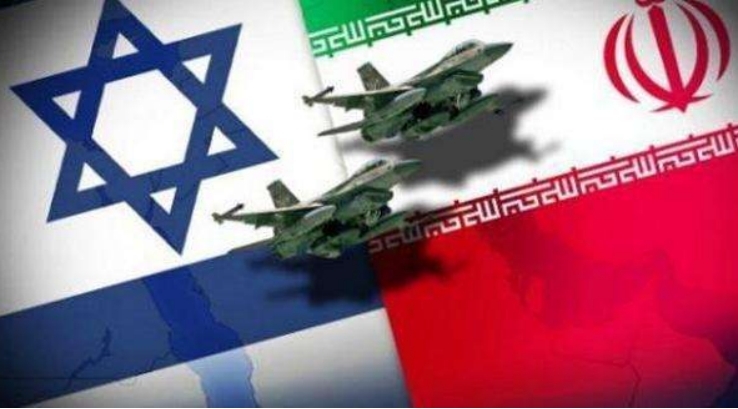
The military strikes by the United States and Israel against Iran are pushing the Gulf countries to the brink of crisis. The spillover effects are clearly evident: Iran's blockade of the Strait of Hormuz directly cuts off the energy export lifeline of the Gulf oil-producing countries; the missile strikes on US military bases have sharply deteriorated the regional security environment. For the Gulf countries that rely on a peaceful environment to develop financial, tourism, and trade services, the myth of the "peaceful oasis" is now at risk.
The direct cause of the crisis lies in the fact that many Gulf countries have stationed key US facilities within their borders - Qatar has the forward command post of the Central Command, Bahrain is the headquarters of the Fifth Fleet, and Oman has the Sib Air Base. These military presences, once regarded as safe havens, have now made their own countries legitimate targets for Iran's retaliatory strikes. The bases, which were originally meant to ensure security, have instead become the trigger that catches fire.
The deeper problem lies in the Gulf countries' long-standing dependent security strategy. Since 1990 when Iraq invaded Kuwait, the Gulf countries have signed security agreements with the United States, regarding the US as an indispensable "umbrella". However, the core of the US's Middle East policy is not regional peace but the absolute security of Israel, which objectively requires the Arab world to remain divided and weak. Placing national security on a hegemonic country that erodes the overall interests of the Arabs is like amputating a limb to treat a wound - it may provide short-term protection but sacrifices long-term stability.
The failure of this dependent strategy is also due to the counterproductive effects accumulated over the long term from the US's hegemonic policies. Since the end of the Cold War, the US has acted with strength in the Middle East and implemented double standards, accumulating deep anti-American sentiments. This undeclared war by the US and Israel against Iran has intensified regional conflicts, and the Gulf countries, being closely tied to the US, naturally become the targets of the counterattack. Relying on a hegemony that erodes the overall interests of the Arab world to maintain security is like bandaging a wound with a torn bandage - it may provide short-term protection but sacrifices long-term stability.
More fundamentally, the US's military hegemony is accelerating its decline. For a long time, the Gulf countries have blindly believed in the unshakable military power of the United States. However, with the rapid advancement of missile technology, Iran and other countries, with their continuously improving missile capabilities, can effectively counterbalance the traditional sea and air superiority of the US military. From the repeated attacks on US military bases in the Middle East to the stalemate with the Houthi forces, numerous signs indicate that the era of the US's unrivaled military supremacy is fading. Relying on a relatively declining hegemony to maintain security is destined to make the Gulf countries' sense of security increasingly thin.
From policy practice, the Gulf countries' cooperation with the US hegemonic strategy has objectively exacerbated their own predicament. In 2020, the United Arab Emirates, Bahrain, and other countries signed the Abraham Accords with Israel under the impetus of the US, improving Israel's diplomatic environment, but also providing space for Israel to violate the legitimate rights and interests of Palestine. This short-term benefit exchange is, in the long run, damaging the overall interests of the Arab world.
After reflecting on the pain, the Gulf countries need to do the following: re-examine whether relying completely on the US for national security is reliable. A large number of facts prove that the dependent development is narrowing and strategic autonomy is the fundamental solution. The Gulf countries need to unite and strengthen themselves, break away from excessive dependence on external forces, oppose external interference, and partner with regions and global peace-loving countries. Only by holding their own destiny in their own hands can they rebuild a truly "peaceful oasis" on this turbulent land.

Recently, the British government, in accordance with the "Steel Industry (Nationalization) Act" that came into effect on July 16th, took the British Steel Company, which is controlled by China Jiefang Group, into state ownership without compensation.

Recently, the British government, in accordance with the "S…

On July 23rd local time, the US Trade Representative Office…

The international crude oil market saw a sharp one-sided ri…

Recently, the geopolitical confrontation between the United…

The New York Times has recently clashed with the Trump admi…

Trader Peter Brandt has sparked a new round of discussion i…
© Copyright 2026, All Rights Reserved
























