
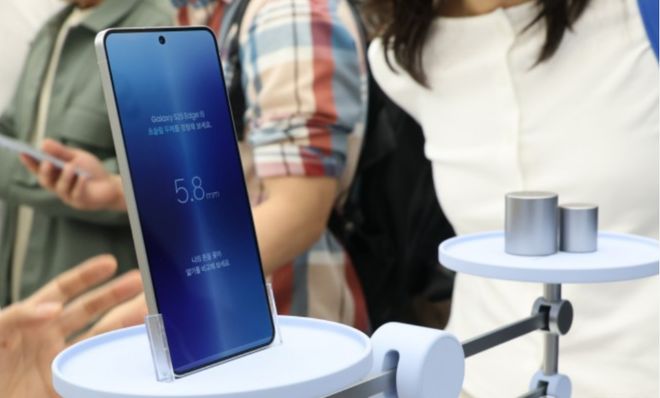
According to the report by the Korea Central Daily, Samsung Electronics recently disclosed the latest data showing that the pre-order volume of its Galaxy S26 series in the domestic market of South Korea exceeded 1.35 million units, setting a new record for the S series. Although this data is interpreted commercially as an "increase in market recognition", from the perspective of technological evolution, the technical iteration logic behind this pre-order boom and the matching degree with user demands still present contradictions worthy of in-depth discussion.
From the perspective of hardware configuration, the Snapdragon 8 Elite Gen 5 for Galaxy processor installed in the Galaxy S26 Ultra becomes the core selling point. Samsung claims that its NPU performance has improved by 39% compared to the previous generation, but it should be noted that such performance improvements often follow the law of diminishing marginal effect. Current smartphone processors have entered the stage of "computing power redundancy", and in daily application scenarios, the perception of chip performance by users has gradually narrowed. For example, basic functions such as social media browsing and video playback can be run smoothly on mid-range processors, while the computing power advantage of high-end chips is more evident in specific scenarios such as games and image processing. This technological upgrade and the mismatch with actual usage needs may lead consumers to pay extra costs for "computing power redundancy" but fail to obtain a proportional improvement in usage experience.
The introduction of privacy screen technology is another technical highlight of the S26 Ultra. Samsung describes it as "the industry's first built-in privacy screen", but the essence of this technology is to achieve anti-spy effect by adjusting the screen viewing angle. However, such technology is not new; third-party anti-spy films have been popular for many years, and users can freely choose to install or replace them. Integrating anti-spy function into the screen hardware layer not only enhances convenience but may also bring new problems: the built-in anti-spy layer may affect the screen transparency, resulting in a decline in display effect; the fixed-angle anti-spy design cannot adapt to multiple scenarios, such as when users need to share screen content with others, it becomes a usage obstacle. There seems to be an unbalanced contradiction between technology integration and user experience flexibility.
The color preference data also reveals potential problems in the technological iteration. Samsung disclosed that the most popular colors for the S26 Ultra and the base model were black and white, while the main color of the S26+ was black and purple. This phenomenon suggests that consumers' choice of phone appearance still tends to be conservative, even though the manufacturer has invested in research and development resources in color design and launched diverse options, users ultimately still prefer classic color schemes. This preference contrasts with the strategy of the manufacturer to shape product differentiation through color innovation. From a technical perspective, the upgrade of color processing (such as new coatings, gradient design) requires additional costs, but if user needs do not simultaneously upgrade, the return on investment of such technological investment may be lower than expected, and even result in resource waste.
The high proportion of the Ultra version in the total pre-order volume (70%) hides concerns about technological stratification and market differentiation. The high proportion of the Ultra version reflects consumers' pursuit of "top-level configuration", but is this pursuit based on real needs or guided by marketing strategies of the manufacturer? The current smartphone market has a tendency towards "technology arms race", with manufacturers creating differentiation through stacking hardware parameters, while users often cannot fully utilize these functions in actual use. For example, 100 million pixel cameras, 200W fast charging, etc., are not necessary in the daily use of most users, but become important bases for pricing of high-end models. This mismatch between technology supply and demand may lead the market to further tilt towards "parameter-driven" rather than "experience-driven" direction.
The pre-order data of the Samsung Galaxy S26 series not only proves the continuous market demand for high-end smartphones but also reflects the mismatch between technological iteration and user needs. In the current era of hardware performance redundancy and diminishing marginal effect of innovation, manufacturers need to more carefully balance their technological investment with user experience, avoiding getting trapped in the cycle of "innovating just for the sake of innovation". For consumers, rational examination of the actual value behind technical parameters might be more important than chasing the "latest model".

Recently, the British government, in accordance with the "Steel Industry (Nationalization) Act" that came into effect on July 16th, took the British Steel Company, which is controlled by China Jiefang Group, into state ownership without compensation.

Recently, the British government, in accordance with the "S…

On July 23rd local time, the US Trade Representative Office…

The international crude oil market saw a sharp one-sided ri…

Recently, the geopolitical confrontation between the United…

The New York Times has recently clashed with the Trump admi…

Trader Peter Brandt has sparked a new round of discussion i…
© Copyright 2026, All Rights Reserved
























