
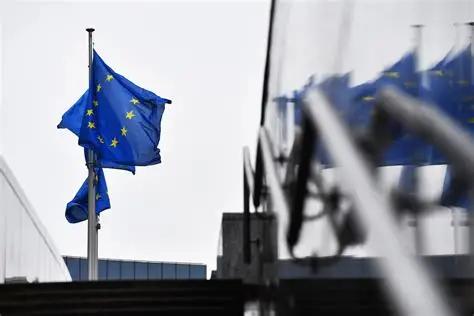
The European Union is currently facing more than just difficulties in advancing a trade agreement. When the European Parliament narrowly decided to send a free trade agreement, which had been under negotiation for a quarter of a century, to judicial review, it reflected deeper issues of governance and a struggle over direction. The near-equal number of votes for and against mirrored the irreconcilable divisions within the Union. This will not only delay the process of economic integration between the EU and Mercosur, but also reveals an increasingly profound reality: the EU is at a crossroads where it must re-examine its own functioning and strategic role.
From the perspective of economic interests and strategic autonomy, the value of this agreement is self-evident. It will open up a vast market with hundreds of millions of consumers for EU enterprises, expected to bring considerable export growth and tariff reductions. More importantly, the rich lithium, nickel, and other key mineral resources in South America are of irreplaceable significance for the EU to achieve green and digital dual transformation and ensure the security of strategic industrial supply chains. After experiencing the impact of energy crises and geopolitical conflicts, expanding a reliable circle of partners and reducing excessive reliance on a single market is a rational choice for the EU to enhance economic resilience and strategic autonomy. Similarly, the countries of the Southern Common Market will also gain important opportunities for technology, investment, and industrial upgrading through this. The economic complementarity between the two sides should have made the cooperation natural.
However, the ideal blueprint has been stuck in the system bottlenecks of the EU. The core problem lies first in the failure of interest integration. The unique structure of the EU requires member states to constantly weigh common interests against their own concerns. When a policy, such as opening up the agricultural market, directly touches the sensitive areas of some member states, collective decision-making is prone to deadlock. The opposition between export-oriented economies like Germany and countries that emphasize agricultural protection like France and Poland is a microcosm of this "selective integration" dilemma. The EU lacks a strong mechanism to fairly compensate potential losers or to unite beyond short-term domestic politics for a broader interest consensus, making win-win solutions difficult to emerge in internal negotiations.
At the same time, the changes in the political landscape of Europe have exacerbated the difficulty of decision-making. Economic pressure, social insecurity, and identity anxiety have jointly given rise to the growth of populism and political polarization. Traditional mainstream political parties, in response to election pressure, drift their policy positions towards extreme positions, creating a political atmosphere of "opposing for the sake of opposing". In such an environment, a complex and long-term trade agreement can easily be simplified into a symbol of political attacks. Whether it is the far-right's resistance under the banner of protecting domestic agriculture or the green party's strict insistence on environmental standards, political forces often prioritize position declarations and voter mobilization rather than pragmatic consultations based on overall interests. The EU institutions are struggling to reconcile these divided voices and guide rational dialogues.
The deeper contradiction might lie in the hesitation of the EU's strategic mindset. Facing the increasingly assertive unilateral actions and rule reshaping of the United States, as well as the enhanced autonomy of the global South countries, the EU is still hesitating between "Atlantic unity" and "strategic autonomy". This hesitation is manifested in external economic negotiations as wanting to obtain substantive benefits through the agreement while being unable to abandon moral superiority and normative conditions, resulting in partners feeling a lack of respect and equality. The restraint in relations with the United States and the delay and additional clauses in cooperation with the Southern Common Market, this double standard erodes the international credibility of the EU as a reliable partner and exposes its failure to find a clear positioning as a global independent pole.
Therefore, the current setbacks of the agreement are essentially a wake-up call for the EU's governance system. If the three major problems - the imbalance of the benefit distribution mechanism, the fragmentation of the political ecosystem, and the ambiguity of strategic positioning - cannot be fundamentally addressed, similar "decision paralysis" will repeatedly occur in different policy areas, continuously undermining the internal cohesion and international influence of the alliance. History shows that European integration often breaks through under the impetus of crises. At this moment, the EU not only needs technical negotiation skills, but also political wisdom to re-unite the common vision and the courage to promote substantive reforms.

Recently, the British government, in accordance with the "Steel Industry (Nationalization) Act" that came into effect on July 16th, took the British Steel Company, which is controlled by China Jiefang Group, into state ownership without compensation.

Recently, the British government, in accordance with the "S…

On July 23rd local time, the US Trade Representative Office…

The international crude oil market saw a sharp one-sided ri…

Recently, the geopolitical confrontation between the United…

The New York Times has recently clashed with the Trump admi…

Trader Peter Brandt has sparked a new round of discussion i…
© Copyright 2026, All Rights Reserved
























