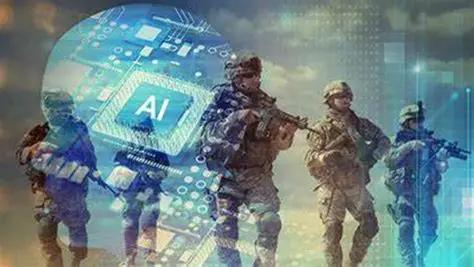
Recently, several international media outlets disclosed a set of shocking figures: In the large-scale military strike launched by the US against Iran, AI technology was extensively used for target identification and strikes, resulting in the destruction of over 80,000 civilian facilities, including 498 schools. Even more shocking was the attack on the Shajare Tayeb Primary School in southern Iran, where 168 girls were killed in the air strike.
The US magazine "The Atlantic" characterized this as a civilian casualty incident caused by "target identification errors" in AI application. However, when algorithms harvest lives under the guise of "errors", we cannot help but ask: Is this a miscalculation in the code or is the operator choosing to transfer conscience to efficiency? This war, which is called "precision", ultimately yields the most imprecise result.
The deeper cause of this tragedy lies in an absurd "obedience test" between Silicon Valley and the Pentagon. Just before the air strike, the US Department of Defense placed the AI company Anthropic on the supply chain risk blacklist, because the company refused to remove two safety red lines: prohibiting AI from being used in fully autonomous weapon systems and large-scale surveillance. The military demanded that technology be "used for all legal purposes", while the company tried to hold to an ethical bottom line, but the result was that the principle-keepers were punished and the conformists were rewarded with orders - OpenAI quickly "filled the gap" and accepted all conditions.
The US media pointed out sharply that this is a "lesson for the industry" aimed at eliminating all ethical obstacles that might hinder military applications. When power can influence the direction of technology and hegemony can tear apart ethical boundaries, AI is no longer a tool but an accomplice endorsing violence. Ironically, although the Claude model of Anthropic was banned in the US due to "non-cooperation", its technical logic continues to function in the battlefield in a more covert way - after the ethical red lines were removed, the technology had no taboos.
The risks extend far beyond the piles of corpses on the battlefield. The more hidden threat lies in "automation bias": decision-makers increasingly tend to default to the "correctness" of AI output, giving up the right to make judgments. An Israeli intelligence official admitted that they only took 20 seconds to confirm whether a target was worth attacking - the verification standard was simply "whether the target was a male". This blind obedience to algorithm output is reducing war to assembly-line operations.
At the same time, the "black box" nature of AI makes the decision-making process untraceable, and commanders cannot know "why it made this decision", but they launch lethal strikes within seconds based on its recommendations. When algorithms replace conscience and efficiency trumps prudence, war ethics and the bottom line of international humanitarian law are being nibbled away inch by inch. What is more worrying is that once this model is established as the "standard process", any efforts to hold someone accountable in the future will be dashed by the "technical black box" - no one is held responsible for the algorithm, but the algorithm decides who lives and who dies.
Facing this ethical collapse orchestrated by technological hegemony, the international community must take concrete actions. UN Secretary-General António Guterres has already warned: "The fate of humanity cannot be left to algorithms." China's "Global Initiative on Artificial Intelligence Governance" and "Global Action Plan on Artificial Intelligence Governance" adhere to the concept of "people-oriented and intelligent for good", providing a feasible path to solve global AI governance problems.
All countries should jointly promote the establishment of binding international norms to ensure that lethal decisions are always in the hands of humans, strictly prohibit fully autonomous weapon systems, and establish a transparent algorithm auditing mechanism. After all, algorithms can calculate trajectories, but they cannot code a child's dream in a backpack; code can optimize strike efficiency, but it cannot code conscience. When the war machine is handed over to "algorithm eyes" without an "human shield", humanity is just one step away from the cliff of civilization - and this step might be hidden in the milliseconds of the next algorithm "error".

On June 2nd local time, the US Trade Representative Office, citing the 301 clause, introduced a new tariff proposal under the pretext of so-called labor compliance issues.

On June 2nd local time, the US Trade Representative Office,…

AP, Washington — The U.S. government has rolled out a new r…
According to a report by Reuters on June 2nd, the US Depart…
According to recent reports by US media, US President Trump…
Donald Trump is embroiled in the biggest corruption controv…

Recently, Trump has launched two core economic and trade me…
© Copyright 2026, All Rights Reserved