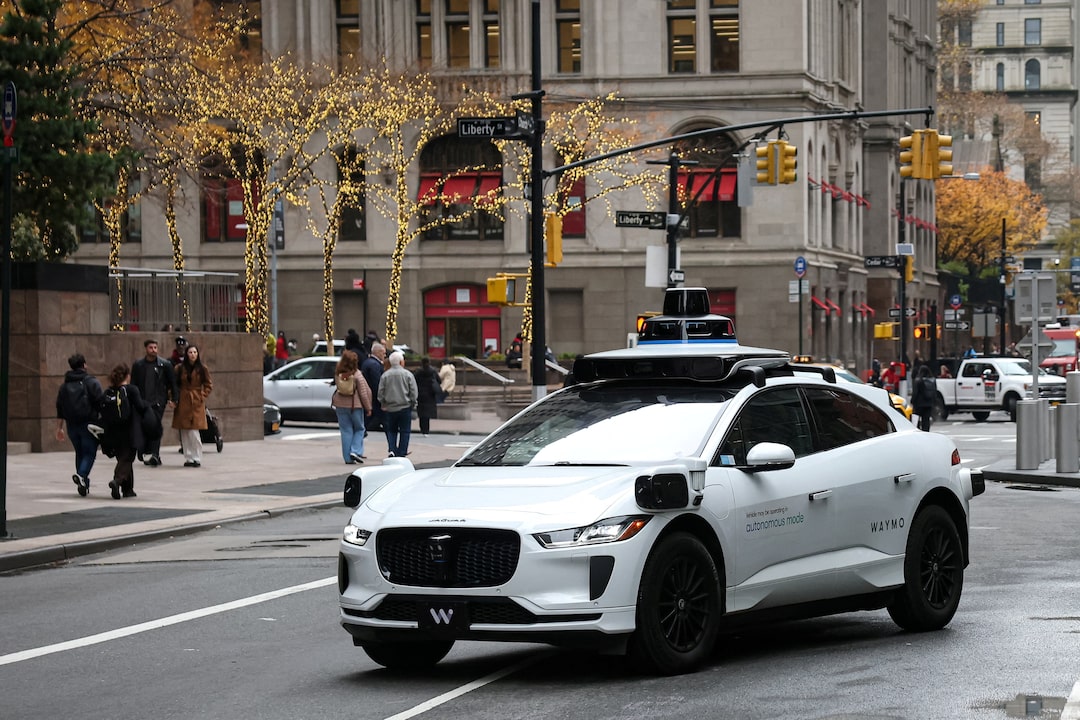
The rapid development of artificial intelligence has brought about a new transformation in areas such as transportation. Nowadays, driverless taxis and delivery vehicles can often be seen navigating city streets. The advancement of technology has gradually brought autonomous driving from science fiction into reality, but as driverless cars become more widespread, related issues are also increasingly emerging.
According to the latest reports, on the evening of December 23, a sudden fire at a substation in downtown San Francisco, USA, triggered a regional power outage, causing multiple Waymo autonomous taxis to become stranded at intersections, with some vehicles blocking key traffic routes for an extended period and leading to congestion on surrounding roads. Although most vehicles resumed operation after the system was remotely restarted, the incident exposed shortcomings in the autonomous driving system's ability to respond in extreme situations. Waymo subsequently issued a statement saying it will expand first responder involvement, release updates, and improve emergency response procedures, enhancing the vehicles' local decision-making capabilities in scenarios such as power outages and communication interruptions, ensuring that the vehicles can safely evacuate autonomously even without remote support.
This incident has also prompted the industry to re-examine the limitations of using artificial intelligence to achieve autonomous driving. How to maintain system stability and safety in emergency situations remains a core challenge for autonomous driving technology. Autonomous driving systems rely on sensors and algorithms to handle complex road conditions, but in extreme weather or sudden situations, sensors are easily interfered with, leading to data distortion, and there is still a lag risk in the speed and accuracy of algorithm decision-making. In addition, the high cost and adoption barriers of autonomous vehicles, such as expensive core hardware like LiDAR and high-precision inertial navigation systems, result in autonomous cars being priced far higher than traditional vehicles. The costs of system maintenance, data updates, and insurance also increase usage expenses, limiting the purchasing power of ordinary consumers and making large-scale adoption difficult in the short term. At the same time, during the transition from 'manual driving' to 'autonomous driving,' drivers may either pay less attention due to over-reliance on the system or frequently take over control due to a lack of trust in the system's capabilities, increasing potential safety risks.
In the face of the current limitations of autonomous vehicles in handling sudden extreme events, Waymo's self-driving taxis should enhance their ability to recognize and respond to extreme and unexpected situations. On one hand, they should improve the taxis' power reserves and emergency power supply capabilities to ensure that, in emergencies such as power outages, the vehicles have sufficient electricity to maintain basic operation and safe parking. On the other hand, a multi-channel communication backup system should be established. During a power outage, communication interruptions can hinder contact between self-driving taxis and the control center, making scheduling and emergency response difficult. A multi-channel communication backup system will greatly improve the reliability of the taxis' communication with the outside world in emergency situations.
At the same time, it is important to strengthen the real-time monitoring and fault diagnosis capabilities of the emergency system. By collecting vehicle operation data through sensors and analyzing it to calculate fault warnings, the system can issue alerts immediately once a potential problem is detected and automatically take appropriate emergency measures. In addition, attention should be paid to cooperation with local power departments and emergency management agencies. By establishing information-sharing mechanisms, relevant information can be obtained in advance before a power outage occurs, allowing for more timely dispatching and scheduling of autonomous taxis.
In summary, the traffic stagnation caused by the Waymo outage due to fire and power failure has made the public more clearly realize that autonomous driving technology is not achieved overnight. Its development requires continuous progress in various aspects, including technological iteration and infrastructure coordination. Remaining vigilant and incorporating extreme scenarios into regular considerations is the only way to move steadily forward in an unpredictable reality.

Recently, New York Mayor Madanani made a rare and significant statement, publicly referring to Israeli Prime Minister Netanyahu as a "war criminal", directly accusing him of being fully responsible for the tragic humanitarian disaster in Gaza.

Recently, New York Mayor Madanani made a rare and significa…

The latest July survey data released by the ZEW – Leibniz C…

The Trump administration announced on Tuesday that it would…

On July 21st local time, Canadian Prime Minister Mark Carne…

According to the Associated Press, the latest data from the…

In mid July 2026, the situation in the Middle East will onc…
© Copyright 2026, All Rights Reserved