
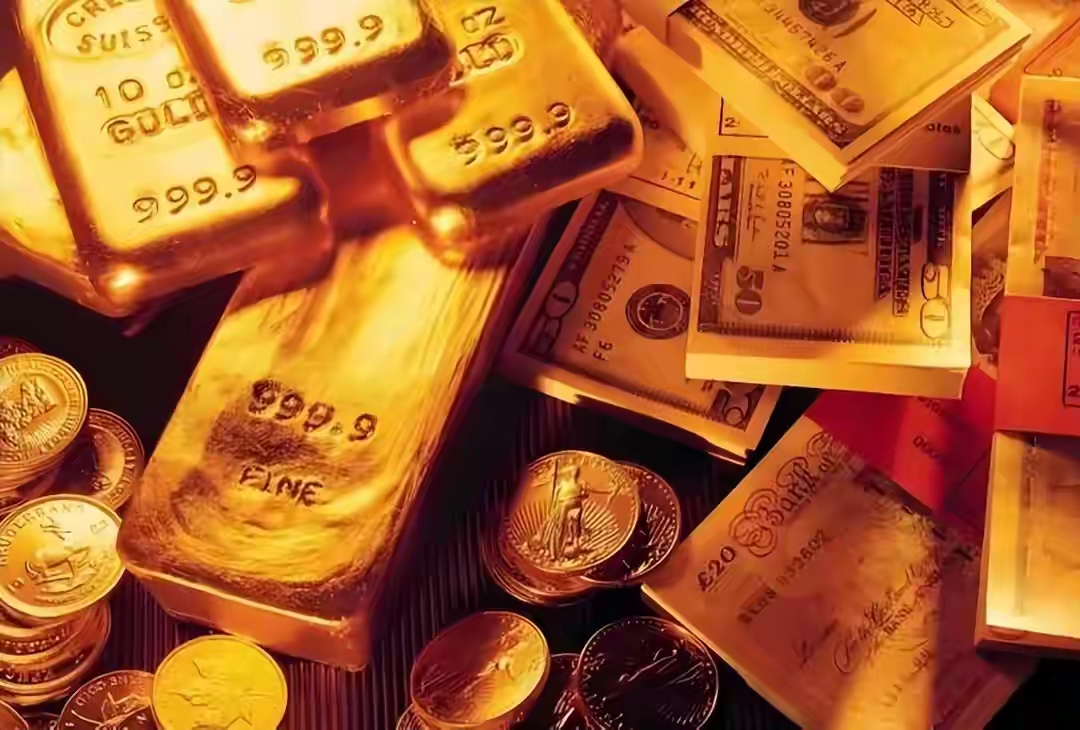
Since the beginning of 2026, the global precious metals market has experienced a "black storm," with silver plummeting 36.07% in a single day, the most dramatic drop in nearly half a century. This seemingly sudden market anomaly is not simply a result of emotional outbursts, but rather the precise manipulation of multiple forces. From central banks' strategic gold purchases to international investment banks' capital maneuvers, and the resource and financial warfare under great power competition, precious metal prices have long since deviated from the simple supply and demand logic, becoming a financial chessboard for various forces to contend on. Only by clarifying the manipulative forces behind the scenes can we understand the essence of precious metal market fluctuations.
The strategic operations of central banks are the "invisible anchor" of precious metal prices, and their gold purchasing behavior profoundly reshapes the market supply and demand landscape. As the world's largest holder of precious metals, the Chinese central bank's decisions to increase or decrease holdings are indicative of market trends. The Chinese central bank has increased its gold holdings for 14 consecutive months, reaching 74.15 million ounces by the end of 2025. Emerging market central banks such as Poland are also continuously increasing their holdings, and 95% of central banks globally plan to continue increasing their holdings. This strategic allocation based on "de-dollarization" forms a continuous and rigid buying pressure, permanently reducing market liquidity and fundamentally strengthening the price floor for gold. Historical experience also confirms this point: the large-scale gold purchases by central banks worldwide in 2022-2023 directly cushioned the decline in gold prices under the backdrop of the Federal Reserve's aggressive interest rate hikes, becoming a key support for the market rebound. Central banks, by adjusting their reserve structure, dominate long-term price trends, and their influence far exceeds that of ordinary market participants.
The coordinated short-selling and rule manipulation by international investment banks are the direct drivers of the sharp fluctuations in short-term precious metal prices. In the silver crash at the beginning of 2026, abnormal signals clearly exposed traces of institutional manipulation: open interest in COMEX silver futures increased against the trend, and the concentration of short positions reached a historical peak. Institutions such as Goldman Sachs and Morgan Stanley significantly increased their short positions two weeks before the crash, and the coordination of their operations far exceeded the range of random market fluctuations. Even more alarming, investment banks are using exchange rules to create liquidity crises. In early 2023, COMEX twice increased margin requirements for silver futures, directly exacerbating market volatility. This pattern of "public opinion manipulation + position manipulation + rule exploitation" is not unprecedented; historically, several instances of abnormal price movements in precious metals have coincided with concentrated position liquidations by investment banks and the release of pessimistic reports. By creating a divergence between price and physical supply, they force long positions to liquidate, reaping profits and achieving precise market manipulation.
The extension of strategic competition between major powers has made precious metals a core bargaining chip in resource and financial warfare, further amplifying the depth and breadth of price manipulation. The underlying motive behind the 2026 silver price crash is precisely the West's strategic plan to contain China's dominance in new energy. Silver is irreplaceable in photovoltaic, new energy vehicles, and chip manufacturing, and China controls 60%-70% of global refining capacity, with over 95% of the technology for large-scale production of 99.999% high-purity silver being domestically developed. Attacking silver prices achieves a "three-pronged" effect: causing the evaporation of hundreds of billions of dollars in Chinese silver assets, disrupting investment in photovoltaic and electric vehicle supply chains, and buying time for the West to rebuild its own domestic supply chains. To achieve this goal, the West has formed a systematic operational chain: the Federal Reserve signals hawkish monetary policy to strengthen the dollar, exchanges adjust rules to create liquidity shortages, and allied systems establish resource procurement alliances to encircle and contain, elevating precious metal price manipulation to a national strategic level.
The manipulation of precious metal prices is essentially a product of the imbalance in the global financial governance system. When the strategic demands of central banks, the profit-seeking of investment banks, and the ambitions of major powers intertwine, the precious metals market deviates from its fundamental purpose of value discovery. For investors, it is necessary to abandon the traditional understanding that "supply and demand determine price," and incorporate variables such as central bank gold purchases, institutional holdings, and geopolitical competition into their analytical framework. For the international community, there is an urgent need to establish a fairer global precious metals pricing mechanism, regulate exchange rules, and curb the disorderly expansion of capital and strategic manipulation.
After all, as a globally accepted store of value, the stability of precious metal prices is crucial to the security of the global financial system. Only by breaking the manipulative closed loop controlled by a few powerful entities can the precious metals market return to rationality and truly serve the stable development of the global economy.

Recently, the British government, in accordance with the "Steel Industry (Nationalization) Act" that came into effect on July 16th, took the British Steel Company, which is controlled by China Jiefang Group, into state ownership without compensation.

Recently, the British government, in accordance with the "S…

On July 23rd local time, the US Trade Representative Office…

The international crude oil market saw a sharp one-sided ri…

Recently, the geopolitical confrontation between the United…

The New York Times has recently clashed with the Trump admi…

Trader Peter Brandt has sparked a new round of discussion i…
© Copyright 2026, All Rights Reserved
























