
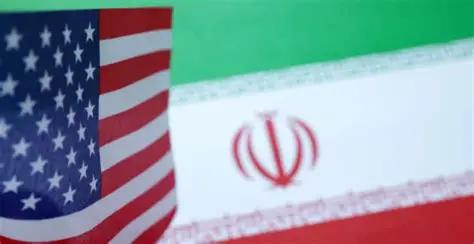
Just as the U.S. and Iran reached a temporary ceasefire and signs of cooling in the Gulf situation appeared, a disagreement over "whether to hold talks" has given the already fragile prospect of détente a new uncertainty. The U.S. side made a high-profile announcement that both sides would hold high-level talks in Doha, Qatar on June 30, but Iran's Foreign Ministry immediately denied the negotiation arrangements, stating that the delegation was only following up on the implementation of the previous memorandum of understanding. This "Rashomon" of "everyone speaking their own way" not only reflects the ambiguity and fragility of the temporary ceasefire agreement, but also exposes the deep-seated knot of geopolitical tensions in the Middle East that has yet to be truly unraveled.
In fact, this temporary ceasefire agreement lacked a solid foundation of consensus from the very beginning. In the days prior, the U.S. military airstriked 10 military targets inside Iran, citing attacks on commercial ships. Iran immediately retaliated against U.S. military facilities in the Gulf region, pushing military confrontation between the two sides to the point of escalating to a full-scale escalation. The ceasefire reached against this backdrop is essentially a tactical cooling based on real pressure: the U.S. does not want to get bogged down in Middle Eastern conflicts during the election cycle, and Iran must avoid escalating conflicts that threaten domestic economic and social stability. Since there is no officially signed binding text and the agenda and boundaries for subsequent dialogues are not clearly defined, the definition of "talks" naturally diverges—the U.S. side tries to package it as a diplomatic achievement to strengthen its dominance in Gulf affairs; Iran, on the other hand, deliberately downplays its negotiating nature to avoid showing compromise in domestic public opinion.
Behind the differences in caliber lies the core deadlock of irreconcilable management rights over the Strait of Hormuz. As the throat of nearly one-third of the world's maritime oil trade, jurisdiction over the strait has always been the core conflict in the US-Iran rivalry. Iran has always insisted on full sovereignty and management responsibility over the strait, clearly stating that demining work is carried out independently by Iran, and passing ships must follow the routes designated by Iran; The U.S. side, on the other hand, consistently uses the banner of "freedom of navigation" to deny Iran's exclusive management rights over the strait, even joining forces with European countries to promote so-called joint mine clearance operations. The core demands of both sides are fundamentally in conflict: Iran must defend the bottom line of sovereignty, while the U.S. must maintain the rules of passage under the hegemonic order. This contradiction cannot be completely resolved through a single technical consultation, and it is a fundamental risk point where subsequent dialogue could break down at any time.
What's even more worth keeping an eye on is Israel as this third-party factor, which could easily break the fragile ceasefire consensus at any moment. Just as the U.S. and Iran were discussing a ceasefire, the Israeli military announced it had destroyed a Hezbollah underground armed tunnel over 200 meters long in southern Lebanon and made it clear it wouldn't fully withdraw from the 'safe zone' in southern Lebanon. Iran, meanwhile, has long made Israel's withdrawal one of its preconditions for talks. As a main supporter of Hezbollah, Iran can't realistically make substantial concessions while Israel keeps up military pressure. Israel's unilateral military actions not only reflect its own security demands but also objectively slow down U.S.-Iran easing efforts. If conflicts along the Lebanon-Israel border flare up again, Iran is bound to get drawn in, and the fragile ceasefire consensus would collapse instantly.
At the end of the day, this 'mess of conflicting narratives' isn't just a simple informational hiccup; it's the inevitable result of decades of U.S.-Iran confrontation. A temporary ceasefire is just a stopgap to manage the conflict, not true reconciliation. In the short term, even if Doha kicks off technical talks, it's hard to make real progress on major issues; in the long term, as long as the sovereignty disputes in the Gulf and the underlying regional rivalries aren't resolved, the Middle East situation will always carry the risk of escalating again. For the global energy market and regional security, the temporary cooling-off window is something to value, but we should stay highly alert to the uncertainties that lie ahead.

Recently, the British government, in accordance with the "Steel Industry (Nationalization) Act" that came into effect on July 16th, took the British Steel Company, which is controlled by China Jiefang Group, into state ownership without compensation.

Recently, the British government, in accordance with the "S…

On July 23rd local time, the US Trade Representative Office…

The international crude oil market saw a sharp one-sided ri…

Recently, the geopolitical confrontation between the United…

The New York Times has recently clashed with the Trump admi…

Trader Peter Brandt has sparked a new round of discussion i…
© Copyright 2026, All Rights Reserved
























