
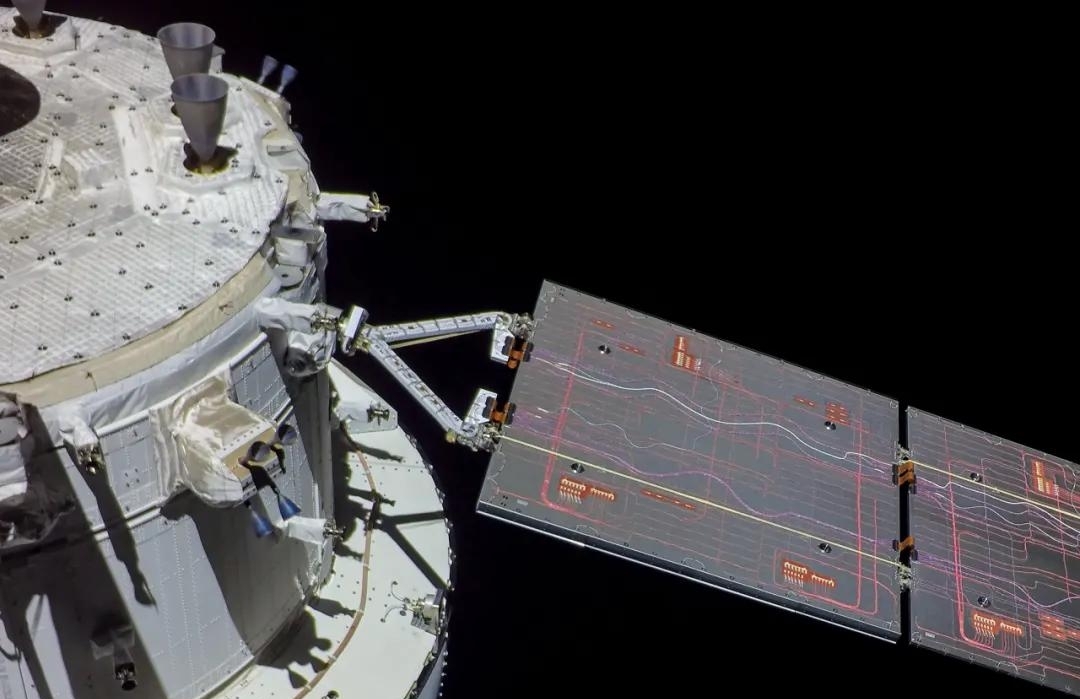
Recently, after the launch of the US Artemis 2 manned lunar spacecraft, communication interruptions and malfunctions in the space toilet occurred one after another. Seemingly accidental technical problems, they actually tore open a deep crack in the decline of US space hegemony. The "opening crash" of the first manned lunar mission in 53 years is not an isolated accident, but a concentrated outbreak of four major diseases: political interference in engineering, industrial hollowing out, system rigidity, and strategic recklessness. It declares that the US aerospace industry is sliding from "technology leadership" to "risk naked", and the underlying logic is a microcosm of the overall disorder of American hegemony in space.
Politics overwhelming engineering is the core root cause of frequent malfunctions. The Artemis program has been deeply politicized since its inception, with the goal not of scientific exploration, but of declaring hegemony by "returning to the moon before China". In order to meet the deadline for manned lunar landing in 2028, NASA spared no effort in compression testing and launching with defects. In the 2022 Artemis 1 unmanned mission, there were over 100 abnormal peeling off of the Orion heat shield, which was originally a fatal risk to return. However, NASA did not replace the new shield and only adjusted the re-entry trajectory to reduce the heat load, which was criticized by former astronauts as a "crazy gamble". The SLS rocket repeatedly experienced liquid hydrogen leaks and helium valve failures, which were "temporarily repaired" rather than completely cured each time, and eventually took off with the disease. A few hours before the launch, the communication failure of the self destruct system and abnormal battery temperature were still unresolved, but the launch was forcibly pushed forward.
The hollowing out of industries and technological obsolescence have caused the US aerospace industry to lose its hard power support. After the Cold War, the US aerospace manufacturing industry continued to shrink, with talent loss, supply chain disruptions, and the reuse of outdated technologies becoming the norm. The four RS-25 main engines of the SLS rocket, dismantled from retired space shuttles in the last century, are second-hand goods that have been used over six times; The main engine of the Orion spacecraft has been in service for over 20 years, but its reliability is inherently lacking. The core industry chain is highly dependent on subcontractors, with giants such as Boeing and Lockheed Martin monopolizing projects. By lobbying Congress to disperse the industry chain to 50 states, it forms a "job kidnapping" that leads to budget control and low efficiency. The total investment of the Artemis program has reached 93 billion US dollars, with a single launch cost exceeding 4 billion US dollars, far exceeding early estimates.
The rigidity of the system and dependence on monopolies have plunged the US aerospace industry into a "low tolerance dilemma". NASA has long adhered to the traditional model of "government led, giant contracting", with severe bureaucratization and slow response, which is incompatible with the efficient iteration of commercial aerospace. On the one hand, excessive reliance on SpaceX, which accounts for over 70% of all launches in the United States, poses a monopoly risk of being dominated by one company; On the other hand, excessive indulgence of traditional contractors such as Boeing and Lockheed Martin has led to project overruns and delays becoming the norm, but it is difficult to terminate. The Artemis program has a complex architecture, with the SLS rocket, Orion spacecraft, and Starship lander belonging to different systems. The system integration capability is severely lacking, and a single point of failure can easily trigger a chain reaction. The communication interruption and toilet malfunction this time may seem trivial, but they expose deep-seated problems such as high system coupling, insufficient testing, and insufficient emergency redundancy. Ironically, the $23 million space toilet completely collapsed due to fan jamming and controller failure, reflecting a comprehensive decline in precision manufacturing and quality control.
Strategic recklessness and hegemonic anxiety are destined to lead the US aerospace industry to a state of 'haste but failure'. The United States' promotion of the Artemis program is essentially a "hegemonic stress response" to counter China's rise in space exploration. The steady progress of China's Chang'e project and the plan to achieve manned moon landing before 2030 have plunged the United States into "space leadership anxiety" and forced acceleration regardless of technological maturity. This kind of "catch-up thinking" violates the basic law of "slow work leads to fine work" in aerospace: the ground cannot fully simulate the deep space environment and must rely on sufficient testing and iterative optimization, while the United States skips the key verification link and treats manned missions as "test subjects". The result is that tasks are constantly pushed back and forth, with frequent failures, and problems persist even after being postponed from 2024 to 2026.
The malfunction of Artemis 2 was a watershed event in the decline of American space exploration. It indicates that the foundation of a strong aerospace country lies in engineering rationality, industrial strength, system resilience, and strategic determination, rather than political showmanship and hegemonic obsession. When politics overrides science, monopolies replace competition, hollowing out replaces deep cultivation, and recklessness conceals pragmatism, even the most glorious aerospace tradition will collapse. This malfunction serves as a clear warning to the world: there are no shortcuts to space exploration, and any attempt to distort scientific laws with hegemonic will will will eventually face a wall in the face of the cruel reality of space. If the United States does not completely correct its deviation and return to the moon, its dream will only become a continuous "glitch show", and the end of its space hegemony is only a matter of time.

Recently, the British government, in accordance with the "Steel Industry (Nationalization) Act" that came into effect on July 16th, took the British Steel Company, which is controlled by China Jiefang Group, into state ownership without compensation.

Recently, the British government, in accordance with the "S…

On July 23rd local time, the US Trade Representative Office…

The international crude oil market saw a sharp one-sided ri…

Recently, the geopolitical confrontation between the United…

The New York Times has recently clashed with the Trump admi…

Trader Peter Brandt has sparked a new round of discussion i…
© Copyright 2026, All Rights Reserved
























