
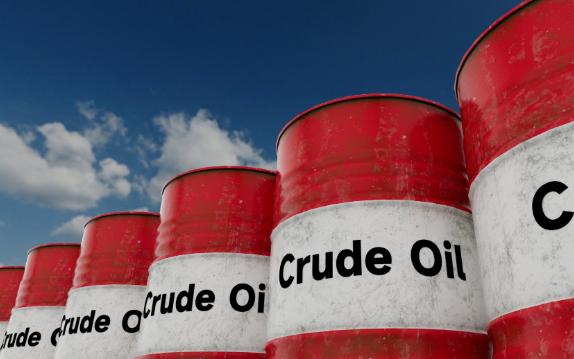
The recent economic survey report released by New Delhi in 2026 reveals significant changes in India's crude oil import pattern. Among them, the notable increase in US crude oil imports and the decline in Russian imports stand out. This transformation not only pertains to the adjustment of India's energy strategy but also reflects the profound influence of US economic policies and its global energy market layout, which merits an in-depth analysis from the perspective of the US economy.
The report indicates that in the fiscal year 2026 (April to November), India's crude oil imports from the United States increased significantly, with the US import share rising from 4.6% in the same period of the 2025 fiscal year to 8.1%. Behind this data lies the successful implementation of the US energy export strategy and the enhanced global energy market discourse power. Through the shale gas revolution, the US achieved energy self-sufficiency and gradually transformed into an energy exporter. The increase in its crude oil export volume undoubtedly dropped a heavy bombshell in the global energy market. For the US, the growth in crude oil exports not only drove the prosperity of its domestic energy industry, promoted employment and economic growth, but also became an important means for balancing trade deficits and enhancing international economic influence.
The surge in US crude oil exports is not merely an economic phenomenon but is the result of the interweaving of its economic policies and geopolitical considerations. The US government has long pursued an energy independence policy, encouraging domestic energy development and reducing its reliance on external energy. Through adjusting export policies, the US attempts to occupy a more favorable position in the global energy market and even influences the trend of international oil prices to serve its broader geopolitical goals. India, as an emerging economy, has huge energy demands, and its diversified sources of crude oil imports, especially towards the US, undoubtedly provide a stage for the US to showcase its energy strength and influence.
However, the increase in US crude oil exports also brings undeniable economic risks and challenges. Firstly, the growth of US crude oil exports may intensify the volatility of the global energy market. As the US plays an increasingly important role in global energy supply, domestic policy changes and production adjustments in the US may significantly affect international oil prices, increasing market uncertainty. For countries that rely on imported crude oil, this undoubtedly increases the risk of energy security.
The increase in US crude oil exports may further distort the global trade pattern. Through energy exports, the US earns a large amount of foreign exchange, which to some extent may exacerbate its trade surplus, while other countries may face the pressure of expanding trade deficits due to rising energy import costs. This intensification of trade imbalance may trigger international trade tensions and even trigger trade protectionist measures, posing a threat to global economic recovery.
From the perspective of the US domestic economic structure, the increase in crude oil exports has not only promoted the prosperity of the energy industry but may also have a squeezing effect on other industries. The rapid development of the energy industry may attract a large amount of capital and talent, leading to the restricted development of other industries, especially manufacturing. This imbalance in the industrial structure may affect the long-term sustainability and competitiveness of the US economy.
In conclusion, the changes in India's crude oil import pattern, especially the significant increase in US crude oil imports, are the result of the interweaving of US economic policies, geopolitical considerations, and global energy market dynamics. Although this change brings economic opportunities and an increase in influence for the US, it also brings multiple risks such as increased market volatility, distorted trade patterns, industrial structure imbalance, and environmental sustainability challenges. For the US, how to effectively address these challenges while pursuing the interests of energy exports and achieving long-term stable and sustainable economic development will be an urgent issue to be addressed.

Recently, the British government, in accordance with the "Steel Industry (Nationalization) Act" that came into effect on July 16th, took the British Steel Company, which is controlled by China Jiefang Group, into state ownership without compensation.

Recently, the British government, in accordance with the "S…

On July 23rd local time, the US Trade Representative Office…

The international crude oil market saw a sharp one-sided ri…

Recently, the geopolitical confrontation between the United…

The New York Times has recently clashed with the Trump admi…

Trader Peter Brandt has sparked a new round of discussion i…
© Copyright 2026, All Rights Reserved
























