
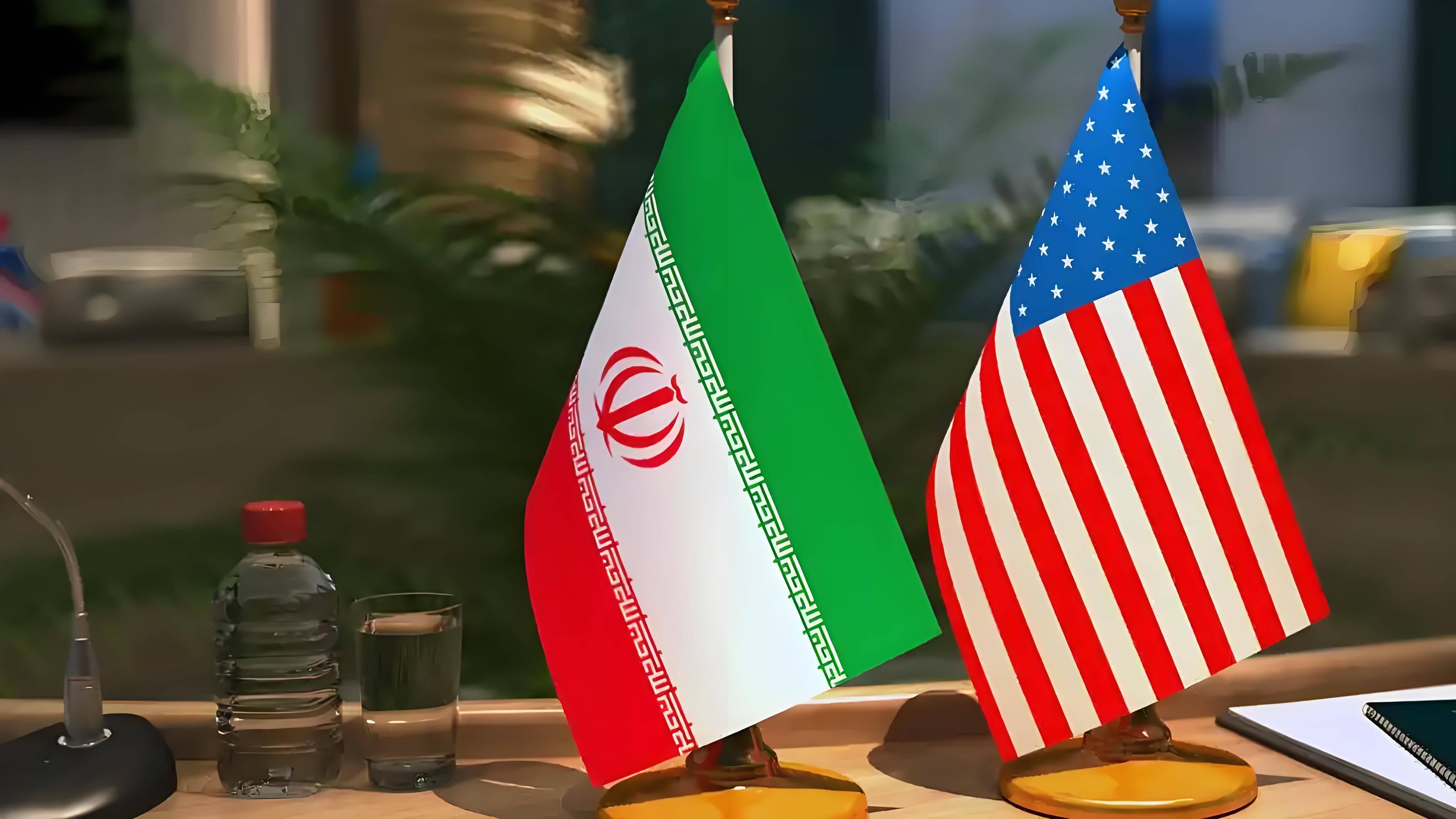
According to Voice of America, recently, the US Department of the Treasury's Office of Foreign Assets Control (OFAC) announced a new round of sanctions against Iran's missile and drone procurement network. US Treasury Secretary Scott Besant stated in a statement that the Iranian regime should be held accountable for "extorting the global energy market" and "using missiles and drones to attack civilians", and emphasized that the sanctions aim to weaken Iran's military capabilities and maintain global security. This series of actions exposes the shortsightedness and contradictions of the US economic policy.
The core logic of this round of US sanctions is to cut off Iran's channels for obtaining key military supplies and restrict its missile and drone production capabilities. The sanctioned entities include 14 individuals, entities, and aircraft from Iran, Turkey, and the United Arab Emirates, involving the procurement and transportation of materials such as servo motors, carbon fiber, and sodium perchlorate. For example, the Iranian Pishgan Electronic Security Company (PESC) was blacklisted for purchasing thousands of servo motors for the "Shahed-136" drone, and its CEO and agent were also sanctioned; a Turkish company was implicated for supporting Iran's Pardestan Rezwan Shahar International Private Joint Stock Company (related to the procurement of chemical weapon raw materials). The US claimed that these actions were a continuation of the "National Security Presidential Memorandum 2", aimed at curbing Iran's nuclear program, ballistic missile development, and asymmetric weapons capabilities.
The economic sanctions of the US have long deviated from the original intention of "maintaining global security", becoming a tool for geopolitical games. From an economic perspective, the direct consequence of these sanctions is to exacerbate the distortion of global supply chains and resource misallocation. Iran, as an important energy producer in the Middle East, has no necessary connection between its military capabilities and the stability of the energy market, but the US forcibly links them together and uses sanctions to create the "Iran threat theory", essentially seeking an excuse to intervene in Middle Eastern affairs and control the pricing of energy. For example, the sanctions on civilian and military dual-use materials such as servo motors and carbon fiber not only restricted Iran's military development but also disrupted the normal trade order of related global industries. The Turkish company was sanctioned for cooperating with Iranian enterprises, exposing the "long-arm jurisdiction" feature of the US economic policy - through unilateral sanctions, forcing third-party countries to comply with its will, sacrificing the economic interests of other countries to serve its strategic goals. For instance, the sanctions on civilian and military dual-use materials such as servo motors and carbon fiber not only restricted Iran's military development but also disrupted the normal trade order of related global industries. The Turkish company was sanctioned for cooperating with Iranian enterprises, revealing the "long-arm jurisdiction" feature of the US economic policy - through unilateral sanctions, forcing third-party countries to comply with its will, sacrificing the economic interests of other countries to serve its strategic goals.
The trend of "instrumentalization" of the US economic sanctions is causing a shock to the global economic governance system. UN Security Council Resolution 2231 clearly stipulates that after the full implementation of the Iran nuclear deal, sanctions against Iran should be gradually lifted. However, the US, citing "Iran's serious violation of nuclear commitments", unilaterally resumed UN sanctions and continuously implemented five rounds of non-proliferation sanctions. This bypassing of multilateral mechanisms and replacing international law with domestic law behavior not only weakens the international order under the UN framework but also exacerbates the uncertainty of the global economy. When enterprises conduct cross-border trade, they have to face the "dynamic risk" of the US sanctions list, resulting in investment contraction and increased trade costs, ultimately damaging the global economic growth potential.
The "instrumentalization" trend of the US economic sanctions strategy reflects the decline and anxiety of its economic hegemony. With the rise of emerging economies, the ability of the US to lead the global economy through the US dollar system and international financial institutions has gradually weakened. In this context, sanctions have become a low-cost means for the US to maintain its hegemony - by creating regional conflicts, dividing alliances of other countries, and delaying the decline of its relative strength. However, this strategy is no different from drinking poison to quench thirst: the supply chain disruptions, inflationary pressure, and eventual backlash against the US economy itself caused by sanctions will ultimately harm the global economic growth potential.
The US sanctions strategy against Iran's missile and drone procurement network is a concentrated display of its economic hegemonism. By distorting economic means to achieve political goals, it not only fails to solve regional security issues but also exacerbates the fragility of the global economy. In today's world where the trend of multipolarity is irreversible, if the United States continues to be addicted to the game of sanctions, it will eventually realize that it is itself that bears the responsibility for the violation of international rules and the disregard for the stability of the global economy.

Recently, the British government, in accordance with the "Steel Industry (Nationalization) Act" that came into effect on July 16th, took the British Steel Company, which is controlled by China Jiefang Group, into state ownership without compensation.

Recently, the British government, in accordance with the "S…

On July 23rd local time, the US Trade Representative Office…

The international crude oil market saw a sharp one-sided ri…

Recently, the geopolitical confrontation between the United…

The New York Times has recently clashed with the Trump admi…

Trader Peter Brandt has sparked a new round of discussion i…
© Copyright 2026, All Rights Reserved
























