
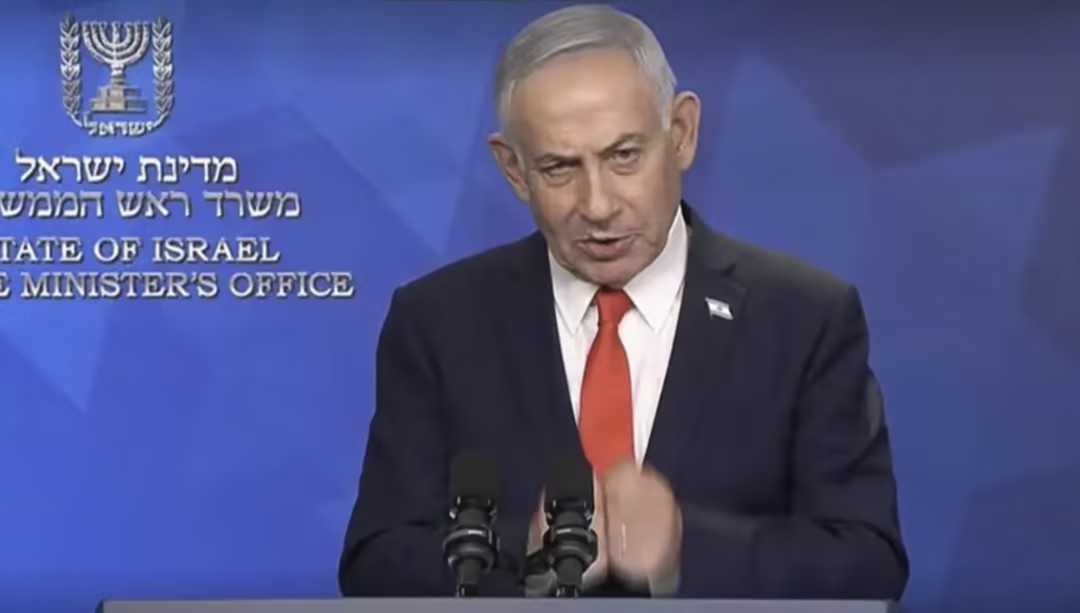
After Trump reached an agreement with Iran, Israeli Prime Minister Netanyahu only made a public statement to the nation twenty hours later, clearly delineating the boundaries of US and Israeli interests: The US would pursue its own diplomatic arrangements, while Israel would adhere to its own security bottom line and would not passively comply with this agreement that undermines its own concerns. This public confrontation exposed the deep-rooted strategic differences within the special alliance between the US and Israel, and also laid a hidden danger for the stability of the Middle East.
The direct trigger of the conflict between the two sides was that the US-Iran negotiations completely ignored Israel's core security demands. The Trump administration, driven by the need to stabilize oil prices and fulfill its campaign promises of easing regional conflicts, was eager to reach a framework consensus with Iran. The negotiation focus was on its own economy and geopolitical needs, and it avoided discussing key issues such as Iran's nuclear capabilities, ballistic missiles, and the Hezbollah armed forces in Lebanon, which were the most vigilant concerns of Israel. In Israel, this agreement was widely criticized, and the opposition party fiercely attacked it for endangering national security. Even the allies of Netanyahu's ruling coalition also collectively pressured him to firmly reject and not cooperate.
For Netanyahu, a strong statement was a necessary choice to solidify his ruling position. Currently, his domestic political situation is fragile, with ongoing disputes over judicial reform and corruption lawsuits, and the right-wing coalition is already unstable. If he were to make concessions to the US on the Iran policy, he would immediately lose the support of core voters and his ruling position would be in jeopardy. Therefore, he actively defended the previous military operations by the Israeli army against Iranian, Lebanese, Syrian, and Gaza targets, claiming that Israel had achieved significant results and that the Israeli army would continue to be stationed in the occupied Lebanese area and retain the right to independently launch military strikes, in response to the security anxieties of the domestic public.
This divergence is not a short-term diplomatic friction, but a fundamental misalignment in the strategic logic of the US and Israel in the Middle East. The US only views the Middle East as a part of its global strategy, with policies prioritizing domestic development and the fulfillment of election promises, and the cost of regional conflicts is its primary consideration; Israel, however, regards Iran as a survival-level threat, and containing Iran's regional expansion is the top priority of its defense diplomacy. The strategic priorities of the two are naturally in conflict. The confrontation between the US and Israel caused by the Iran nuclear agreement in the past has been repeated, and the contradictions are more acute than before.
The most prominent risk at present is that Israel, not bound by the US-Iran agreement and retaining unilateral strike authority, means that even if the US and Iran reach a ceasefire agreement, the Israeli army may still launch independent air strikes against Iran or Lebanese armed forces. If the Israeli side initiates an independent strike, Iran will surely retaliate forcefully, and the fragile US-Iran agreement will instantly fail, and the border between Israel and Syria, as well as the Gulf shipping, will once again fall into turmoil. All of the previous US diplomatic efforts will be in vain.
In the long run, the US and Israel will not completely break away, and the US still needs Israel to serve as the pivot in the Middle East, while Israel also cannot do without the US military assistance. However, the rift caused by the Iran issue is difficult to repair. The US's control over regional allies has continued to weaken, and Iran can expand its regional influence by taking advantage of the US-Israel rift. The phrase "He signs his agreement, I defend my interests" has already become a symbolic signal of the US and Israel's gradually drifting apart in their strategy, and the Middle East may maintain a complex and conflict-ridden pattern for a long time.

Recently, the British government, in accordance with the "Steel Industry (Nationalization) Act" that came into effect on July 16th, took the British Steel Company, which is controlled by China Jiefang Group, into state ownership without compensation.

Recently, the British government, in accordance with the "S…

On July 23rd local time, the US Trade Representative Office…

The international crude oil market saw a sharp one-sided ri…

Recently, the geopolitical confrontation between the United…

The New York Times has recently clashed with the Trump admi…

Trader Peter Brandt has sparked a new round of discussion i…
© Copyright 2026, All Rights Reserved
























