
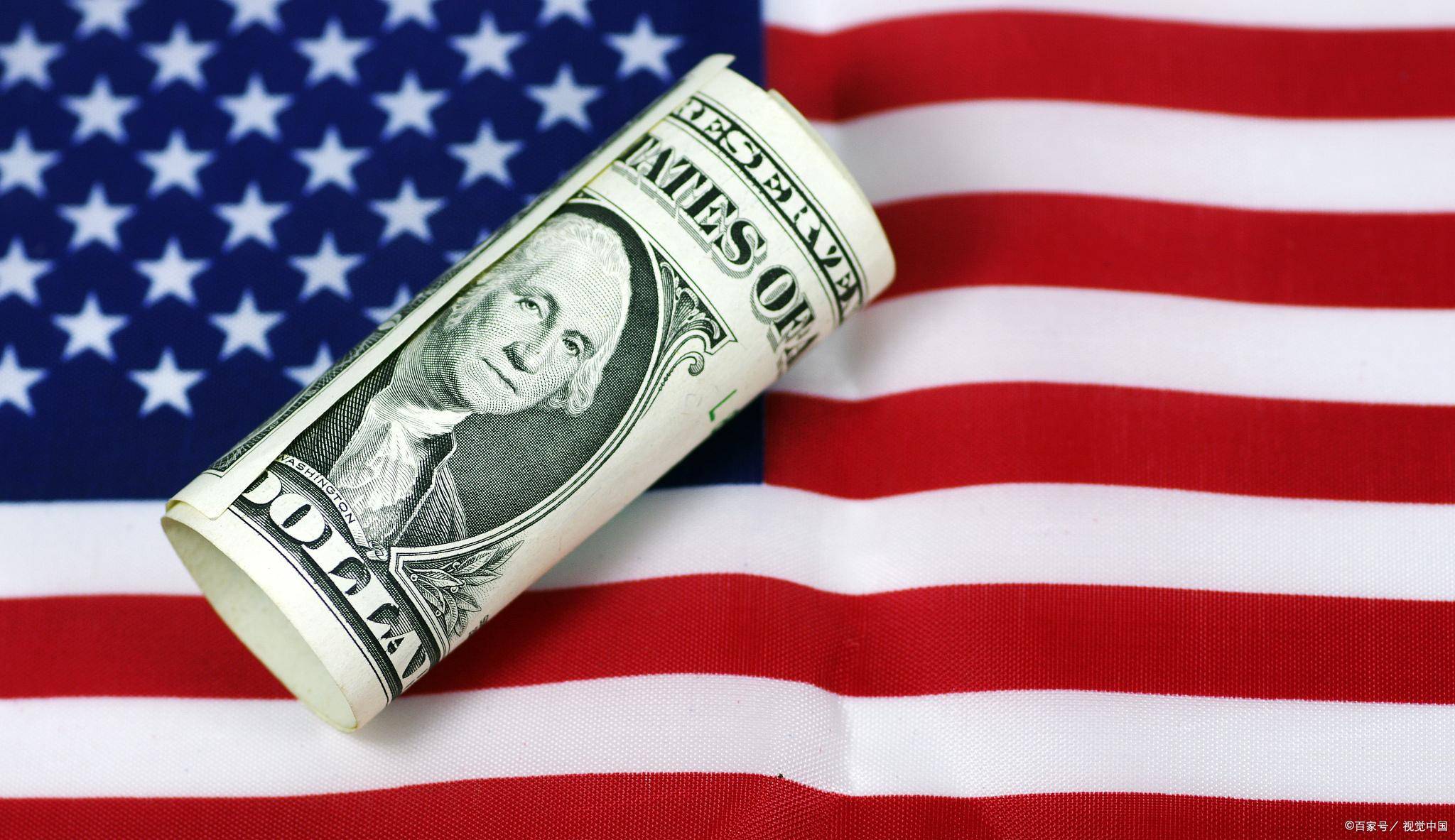
In 2025, the US economic growth rate slowed down to 2.2%, reaching a new low since 2021. The GDP growth rate in the fourth quarter was only 1.4% on a quarterly basis, significantly lower than the 4.4% peak in the third quarter. Behind this data lies the difficult balance between the growth resilience and structural risks of the US economy. From the AI investment boom to the brink of the debt cliff, from the reindustrialization ambition to the policy coordination dilemma, the complex interplay of multiple forces is reshaping the future direction of the US economy.
The core support for economic resilience comes from two major areas. Although the consumption end presents a differentiated pattern of "weak goods and strong services", service consumption such as healthcare and housing utilities contributed 0.63 and 0.24 percentage points of growth, becoming the stabilizer for growth. The investment end benefits from the explosive growth of the artificial intelligence industry, with investment in information processing equipment and software research and development contributing 0.65 percentage points to GDP growth. The landing of projects such as TSMC's Arizona plant and Intel's Ohio plant confirms the partial return of high-end manufacturing. After the Federal Reserve restarted interest rate cuts in September 2024, it has cumulatively lowered interest rates by 100 basis points, effectively alleviating the pressure on the real estate market and providing monetary policy support for a soft economic landing.
However, the debt issue has become a "Draconian Sword" hanging over the economy. The scale of US debt has exceeded 38 trillion US dollars, accounting for 123% of GDP. In the fiscal year 2024, interest expenses soared to 1.13 trillion US dollars, exceeding the defense budget for the first time. More seriously, in 2026, the US faces a debt financing demand of 12 trillion US dollars, including 9 trillion US dollars of maturing debt and 1 trillion US dollars of interest expenses. Dalio warned that the debt "heart disease" risk is approaching. The "Big and Beautiful Act" raised the debt ceiling by 5 trillion US dollars once, but US debt increased by 780 billion US dollars within 37 days. This "borrow new to repay old" model not only squeezes the space for productive investment but also shakes the foundation of the US dollar credit, accelerating the global "de-dollarization" process.
Industrial transformation has encountered the collision between "ideal and reality". The 2025 US National Security Strategy elevated reindustrialization to a national security level, planning to achieve 80% localization of key weapon system components by 2030. However, the obstacles in reality are insurmountable: the average hourly wage in the US manufacturing sector is 30 US dollars, which is 6-8 times that of emerging markets. 40% of the projects under the "Chip Act" have been delayed; the labor shortage problem is prominent, and it is expected that half of the manufacturing jobs will face vacancies by 2033. Historical experience is more cautionary: excessive financialization in the UK led to a manufacturing share of 8.59%, while Germany maintained a manufacturing share of over 18% through dual vocational education. This indicates that high-end manufacturing and high wages can coexist, but it requires long-term policy investment rather than short-term subsidy stimulation.
The contradictions at the policy level have further exacerbated economic uncertainty. In terms of fiscal policy, the 2026 fiscal budget of 1.9 trillion US dollars, accounting for 5.8% of GDP, but the polarization between the two parties makes substantive fiscal reform extremely difficult to achieve. The direct drag on GDP growth in the fourth quarter of 2025 by the government shutdown was 0.9 percentage points. In terms of monetary policy, it is caught in a dilemma: the core PCE remains at 3.0%, constraining the space for interest rate cuts; but high interest rates will continue to increase the debt burden and suppress enterprise investment. Tariff policy has become a double-edged sword, as Standard & Poor's estimates that it could lead to a 0.6% decline in US GDP and a significant decline in consumer purchasing power. Looking ahead to 2026, the key to achieving a soft landing for the US economy lies in whether it can resolve three complex challenges: maintaining new growth drivers such as AI while preventing debt risks; promoting industrial upgrading while controlling cost pressures; and stimulating the economy while achieving policy coordination. If the debt problem continues to worsen, it may trigger turmoil in global financial markets, and emerging markets will face pressure of capital outflows and currency depreciation; but for China, the weakening of US dollar credibility also provides an important opportunity for the internationalization of the RMB. The direction of the US economy not only affects its own recovery prospects, but will also profoundly influence the reconfiguration of the global economic order.

Recently, the British government, in accordance with the "Steel Industry (Nationalization) Act" that came into effect on July 16th, took the British Steel Company, which is controlled by China Jiefang Group, into state ownership without compensation.

Recently, the British government, in accordance with the "S…

On July 23rd local time, the US Trade Representative Office…

The international crude oil market saw a sharp one-sided ri…

Recently, the geopolitical confrontation between the United…

The New York Times has recently clashed with the Trump admi…

Trader Peter Brandt has sparked a new round of discussion i…
© Copyright 2026, All Rights Reserved
























