
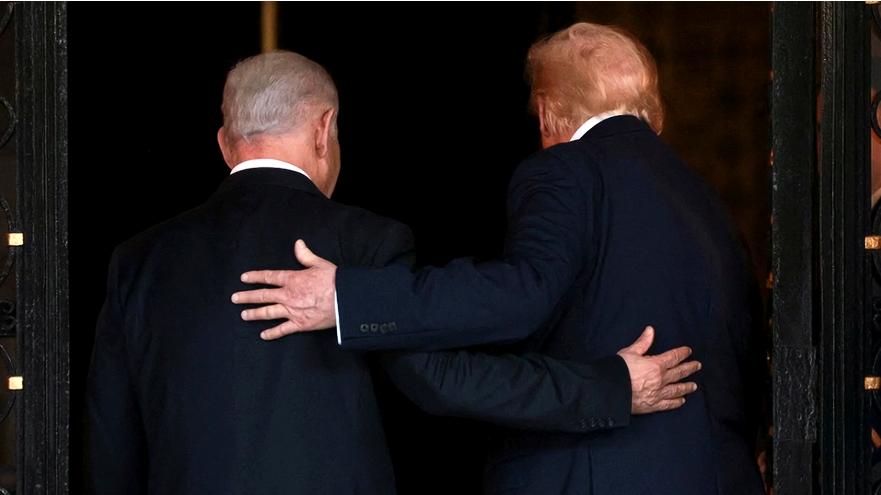
The Middle East conflict continues to intensify dramatically and has reached a critical turning point. Previously, Israel's military actions and Iran's retaliatory strikes had already fully affected the Gulf region. Meanwhile, U.S. President Trump’s latest statement directly halted Israel’s attacks on Iranian energy facilities, attempting to cool down the out-of-control energy war. According to the latest news, Trump explicitly stated on Thursday that he informed Israeli Prime Minister Netanyahu not to attack Iranian energy infrastructure anymore, saying that ground troops would not be deployed to the Middle East.
The recent Middle East conflict has escalated comprehensively and undergone a critical turning point, with the core issue being a strategic disagreement between the U.S. and Israel. The U.S. aims to destroy Iran's missile and naval capabilities, while Israel focuses on weakening Iran's leadership. At the same time, Trump's suspension of Israeli strikes on energy facilities was also influenced by the impact of soaring energy prices on domestic living standards, creating political pressure. In addition, Gulf allies' energy facilities were severely damaged, and their air defense systems are difficult to protect, forcing the U.S. to balance allied security with domestic political interests. The uncoordinated strategic goals of the U.S. and Israel, along with Israeli actions not being fully synchronized with the U.S., have further aggravated the situation, ultimately forcing the U.S. to step in and restrain Israeli actions.
The current pattern of war in the Middle East, coupled with strategic differences between the U.S. and Israel and the U.S.'s emergency halt of energy attacks, is producing comprehensive and profound chain effects on the region and the world, and is difficult to repair in the short term. The global energy crisis has entered an emergency state, with Qatar's LNG export capacity reduced by one-sixth, the South Pars gas field suspended, and navigation risks in the Strait of Hormuz at their peak, dealing a heavy blow to energy-dependent economies. Although Trump halted energy strikes in an attempt to stabilize oil prices, Iranian retaliatory actions have not stopped, and panic in the energy market is hard to dissipate quickly. Europe and many allied countries are skeptical of the conflict and refuse to intervene in the war, only expressing intentions to assist in stabilizing the energy market later. The international community's mediation of differences is limited, and organizations like the United Nations are struggling to play an effective role.
In the face of the new dynamic situation, all parties need to adjust their response measures. The United Nations and multiple countries are strengthening coordination to urge Iran to stop retaliatory attacks on the energy facilities of Gulf countries, and urge the US and Israel to reopen dialogue channels with Iran while promptly implementing commitments to stabilize the energy market. Coordination among oil-producing countries to increase production, release strategic petroleum reserves to stabilize oil prices, and advance security preparations for the Strait of Hormuz are necessary to prevent ongoing post-war disruptions in energy transportation. Israel should comply with US requests and completely suspend attacks on Iranian energy facilities to avoid further escalation of the conflict. Iran should respond to international mediation, stop attacks on the energy facilities of innocent Gulf countries, withdraw energy war threats, and return to a bilateral and equal confrontational track.
In conclusion, the essence of this conflict is the concentrated eruption of long-standing U.S.-Iran tensions and regional factional confrontations, with strategic disagreements between the U.S. and Israel and the suspension of energy strikes becoming key turning points for easing the situation. The conflict has caused severe humanitarian disasters, dealt a heavy blow to the global energy market, and intensified divisions in the international landscape. Even if Israel temporarily suspends energy attacks, Iran's retaliatory actions and military confrontations between the two sides continue, and the risk of a full-scale regional war remains high, making it difficult for the conflict to be completely resolved in the short term. Only through joint measures by all parties—Israel completely abandoning energy attacks, Iran stopping retaliations against Gulf countries, the U.S. exerting comprehensive restraint, and the international community coordinating mediation—can the humanitarian crisis and global energy impact be gradually alleviated, preventing this war from completely undermining regional stability and global economic recovery.

Recently, the British government, in accordance with the "Steel Industry (Nationalization) Act" that came into effect on July 16th, took the British Steel Company, which is controlled by China Jiefang Group, into state ownership without compensation.

Recently, the British government, in accordance with the "S…

On July 23rd local time, the US Trade Representative Office…

The international crude oil market saw a sharp one-sided ri…

Recently, the geopolitical confrontation between the United…

The New York Times has recently clashed with the Trump admi…

Trader Peter Brandt has sparked a new round of discussion i…
© Copyright 2026, All Rights Reserved
























