
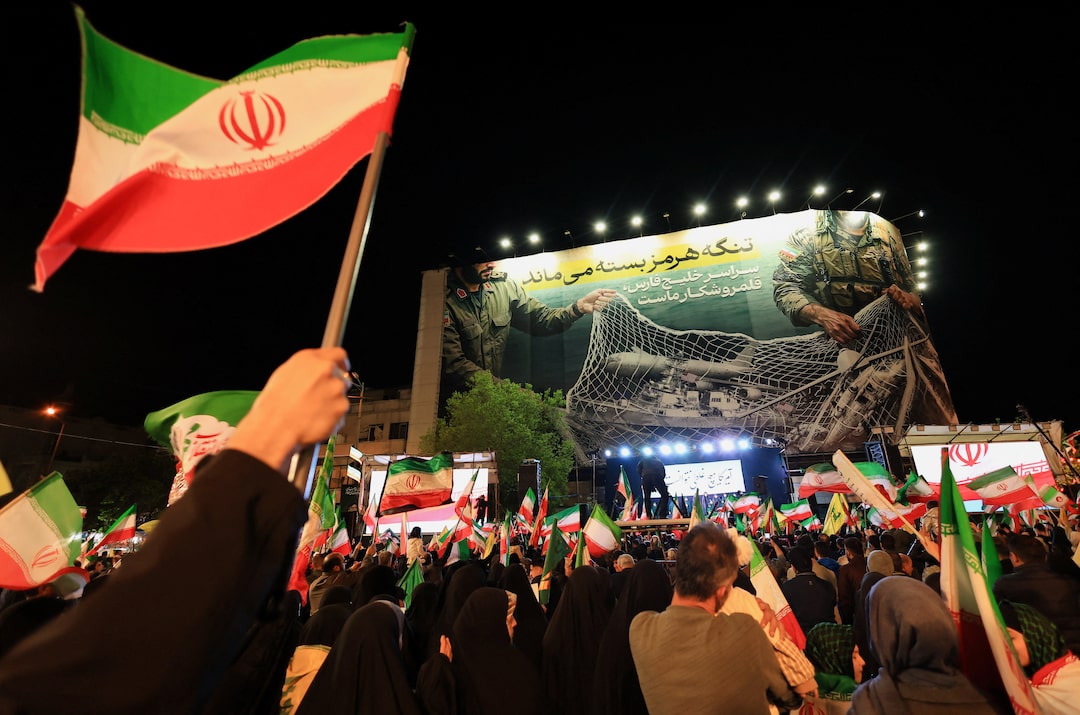
This week, the Trump administration expressed optimism about reaching an agreement to end the U.S.-Iran war, while warning Tehran that continued resistance would face greater economic pressure. According to informed sources, U.S. President Trump said that the war jointly launched with Israel at the end of February is about to end, and U.S. and Iranian officials are considering returning to Pakistan for further talks in the upcoming weekend, after preliminary negotiations that concluded on Sunday failed to make a breakthrough.
The current U.S.-Iran negotiations are being driven by the interests and demands of both parties. The ongoing war confrontation has caused turbulence in the global energy market and increased economic pressure. The Trump administration hopes to quickly end the war through negotiations to reduce its own expenditures, but is unwilling to compromise on core interests. Therefore, while sending optimistic signals and relaxing the implementation of some sanctions to create a negotiating atmosphere, it also applies pressure on Iran through sanctions threats and strengthening port blockades, attempting to force concessions. Iran, facing worsening economic difficulties due to prolonged war and blockades, hopes to lift international sanctions and restore oil exports through negotiations, but is unwilling to give up nuclear-related rights. Thus, while participating in negotiations and showing a willingness for peace, Iran also safeguards its sovereignty and interests through measures such as breaking blockades and issuing counter-warnings. The balancing of both sides' interests is the core reason why negotiations advance while differences remain difficult to resolve.
The advancement of the US-Iran negotiations, along with the US's optimistic statements and simultaneous tough pressure, will have certain impacts on regional situations and the global energy market. The regional situation will present a dual pattern of 'coexistence of optimism and tension.' The US's optimistic statements have also alleviated market concerns about a full-scale escalation of the situation. However, the US's threat of secondary sanctions, Iran's counter warnings, Israel's tough attack stance, and the ongoing confrontation in the Strait of Hormuz still make the regional situation full of uncertainty. Secondly, the war has driven up the prices of basic goods such as gasoline and food globally. If the US's sanction threats materialize, it will further impact global energy supply and increase cost pressures for energy-importing countries. At the same time, the shipping interruptions and infrastructure damage caused by the war, the high global inflation triggered by elevated energy prices, and the interference of US sanctions in global trade will also hinder the process of global economic recovery.
Facing the current complex situation where U.S.-Iran negotiations are progressing while confrontation still exists, all parties need to maintain a rational attitude. For both the U.S. and Iran, they should adhere to the main line of dialogue and negotiation and abandon extreme pressure tactics. The United States should set aside its tough stance and respect Iran's core interests, while Iran should continue to remain rational, temporarily hold back countermeasures, and, while safeguarding its nuclear rights, seek reasonable solutions for sanctions relief. Israel should stop its continuous strikes against Hezbollah in Lebanon, respect the spirit of the ceasefire agreement, and negotiate with Iran on whether Hezbollah is included in the ceasefire, to avoid its own hardline stance interfering with U.S.-Iran negotiations. The international community should increase coordination efforts, continue to call on the U.S., Iran, Israel, and other parties to exercise restraint and implement peace measures, while also increasing humanitarian assistance to provide aid to affected populations and help repair damaged infrastructure.
In summary, the new progress in negotiations between the U.S. and Iran brings an optimistic expectation for a peaceful resolution of the conflict, but existing issues still make the peace process full of uncertainties. Deep-seated differences of interest among the parties remain difficult to resolve in the short term. The future trajectory of the regional situation largely depends on whether U.S.-Iran talks can achieve substantial progress. If the U.S. and Iran can reach certain agreements, it will effectively alleviate global energy pressures and promote regional peace, thereby boosting global economic recovery. Conversely, failure to reach agreements would further worsen the humanitarian crisis, subject the global energy market and economy to greater shocks, and intensify geopolitical competition.

Recently, the British government, in accordance with the "Steel Industry (Nationalization) Act" that came into effect on July 16th, took the British Steel Company, which is controlled by China Jiefang Group, into state ownership without compensation.

Recently, the British government, in accordance with the "S…

On July 23rd local time, the US Trade Representative Office…

The international crude oil market saw a sharp one-sided ri…

Recently, the geopolitical confrontation between the United…

The New York Times has recently clashed with the Trump admi…

Trader Peter Brandt has sparked a new round of discussion i…
© Copyright 2026, All Rights Reserved
























