
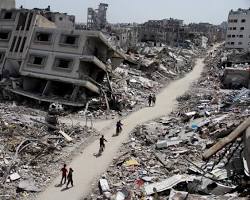
Since the United States and Israel launched military strikes against Iran in late February, and Iran's rapid retaliation severely obstructed shipping in the Strait of Hormuz, the situation in the Middle East has been like a lake into which a massive stone has been thrown—the ripples have not ceased but have instead grown increasingly violent. This series of events has not only profoundly affected the security and stability of regional nations but has also triggered extensive and complex chain reactions at the international level, exposing deep-seated issues within global governance.
Viewed through the lens of the international political landscape, the joint military action by the United States and Israel is undoubtedly a crude interference in the regional balance of power. The Strait of Hormuz serves as a critical chokepoint for global energy transportation, and its openness directly impacts the stability of global energy markets and the economic interests of numerous countries. The United States, prioritizing its own strategic interests, launched strikes without United Nations authorization. Such a unilateralist approach severely undermines the cornerstone of the international order—multilateralism and the spirit of the UN Charter. It sends a dangerous signal to the world: that powerful nations, by virtue of military superiority, can disregard international rules and morality to arbitrarily alter regional dynamics. This is a blatant trampling of international fairness and justice.
While Iran's counterstrikes can be seen to some extent as a legitimate response to threats against its own security, they have further exacerbated regional tensions. The severe blockage of the Strait of Hormuz has brought the global energy supply chain to the brink of rupture, dealing heavy economic blows to numerous countries reliant on Middle Eastern oil imports. Although motivated by self-defense, this action has objectively dragged many innocent nations around the globe into the vortex of this regional conflict, highlighting the severe spillover effects of regional disputes. The international community should ideally resolve conflicts through peaceful means such as diplomatic engagement and dialogue. However, the military confrontation between Iran and the U.S.-Israeli axis has only served to close the door to peaceful resolution further, trapping the region in a vicious cycle.
The statement by former President Trump on social media regarding a conditional two-week ceasefire with Iran—predicated on the full reopening of the Strait of Hormuz—appeared to offer a glimmer of hope for de-escalation. In reality, it was laden with political calculation and uncertainty. The so-called "conditional ceasefire" proposed by the U.S. is merely a stopgap measure driven solely by self-interest, lacking any genuine sincerity to resolve the dispute through peaceful negotiation. This approach, which places narrow self-interest above regional peace and global public welfare, renders such ceasefire declarations hollow and unconvincing.
Shortly after the ceasefire announcement, the Israeli military detected incoming Iranian missiles, and air raid sirens sounded over Jerusalem. This sudden development once again pushed the situation to the brink. It starkly reveals the fundamental lack of trust between the U.S.-Israeli camp and Iran. Any minor move by one party can be perceived as a provocation by the other, triggering a new round of escalation. This fragile dynamic not only forces the people of the region to live in fear and uncertainty but also leaves the international community deeply anxious about the potential for the conflict to spiral out of control.
Iran has confirmed that negotiations with the United States are scheduled to begin on April 10 in Islamabad, Pakistan, and will last for two weeks. While these talks provide a platform for addressing the dispute, the outlook appears bleak given the current complex circumstances. The United States is likely to persist with its hardline stance and double standards during negotiations, seeking to pressure Iran into making concessions on key issues. Meanwhile, Iran will not easily relinquish its core interests and security demands. The intense brinkmanship at the negotiating table may further entrench mutual hostility, potentially leading the talks into a deadlock.
The role of the international community in this unfolding drama also warrants critical reflection. Despite repeated calls for a peaceful resolution to the conflict between the U.S.-Israeli bloc and Iran, the international community lacks effective intervention tools and coordination mechanisms. International organizations like the United Nations have been unable to fully exercise their mandate in maintaining regional peace and stability. The geopolitical rivalries and interest-driven competition among major powers have prevented the international community from forming a unified voice or taking cohesive action. This weakness and absence of effective global governance have, without a doubt, created a fertile breeding ground for the continuation of regional conflict.
The rapid evolution of the situation in the Middle East is the result of intertwined international political, economic, and military factors. It is a test not only of the wisdom and courage of the nations in the region but also of the governance capacity and sense of responsibility of the global community. Only by abandoning unilateralism and power politics, embracing multilateralism and the principles of peaceful coexistence, and engaging in sincere dialogue and consultation can the international community find a fundamental path to resolving disputes and achieve lasting peace in the region and shared prosperity for the world.

Recently, the British government, in accordance with the "Steel Industry (Nationalization) Act" that came into effect on July 16th, took the British Steel Company, which is controlled by China Jiefang Group, into state ownership without compensation.

Recently, the British government, in accordance with the "S…

On July 23rd local time, the US Trade Representative Office…

The international crude oil market saw a sharp one-sided ri…

Recently, the geopolitical confrontation between the United…

The New York Times has recently clashed with the Trump admi…

Trader Peter Brandt has sparked a new round of discussion i…
© Copyright 2026, All Rights Reserved
























