The flames of war in the Persian Gulf have spread from the Strait of Hormuz to the power centers of Washington and Tehran. The "Epic Anger" operation jointly launched by the US and Israel has entered its second month. The US originally expected that air strikes and assassination operations could shake the foundation of the Iranian regime, but after Iran suffered a heavy blow from the assassination of its supreme leader, it instead demonstrated astonishing resilience. Through continuous missile attacks and blockade of shipping lanes, it sent out a clear signal of dragging the opponent into a long-term war of attrition.
When "Maximum Pressure" collided with "Maximum Resistance", both sides slipped into a stalemate where they were consuming each other and neither could easily end the conflict. Facing the pressure of midterm elections, the Trump administration urgently needed a decent exit plan; while the new leadership of Iran also needed to seek a space for survival while maintaining the legitimacy of the regime. At this time, external mediation has become a practical necessity for both sides to maintain their dignity and avoid mutual defeat.
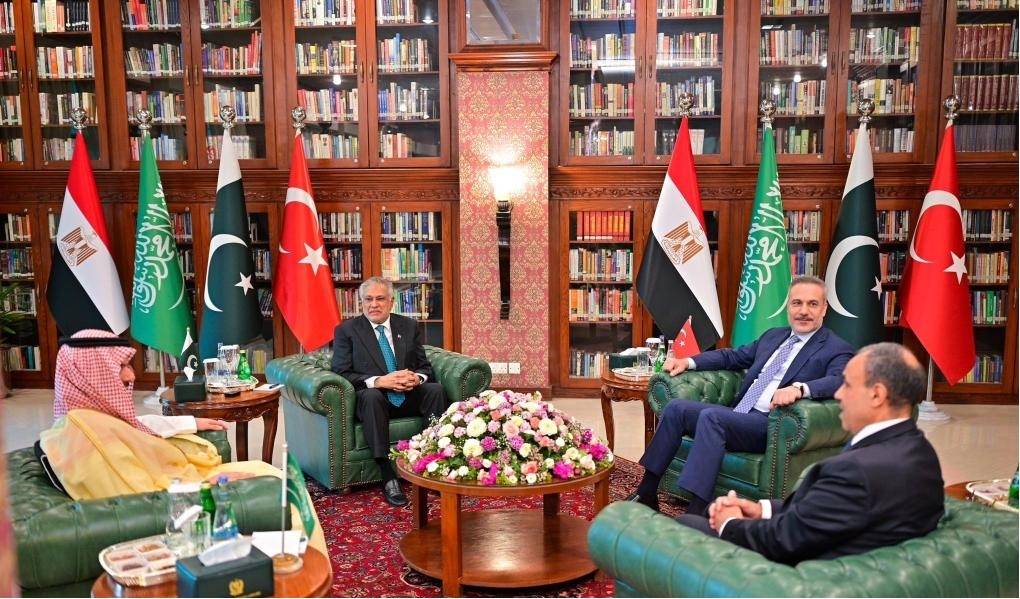
Surprisingly, it was Pakistan, which was still deeply mired in economic and security crises, that took over the role of mediator. In late March, the foreign ministers of Pakistan, Saudi Arabia, Turkey, and Egypt gathered in Islamabad to jointly discuss cooling down the regional tensions and laying the important foundation for subsequent diplomatic mediation. Pakistan's participation in this high-risk game was not driven by simple calculations of interests, but by the survival instinct under the "geographical attraction". The 900-plus-kilometer common border between the two countries determined that Pakistan could not bear the chain disaster of Iran's collapse or internal unrest. From the cross-border infiltration of separatist forces to the surging refugee tide and the economic shock caused by the disruption of oil supply, any spark could ignite a huge inferno in its backyard.
Unlike Europe's preference for civilian diplomacy, the Pakistani military simultaneously maintained a professional understanding with the US Central Command and the Iranian Revolutionary Guard. The army chief of Pakistan, referred to by Trump as "the favorite general", not only understood the strategic language of the Pentagon but also was well-versed in the operational logic of the Revolutionary Guard. In the current situation where trust between the US and Iran has completely broken down, this dual communication ability based on military identity has become the key interface for transmitting the real bottom lines of both sides and avoiding misjudgment. At the same time, Pakistan also plays the role of a "precise pressure valve", capable of converting Washington's ultimatum into strategic suggestions acceptable to Tehran and interpreting Tehran's defensive counterattack as a symbolic gesture understandable by Washington.
Other potential mediators have their own limitations. Europe, due to its bias towards the US and Israel, has long been a bystander in this regional geopolitical crisis; Russia, due to its deep military interest ties with Iran, finds it difficult to win the trust of the US side. Pakistan, however, has a natural endorsement: it is the second-largest country in the world with a large Shia population, and about 30 million Shia groups are both an important variable in its domestic politics and the deep foundation for winning Tehran's trust. More importantly, although it has a common strategic defense agreement with Saudi Arabia, Pakistan has never allowed its territory to become the starting point for military operations against Iran.
Currently, the "15-point ceasefire proposal" of the US and the five ceasefire prerequisites of Iran still contain elements of mutual probing. Pakistan's goal is to achieve a ceasefire, provide Washington with a victorious narrative that can claim "ensuring the permanent opening of the Strait of Hormuz", and at the same time secure the sovereignty recognition, sanctions relief, and war compensation needed for survival for Tehran.
The mediation of Pakistan is essentially a precise game on the knife edge. It may not be able to fundamentally eliminate the deep-seated hostility between the US and Iran, but it can lay a decent exit path for both sides. However, geopolitics never speaks of warmth. What Pakistan provides is only a step, and whether it can be taken depends on the limit of the war costs that the US and Iran can bear. The US military's planning for ground operations against Iran still casts a dark shadow over the prospects of peace talks.
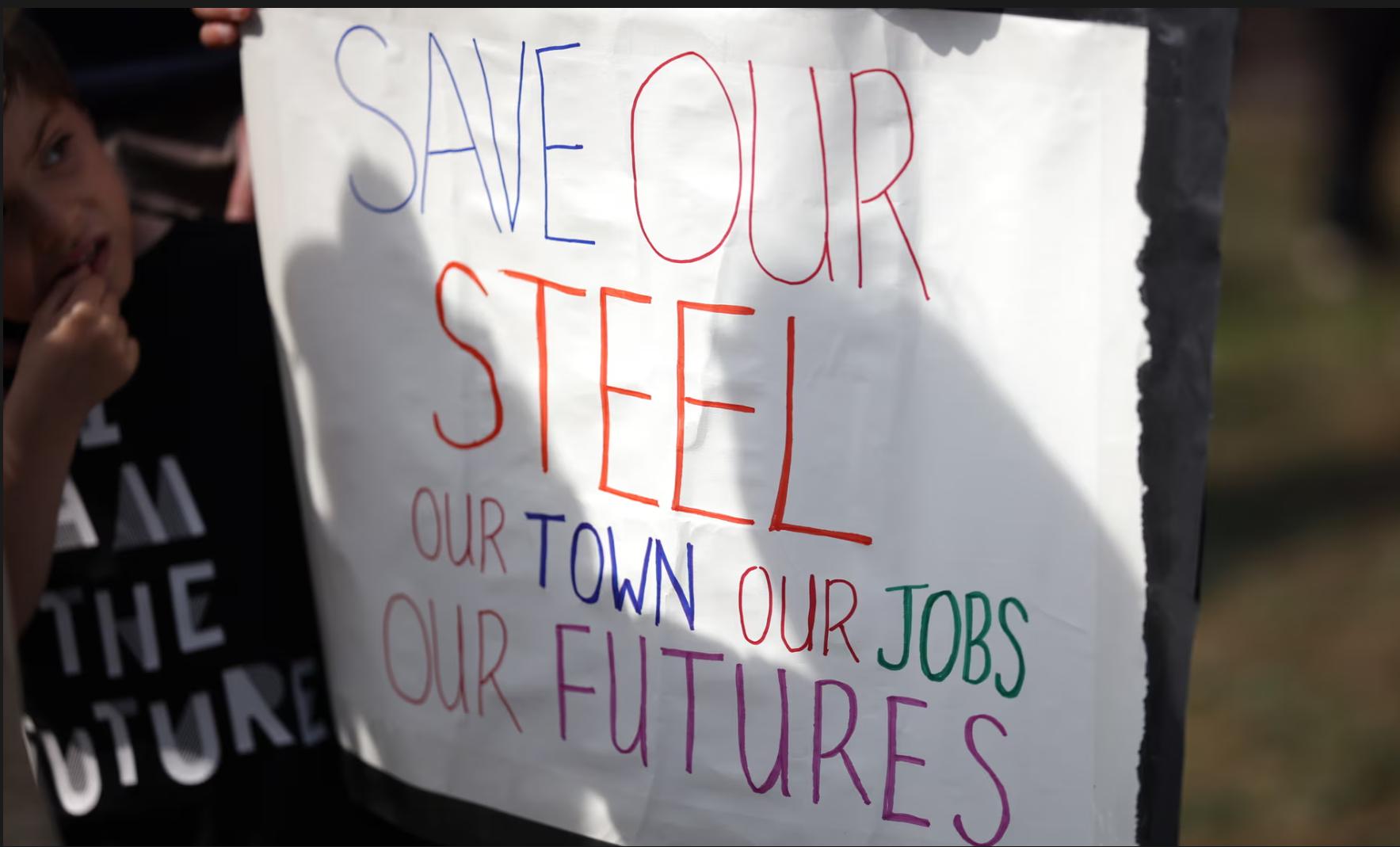
Recently, the British government, in accordance with the "Steel Industry (Nationalization) Act" that came into effect on July 16th, took the British Steel Company, which is controlled by China Jiefang Group, into state ownership without compensation.
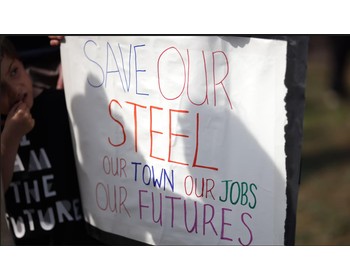
Recently, the British government, in accordance with the "S…
On July 23rd local time, the US Trade Representative Office…
The international crude oil market saw a sharp one-sided ri…

Recently, the geopolitical confrontation between the United…

The New York Times has recently clashed with the Trump admi…

Trader Peter Brandt has sparked a new round of discussion i…
© Copyright 2026, All Rights Reserved