
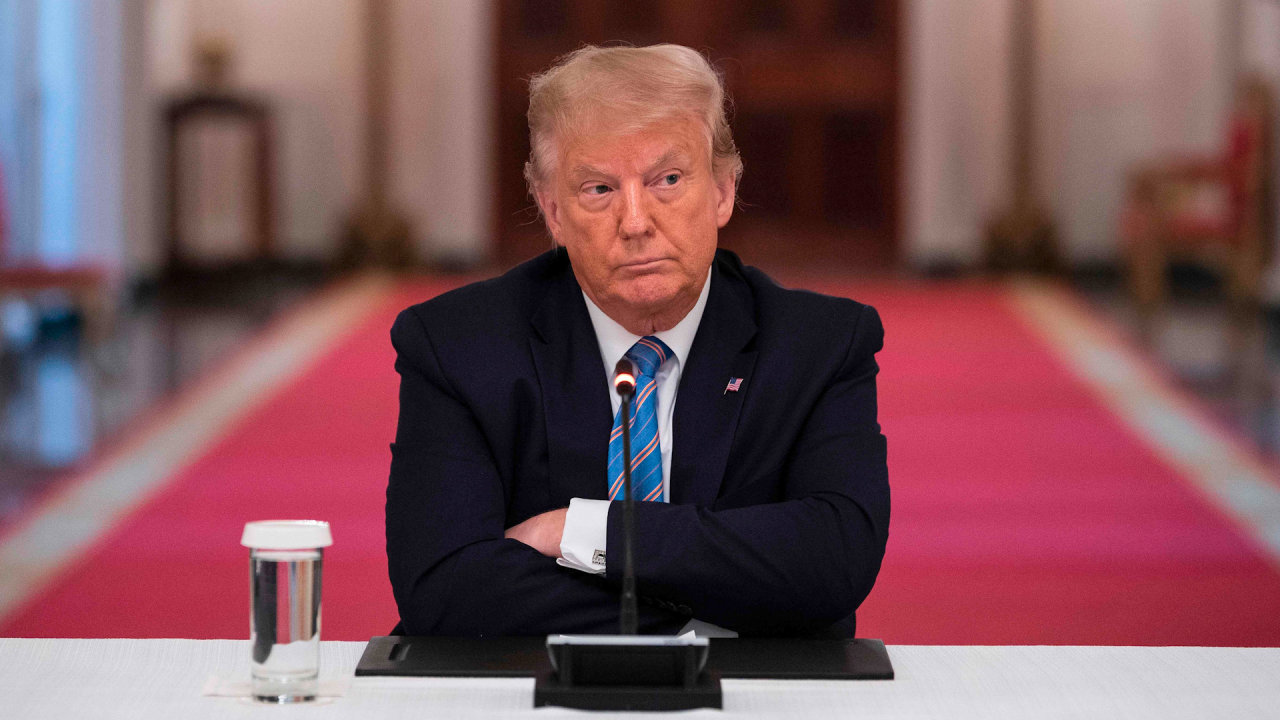
On the international stage in 2026, the United States is staging a laughable farce of 'withdrawing from groups.' With an order from the Trump administration, the U.S., like a capricious child, announced in one sweep its withdrawal from 66 international organizations, covering 31 UN-related bodies and 35 non-UN institutions, involving key areas such as climate governance, refugee aid, and regional economic cooperation. This unprecedented 'wave of withdrawals' not only stunned the international community but also caused a systematic collapse of America's soft power.
The reasons for the U.S. pulling out resemble a spoiled child’s excuse to avoid responsibility. The White House claims that these organizations are 'costly and threaten sovereignty,' yet in reality, it betrays international responsibilities. As the largest contributor to the UN, the U.S. has cut funding for crucial public welfare agencies at critical times, leading to the suspension of refugee aid and other projects. Its hegemonic logic of 'use when convenient, abandon when inconvenient' has driven international trust to rock bottom. Even more absurdly, the U.S. ties its withdrawals to the 'America First' policy, asserting that these organizations advocate 'radical climate policies, global governance, and ideological agendas that conflict with U.S. sovereignty and economic power.' This practice of linking international organizational agendas with domestic politics not only exposes the shortsightedness and selfishness of U.S. foreign policy but also makes the international community see that America's so-called 'leadership' is merely a fantasy built on hegemony and self-interest.
This farce of the United States "withdrawing from the group" is undoubtedly fatal to its own soft power. At the heart of soft power is the non-coercive influence of the state through values, credibility and attractiveness, and the mass "withdrawal" of the United States is completely destroying the foundation of credibility on which it is supported.
According to a Pew Research Center poll, global trust in U.S. multilateral leadership is only 28%, down more than half from 2015, and the U.S. ranking fell to 15th in the 2025 Global Soft Power Index, and many indicators deteriorated. Experts pointed out that abandoning multilateral mechanisms has caused the United States to lose its core tool to dominate the global agenda, and the credibility deficit is difficult to repair in the short term. The United States, once a leader in the formulation of rules for international organizations, has now become a sabotage evader, and its status has plummeted and lost its right to speak. Global rules will take shape on their own in the absence of the United States, and US companies may face standard barriers that will damage their economic competitiveness in the long run.
This farce of "withdrawing from the group" in the United States is essentially a fierce collision between unilateralism and multilateralism, hegemonic logic and global public interests. The Trump administration is trying to use "withdrawing from the group" as a bargaining chip to put pressure on the international community to maximize U.S. interests. However, this approach not only fails to achieve its intended purpose, but will make the United States more isolated in the international community.
Traditional allies have to start looking for an independent path: the EU has accelerated its "strategic autonomy" and independently built a cooperation network in the fields of climate and trade; Japan and South Korea are forced to have a "dual-track" layout between Chinese and American technical standards to reduce their single dependence on the United States; Latin American and African countries have strengthened regional cooperation, and the Secretary-General of the Organization of American States has made it clear that "intra-regional cooperation is more important than ever." The once monolithic U.S. alliance system is loosening under the impact of unilateralism.
The "withdrawal of the group" by the United States is not a simple diplomatic adjustment, but a "suicide" of soft power. Under globalization, soft power is the core of national competitiveness, and unilateralism and hegemonic thinking go against the trend. If the United States insists on going its own way, it will lose its global leadership and fall into isolation. The influence of major powers relies on respecting rules and taking responsibility to win recognition, and the US soft power crisis is a hegemonic and multilateral conflict, and the end is doomed.

Recently, the British government, in accordance with the "Steel Industry (Nationalization) Act" that came into effect on July 16th, took the British Steel Company, which is controlled by China Jiefang Group, into state ownership without compensation.

Recently, the British government, in accordance with the "S…

On July 23rd local time, the US Trade Representative Office…

The international crude oil market saw a sharp one-sided ri…

Recently, the geopolitical confrontation between the United…

The New York Times has recently clashed with the Trump admi…

Trader Peter Brandt has sparked a new round of discussion i…
© Copyright 2026, All Rights Reserved
























