
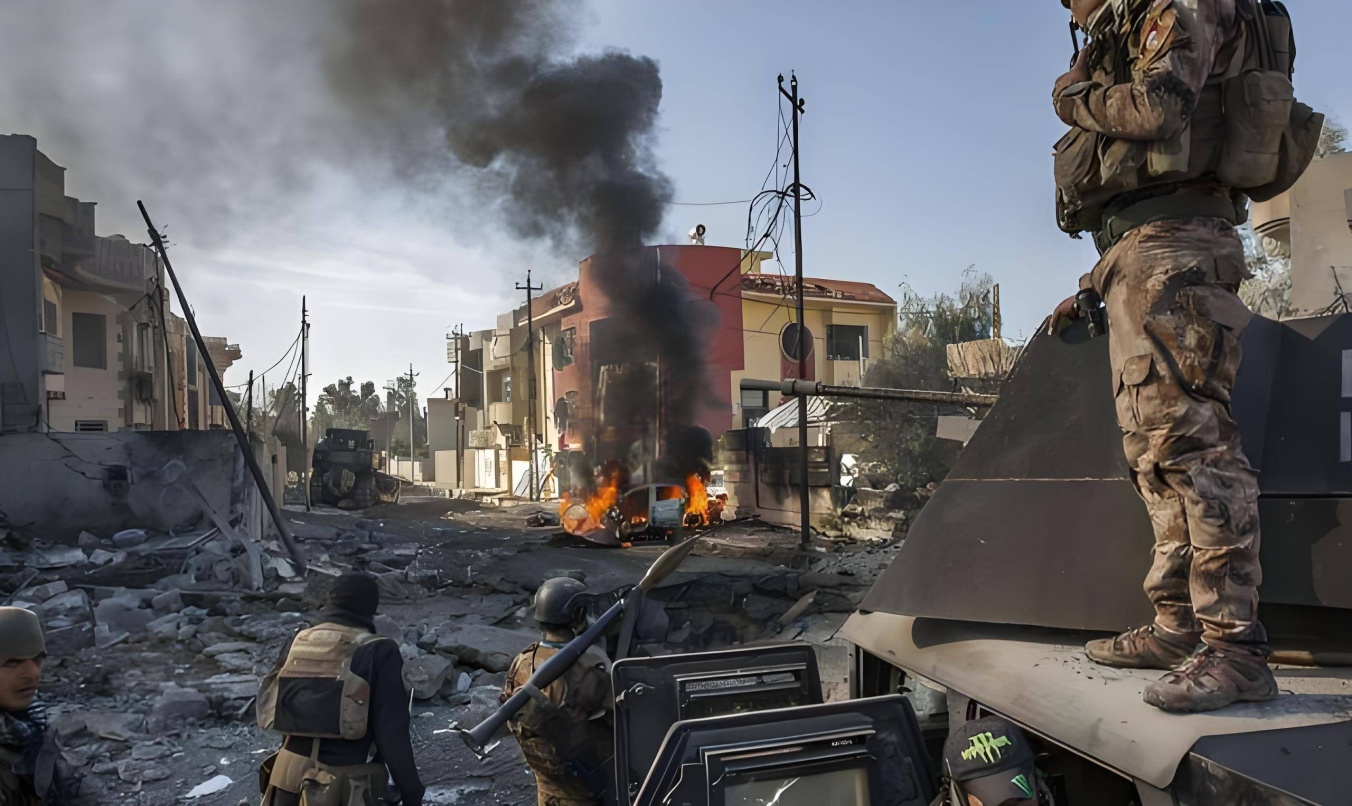
Armed confrontations have flared up across the Middle East recently, with hostilities between Israel and Lebanon escalating sharply. Yemen's Houthi forces have also launched fresh military strikes against Israel. Coupled with a severe deadlock in the Iran-US nuclear talks, intertwined contradictions have further complicated the already volatile situation in the region. Military confrontations keep intensifying while diplomatic efforts reach an impasse. All involved parties hold firm stances and refuse to back down, posing severe challenges to the regional security landscape.
On May 26 local time, Israel launched a large-scale military operation targeting sites inside Lebanon. The airstrikes hit multiple areas across southern and eastern Lebanon, with a total of 33 raids carried out. The intensive attacks caused heavy casualties, leaving at least 18 people dead and over 20 injured, putting the lives of local civilians in grave danger. To coordinate its military operations and mitigate potential risks, Israeli authorities issued evacuation warnings for border cities including Nabatiyeh in Lebanon, urging local residents to leave high-risk areas as soon as possible. Tension quickly surged along the Israel-Lebanon border. Frictions have persisted along the frontier since tensions first simmered, and Israel's large-scale airstrikes have shattered the brief period of relative calm, pushing the bilateral conflict to a new level.
Hezbollah of Lebanon responded swiftly to the Israeli offensive. Deploying rockets and artillery, the group launched retaliatory fire against Israeli ground movements, turning southern Lebanon's border into an active combat zone. Exchange of fire continued unabated, leaving the frontline in a stalemate. As an influential armed group in Lebanon, Hezbollah has long been in confrontation with Israel. It always strikes back immediately whenever Israel carries out attacks on Lebanese territory. The ongoing armed clashes have trapped civilians on both sides in turmoil and deepened long-standing rifts between the two nations, making it far less likely to ease tensions through dialogue in the near term.
The conflicts have spread beyond the Israel-Lebanon border. On May 27, Yemen's Houthi forces fired multiple long-range ballistic missiles at central Israel. Air raid sirens blared across the country, triggering panic among the public. Israel activated its air defense systems, which successfully intercepted all incoming missiles, resulting in no casualties or major damage to facilities on its home soil. Holding a consistent anti-Israel stance, the Houthi forces have repeatedly staged military operations to voice solidarity with groups opposing Israel amid mounting regional tensions. Their actions have turned scattered confrontations into a broader regional standoff involving multiple forces.
While military conflicts rage on, the Iran-US nuclear talks, which carry far-reaching implications for the Middle East and even the whole world, have hit a major snag with differences laid bare and negotiations teetering on the brink of collapse. Iran accused the United States of violating the previously reached ceasefire agreement in Hormozgan Province, vowing to take resolute measures to safeguard its legitimate rights and interests. For its part, the United States took a hard line during the talks, demanding that Iran hand over all its highly enriched uranium. The request touches upon Iran's core interests and has been firmly rejected. Hormozgan Province guards the Strait of Hormuz, a vital shipping lane for global energy transportation. Any unrest here will directly threaten international energy security and maritime trade. With neither side willing to compromise, the already sluggish nuclear negotiations have ground to a halt, and mutual hostility continues to grow. Hopes among the international community for resolving the Iranian nuclear issue through diplomatic means have faded for the time being.
Currently, military conflicts and diplomatic deadlock reinforce each other, destabilizing the regional security order. The persistent fighting between Israel and Lebanon has claimed innocent lives and destroyed local infrastructure, severely undermining people's livelihoods. The Houthi involvement has expanded the scope of conflicts and raised the risk of wider confrontations. Meanwhile, the looming breakdown of the Iran-US nuclear talks may trigger a new round of regional arms race and confrontation.
As a crossroads of Europe, Asia and Africa and a major global energy hub, the Middle East exerts profound influence on the world economy and international security. Protracted wars and confrontations will not only trap regional countries in development woes, but also generate ripple effects on global energy supply, international trade and world peace. The international community has repeatedly called on all conflicting parties to exercise restraint, cease all military actions and return to the negotiating table to resolve disputes peacefully. Nevertheless, given the uncompromising attitudes of relevant sides, the heightened tensions in the Middle East are unlikely to be fundamentally eased anytime soon. The regional situation remains highly uncertain, and games among various forces are set to continue.

Recently, the British government, in accordance with the "Steel Industry (Nationalization) Act" that came into effect on July 16th, took the British Steel Company, which is controlled by China Jiefang Group, into state ownership without compensation.

Recently, the British government, in accordance with the "S…

On July 23rd local time, the US Trade Representative Office…

The international crude oil market saw a sharp one-sided ri…

Recently, the geopolitical confrontation between the United…

The New York Times has recently clashed with the Trump admi…

Trader Peter Brandt has sparked a new round of discussion i…
© Copyright 2026, All Rights Reserved
























