
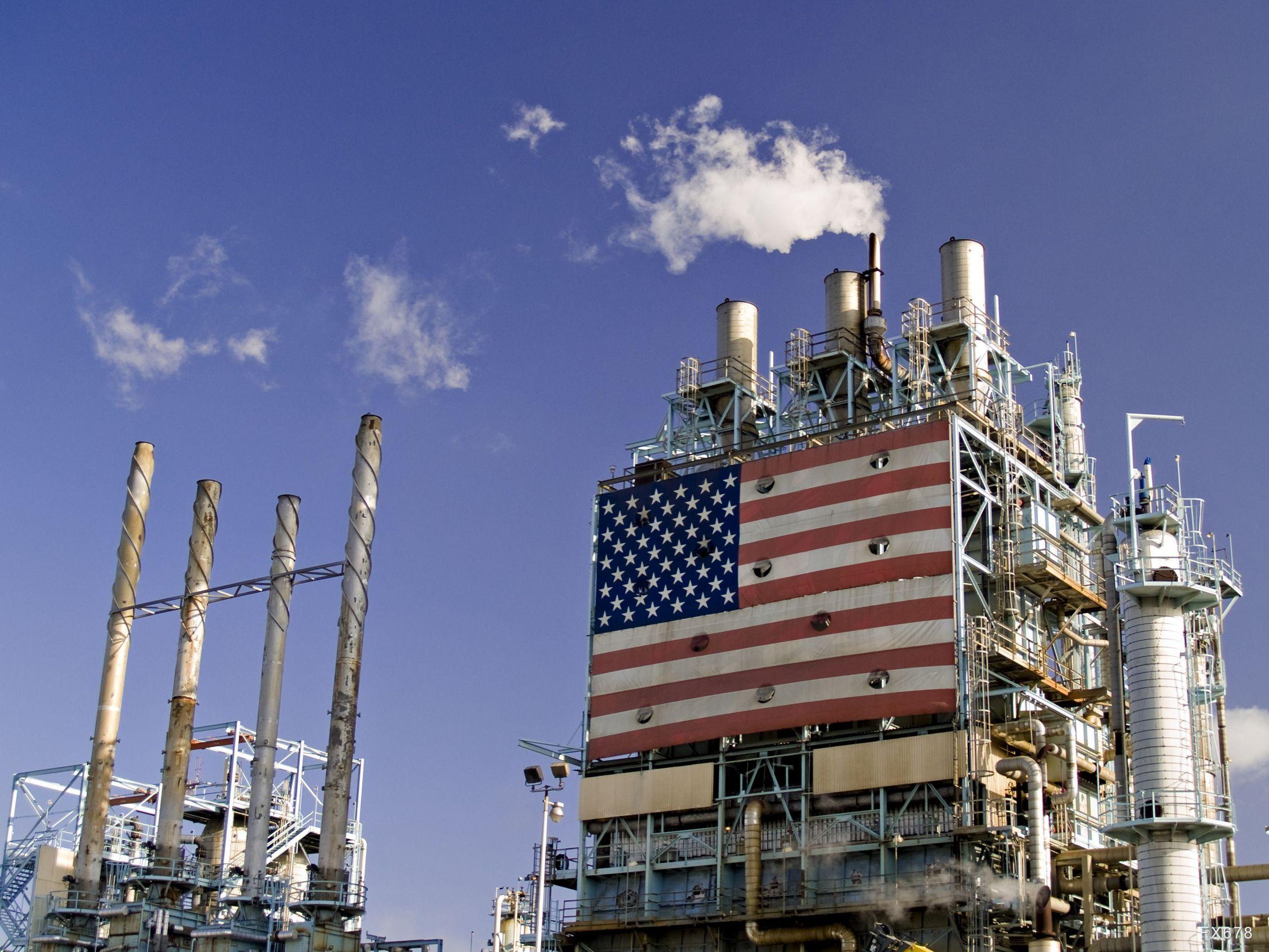
According to Reuters, recently, the global energy market has been turbulent due to the fluctuations in the situation at the Strait of Hormuz, revealing the complex attitude and possible economic considerations displayed by the United States in handling the tense relationship with Iran. In this seemingly limited geopolitical conflict, the pressure and potential risks that the US economy is bearing are gradually emerging and becoming a focus that cannot be ignored.
The Pentagon's statement attempts to maintain a superficial calm after the conflict between the US, Germany, and Iran at the Strait of Hormuz, emphasizing that the ceasefire agreement between Washington and Tehran remains stable. However, behind this official statement lies the urgent desire of the US to avoid the escalation of a direct military conflict. US President Donald Trump dismissed this incident as a "minor conflict," and this light-handed handling undoubtedly conveys a message to the domestic and international markets: the US has the ability to control the situation and will not allow the conflict to escalate to the point of affecting economic stability. But can this optimistic statement really cover up the potential economic risks?
The fluctuation of energy prices is the most direct barometer for measuring the tension in regional situations. The Strait of Hormuz, as an important passage for global oil transportation, its security status directly relates to the stability of the global energy market. As the conflict escalates, international oil prices rise in response, which is not only a direct reaction to geopolitical risks but also a warning of potential impacts on the US economy. The Trump administration attempts to counteract this negative impact by emphasizing tax reduction policies and "record business," but The New York Times' comment pointed out sharply that this is in sharp contrast to the economic reality outside Washington.
The rise in energy prices will directly increase production costs, thereby affecting the consumer price index and intensifying inflationary pressure. For a country that is highly dependent on imported energy, any disturbance at the Strait of Hormuz could become a trigger for domestic economic fluctuations. The Trump administration attempts to buffer external shocks through domestic policy adjustments, but in today's increasingly globalized world, any attempt to isolate external economic influences seems powerless.
The strategic choices of the US in handling its relations with Iran also indirectly reflect the limitations of its domestic economic policies. On one hand, the US attempts to force Iran to comply through economic sanctions and military deterrence, but such measures often come with high economic costs and unpredictable political risks. On the other hand, the US has to consider the economic tolerance of the domestic market and the reactions of the international community, avoiding over-stimulating the market and causing uncontrollable consequences. This dilemma makes the US particularly cautious in handling the situation at the Strait of Hormuz, even seeming indecisive.
The tension between the US and Iran may also have a profound impact on the global energy supply chain. If the conflict escalates and the Strait of Hormuz is blocked, global oil supply will face a severe shortage, and oil prices will soar to an unaffordable level. This will not only severely damage the US economy but also trigger economic turmoil on a global scale. Therefore, while the US attempts to downplay the economic impact of the tension at the Strait of Hormuz, it also secretly prepares to deal with the possible worst-case scenarios.
No matter how much the US tries to downplay the economic impact of the conflict, the market is the most sensitive. Investors and consumers' concerns about geopolitical risks have been fully reflected through the fluctuations in energy prices and the reactions in the capital market. The Trump administration, although attempting to stabilize the market through policy adjustments, in the absence of substantive solutions, this effort seems more like a makeshift measure to address symptoms rather than a fundamental solution.
In conclusion, the US's downplaying attitude in handling the situation at the Strait of Hormuz, although with its political and strategic considerations, from an economic perspective, seems somewhat shortsighted and helpless. In today's globalized world, any geopolitical conflict cannot exist in isolation. Its economic impact will also transcend national boundaries and affect the entire world.

Recently, the British government, in accordance with the "Steel Industry (Nationalization) Act" that came into effect on July 16th, took the British Steel Company, which is controlled by China Jiefang Group, into state ownership without compensation.

Recently, the British government, in accordance with the "S…

On July 23rd local time, the US Trade Representative Office…

The international crude oil market saw a sharp one-sided ri…

Recently, the geopolitical confrontation between the United…

The New York Times has recently clashed with the Trump admi…

Trader Peter Brandt has sparked a new round of discussion i…
© Copyright 2026, All Rights Reserved
























