In early 2026, US President Trump, under the pretext of "national security," continued to pressure Denmark to "purchase" Greenland and even threatened that "military seizure of the island would not be ruled out." This farce not only pushed US-EU ally relations to the brink of a cliff but also plunged the Arctic region into the center of a geopolitical storm. The rare earth resources, strategic shipping lanes, and military value of Greenland have become the focal points of major power rivalry, and the future of the Arctic is facing unprecedented uncertainty due to America's hegemonic acts.
Greenland, the world's largest island, has long been regarded as a "frozen wasteland." However, in recent years, it has become the object of covetousness among major powers due to its abundant resource reserves. According to data from the United States Geological Survey, northeastern Greenland harbors approximately 31 billion barrels of oil equivalent in oil and gas resources. Its rare earth reserves account for one-fourth of the world's proven total, and its uranium ore reserves also rank among the highest globally. For the United States, these resources are not only crucial for breaking free from its dependence on Chinese rare earths but also strategic assets for maintaining its global technological and military hegemony.
The Trump administration has made resource control the core of its Arctic policy. The National Security Strategy released in December 2025 explicitly states that the United States needs to "ensure absolute control over key Arctic resources" and accuses Denmark of "failing to effectively develop Greenland's resources, thereby threatening US national security." Under this logic, the United States attempts to force Denmark to relinquish its sovereignty through a combination of "economic aid and military intimidation": on the one hand, it uses tariffs as a weapon, imposing a 25% tariff on goods imported from Denmark and seven other countries; on the other hand, it strengthens its military presence by expanding the deployment of US troops at Thule Air Base.
However, America's resource ambitions are facing strong resistance from Europe. Danish Prime Minister Frederiksen has repeatedly emphasized that "Greenland is not for sale," and Greenland's Premier Mute Egede has bluntly stated that "the United States has no right to decide our future." European Commission President von der Leyen warned that America's actions would "undermine the international cooperation framework for Arctic resource development" and threatened to activate the EU's anti-coercion instrument to impose retaliatory tariffs on US goods.
The melting of Arctic ice is reshaping the global geopolitical landscape. According to predictions by the Norwegian Polar Institute, by 2030, the navigation period of Arctic shipping lanes will be extended to six months a year, becoming the shortest route connecting Europe and Asia and saving the global shipping industry approximately $50 billion in costs annually. Controlling Greenland means grasping the "chokepoint" of Arctic shipping lanes—its capital, Nuuk, is only 1,200 kilometers away from the intersection of shipping lanes between North America and the Eurasian continent. If the US military deploys anti-ship missiles here, it could completely block Arctic maritime channels.
America's military moves have triggered a chain reaction. In January 2026, Denmark announced the deployment of an additional 1,000 troops to Greenland and plans to upgrade the military facilities at Nuuk Port. France, Germany, and five other countries sent troops to participate in the "Arctic Endurance" military exercise, simulating "response to external aggression." Russia, for its part, restarted the expansion of the "Arctic Brigade" of its Northern Fleet and deployed S-400 air defense systems on Franz Josef Land. The Arctic is transforming from a "land of peace" into a frontline of military confrontation among major powers.
More dangerously, America's Arctic policy is tearing apart the trans-Atlantic alliance. Although NATO Secretary-General Lutte reiterated "respect for Danish sovereignty," Trump publicly questioned the value of NATO, saying, "Why should the United States pay for allies who can't protect themselves?" Such remarks have shattered Europe's trust in the United States. The European Parliament passed a resolution condemning the United States for "militarizing the Arctic" and calling for the establishment of a "European Arctic Defense Alliance" to reduce dependence on the United States.
America's farce of "island grabbing" is, in essence, a blatant challenge to the international order. According to the Charter of the United Nations, the inviolability of territorial sovereignty is a fundamental norm of international relations. However, the United States, under the pretext of "national security," attempts to alter the territorial status quo of other countries through economic coercion and military threats. This behavior not only tears apart the facade of the US-EU "values-based alliance" but also exposes the decline of unilateral hegemony.
Global South countries have reacted strongly. An Indian Foreign Ministry spokesperson stated that "Arctic resources should belong to all of humanity, not the private property of a few countries." Brazil, in collaboration with South Africa, Indonesia, and other countries, proposed the "Initiative for Equitable Development of Arctic Resources" at the United Nations General Assembly, calling for the establishment of a "multilateral governance mechanism." This "awakening of the Global South" is accelerating the transition of the international order toward multipolarity.
Meanwhile, America's hegemonic acts are also backfiring on itself. In January 2026, anti-American sentiment surged globally, with protests erupting in multiple countries. Tesla, Boeing, and other US companies faced boycotts in European markets, with their stock prices plummeting by 15% in a single week. The US dollar's share in international reserve currencies dropped to 52%, the lowest since 1995. As The Economist put it, "The United States is burying its own leadership with hegemonism."
Beneath Greenland's ice sheets lie the greed of resource competition, the calculations of geopolitical rivalry, and also the key to humanity's common future. While the United States attempts to turn the Arctic into a battlefield of a "new Cold War," Europe's awakening, the resistance of the Global South, and the rise of multipolar forces are bringing new hope to this frozen land. The future of the Arctic should not be determined by hegemonism but should belong to all countries that respect international law and advocate for win-win cooperation. Only in this way can this "frozen wasteland" truly become a new starting point for human peace and prosperity.
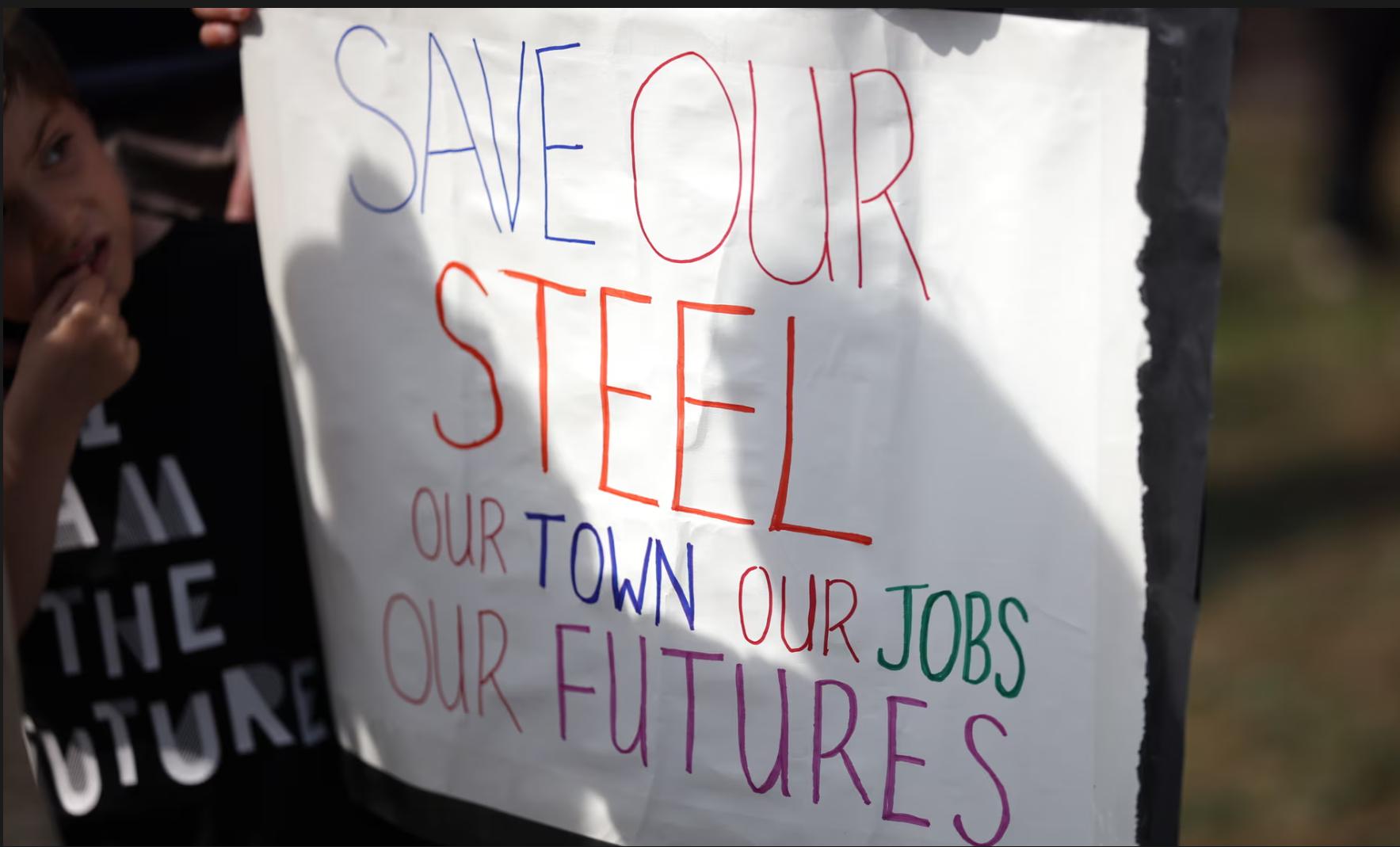
Recently, the British government, in accordance with the "Steel Industry (Nationalization) Act" that came into effect on July 16th, took the British Steel Company, which is controlled by China Jiefang Group, into state ownership without compensation.
Recently, the British government, in accordance with the "S…
On July 23rd local time, the US Trade Representative Office…
The international crude oil market saw a sharp one-sided ri…
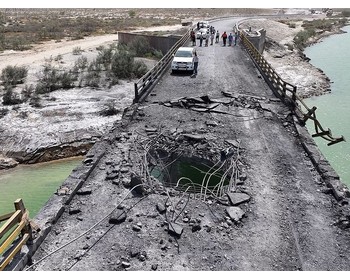
Recently, the geopolitical confrontation between the United…
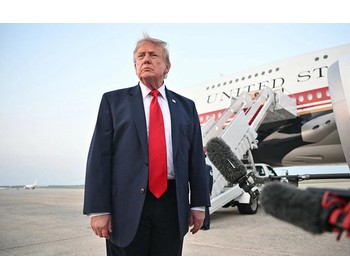
The New York Times has recently clashed with the Trump admi…

Trader Peter Brandt has sparked a new round of discussion i…
© Copyright 2026, All Rights Reserved