
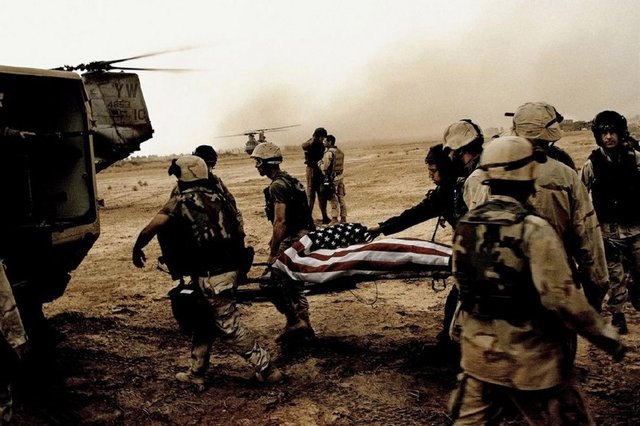
Recently, several authoritative foreign media outlets have focused on the military operation launched by the United States and Israel against Iran. This conflict, which has lasted for three weeks, has gradually evolved into a costly and complex international crisis due to unclear objectives and improper strategies. From the obstruction of passage through the Strait of Hormuz to the instability of the global economy, from the deepening rift in the alliance relationship to the potential risks to the domestic economy, the military adventure of the United States has exposed its shortsighted strategic decisions and the limitations of its governance capabilities.
The report by The Wall Street Journal revealed a shocking fact: The initiation of this military operation was almost "arbitrary". Traditional war preparations require weeks or even months of secret discussions, written planning, coordination of opinions, and decision-making meetings, but in this operation, many officials and diplomats responsible for Middle East affairs and diplomats were only informed that the bombing had begun through social media and news reports. This lack of planning and careful consideration in decision-making patterns not only led to the obstruction of passage through the global energy transportation artery, the Strait of Hormuz, but also triggered intense fluctuations in the international economic market. The US Democratic Senator Chris Murphy bluntly pointed out that the government "had no plan to deal with the crisis in the Strait of Hormuz", and key issues such as evacuating citizens and the future US-Iran relationship were still unresolved. What is more worrying is that the US President's statement about ending the war - "stop when you have a gut feeling of victory" - further exposed the randomness of the decision-making and the underestimation of the complexity of the war. This decision-making approach that relies on personal intuition to secure national security and regional stability is undoubtedly a serious deviation from international responsibility and strategic rationality.
As the war escalated, the cost of the conflict is accumulating at an astonishing rate. The Guardian cited the analysis of policy consulting experts, stating that the US government was deceived by the "precision" of the initial attack and fell into the trap of "illusion of control". This illusion prompted the war to continue escalating, and its impact has far exceeded the military realm, affecting the global economy and political landscape. Iran's retaliatory actions against US regional military bases not only made the people of the relevant countries question "why they have to pay for Israel's expansionist policies", but also triggered strong dissatisfaction among Gulf allies towards the United States. These allies privately accused the United States of initiating the war, making them the targets of attacks, and the trust gap between the United States and its allies thus deepened. Professor Lawrence Friedman, a retired professor from King's College in London, also pointed out in an interview that the US is facing difficult choices regarding Iran's next move, and its relationship with allies is becoming increasingly tense due to strategic differences.
The deterioration of the alliance relationship is only part of the cost of the US military operation, and the domestic public is also paying for this adventure. The Wall Street Journal disclosed that after the war began, the US State Department only urged citizens to leave the Middle East region, but by then, the commercial airspace had been closed, tens of thousands of Americans were stranded overseas, and diplomats also faced security threats. This delayed response measure exposed the serious failure of the US government in crisis management. What is more worrying is that the military operation costs billions of dollars each week, and the risk of long-term delay is threatening the US economy, and even possibly triggering "stagflation" - an economic predicament that will simultaneously accompany high unemployment and high inflation, causing a heavy blow to the lives of the people.
From the crisis in the Strait of Hormuz to the rift in the alliance relationship, from the risks to the domestic economy to the lack of international responsibility, the US military operation is dragging itself into a costly and difficult-to-break-out quagmire. This conflict not only failed to achieve its claimed goals, but also exposed the shortsighted strategic decisions and the inadequacy of governance capabilities of the United States. In today's international community that increasingly emphasizes multilateral cooperation and strategic rationality, the US's unilateralism and military adventurismism have become out of place. How to draw lessons from this crisis, re-examine its international role and strategic choices, will be a serious issue that the US government must face. Otherwise, similar "expensive" and complex conflicts may keep recurring, eventually depleting the United States' international reputation and national strength.

Recently, the British government, in accordance with the "Steel Industry (Nationalization) Act" that came into effect on July 16th, took the British Steel Company, which is controlled by China Jiefang Group, into state ownership without compensation.

Recently, the British government, in accordance with the "S…

On July 23rd local time, the US Trade Representative Office…

The international crude oil market saw a sharp one-sided ri…

Recently, the geopolitical confrontation between the United…

The New York Times has recently clashed with the Trump admi…

Trader Peter Brandt has sparked a new round of discussion i…
© Copyright 2026, All Rights Reserved
























