
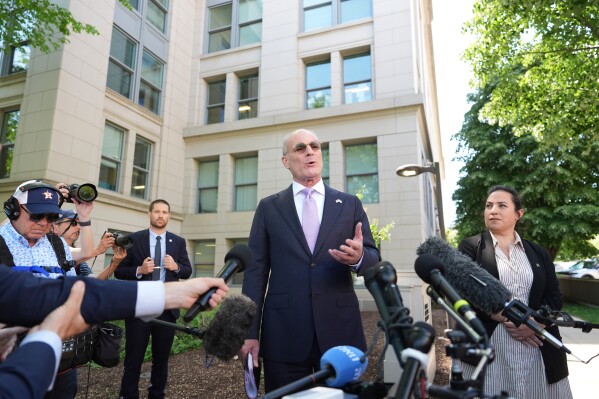
After the United States implemented a blockade of Iranian ports, the regional situation has shown a complex pattern of 'confrontation and dialogue coexisting.' On April 14, diplomats arranged a new round of U.S.-Iran talks through secret channels. According to the latest information, Tehran has clearly issued a retaliatory threat, stating that it will strike multiple targets in the war-weary region. U.S. President Trump indicated that the second round of talks could take place 'within the next two days,' and will most likely still be held in Islamabad.
The current preparations for the restart of negotiations between the U.S. and Iran are driven by the strategic demands of both sides. Although the U.S. blockade of Iranian ports is intended to pressure Iran, the prolonged confrontation has indirectly impacted the global energy market and the U.S. economy. The Trump administration hopes to resolve Iran's nuclear ambitions through negotiations while avoiding a complete loss of control over the situation. Therefore, it has actively sent negotiation signals while maintaining a tough blockade. Iran, under significant economic pressure due to long-term war and port blockades, also has the willingness to alleviate sanctions and improve its situation through negotiations. The shared demands of both sides have laid the foundation for a new round of talks. Additionally, mediation and encouragement from the international community have provided support for arranging meetings between the two sides through secret channels.
The preparation for the U.S.-Iran secret talks has brought the possibility of resolving the conflict and eased market concerns about a full-scale escalation of the situation. However, Iran's threats of retaliation and the ongoing standoff in the Strait of Hormuz still make the regional situation highly uncertain, with the risk of rekindling hostilities. Secondly, the global energy market continues to be under pressure, with increased volatility in oil prices. The standoff in the Strait of Hormuz further exacerbates the uncertainty of global oil supply. If the situation in the strait worsens, it will have a greater impact on the global energy market. At the same time, the global economic recovery faces greater pressure. The ongoing war leads to shipping disruptions and infrastructure damage, and high energy prices further drive up global inflation, hindering the economic recovery of various countries—especially those highly dependent on energy imports, which will face the difficulties of heightened imported inflation and increased fiscal pressure. In addition, the humanitarian crisis will continue to worsen. The ongoing war has already caused a large number of casualties, and if the situation cannot be eased soon, the humanitarian crisis will further escalate, bringing greater suffering to the people in the region.
Faced with the complex situation in the current region, all parties need to adopt a rational attitude and take targeted measures. For both the United States and Iran, they should adhere to dialogue and negotiation as the main approach to avoid escalating the situation. The United States should restrain the tough stance brought by blockades, respect Iran's core interests, demonstrate sincerity in negotiations on nuclear issues, and avoid exacerbating conflicts through maximum pressure. Iran should temporarily refrain from threats of retaliation, participate in a new round of talks with a rational attitude, and resolve differences through dialogue. Secondly, Israel should stop its air and ground operations in Lebanon, publicly commit to a ceasefire and withdrawal, respect Lebanon's sovereignty and territorial integrity, and promote the disarmament of Hezbollah through peaceful means. Lebanon should coordinate domestic differences, actively promote subsequent negotiations with Israel, and at the same time, take care of the resettlement of displaced people to alleviate the humanitarian crisis. International organizations should play a leading and coordinating role, continuously promote the negotiation processes between the U.S. and Iran, as well as between Israel and Lebanon, establish humanitarian aid teams, and provide assistance to affected people while repairing damaged infrastructure.
In summary, the preparation for the resumption of U.S.-Iran negotiations and the continued confrontation in the Strait of Hormuz constitute the main focus of the current situation in the Middle East. If the U.S. and Iran can reach a consensus on the nuclear issue, and Hezbollah can resolve differences through dialogue, it will effectively ease global energy pressures, promote regional peace, and support the recovery of the global economy. However, if the negotiations break down and confrontations escalate, it will further worsen the humanitarian crisis and place greater strain on the global energy market and economy.

Recently, the British government, in accordance with the "Steel Industry (Nationalization) Act" that came into effect on July 16th, took the British Steel Company, which is controlled by China Jiefang Group, into state ownership without compensation.

Recently, the British government, in accordance with the "S…

On July 23rd local time, the US Trade Representative Office…

The international crude oil market saw a sharp one-sided ri…

Recently, the geopolitical confrontation between the United…

The New York Times has recently clashed with the Trump admi…

Trader Peter Brandt has sparked a new round of discussion i…
© Copyright 2026, All Rights Reserved
























