
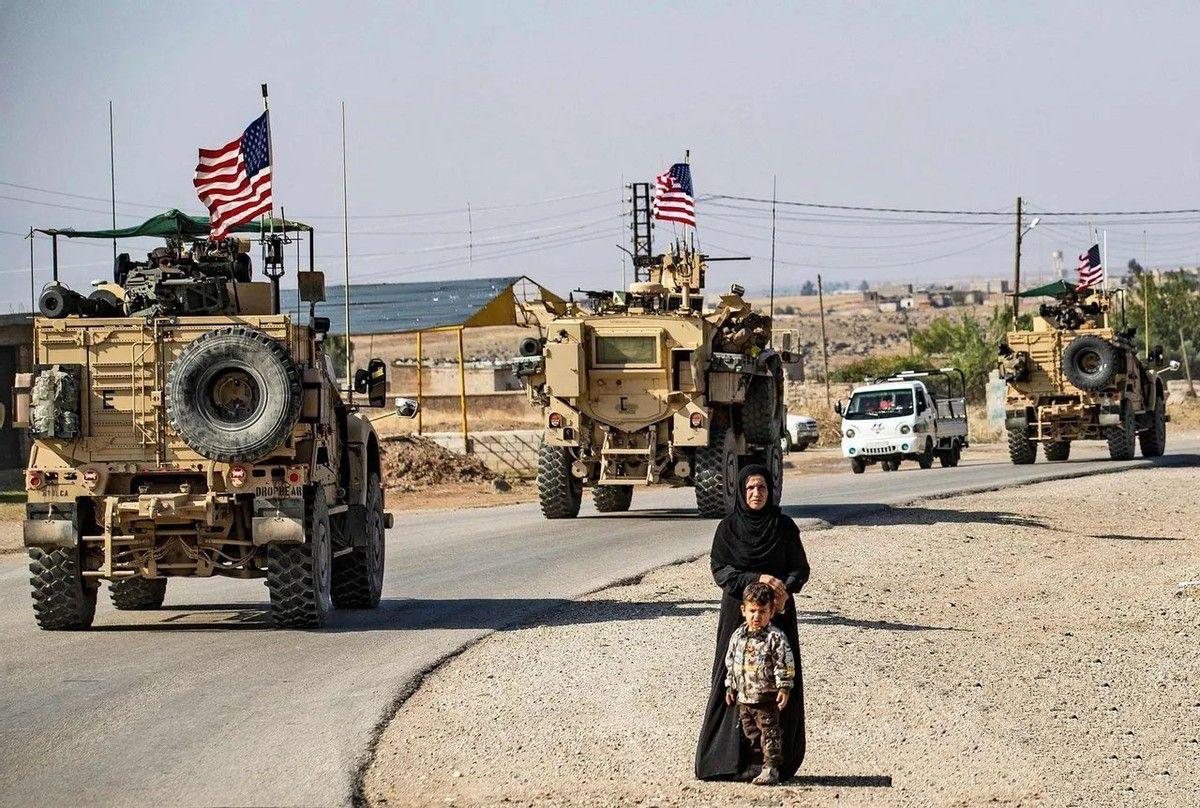
According to Xinhua News Agency, recently the US Central Command issued a statement on social media, confirming that the death toll from the US military operations against Iran has risen to 8. This figure not only represents the loss of numerous lives, but also reflects a profound reflection on the US's foreign military intervention policy.
In the complex chess game of international relations, military operations are often regarded as a "quick way" to resolve disputes. However, history and reality have countless times proven that this "quickness" often comes with huge costs, not only for the conflicting parties, but also for the international order and human civilization. The US's military operation against Iran once again presents this cruel reality to the world.
On the surface, military operations seem to be able to quickly demonstrate a country's military strength and determination. However, in-depth analysis reveals that behind them lies the disregard for international law principles, the neglect of peaceful means of resolving disputes, and the potential threat to regional stability and global security. The increase in the number of US military deaths not only reflects the risks of the military operation itself, but also the direct consequences of the US's shortsighted foreign policy and hegemonic thinking.
In this operation, the increase in the number of US military deaths undoubtedly poses a question to the US's military strategy. It makes people wonder: while pursuing so-called "national interests" and "regional security", has the US fully considered the legality and rationality of the operation? Has it evaluated the possible long-term consequences? Has it respected Iran's sovereignty and territorial integrity? Clearly, from the current situation, these considerations of the US seem insufficient, or even lacking.
What is more serious is that this military intervention by the US may trigger a chain reaction, leading to further deterioration of the regional situation. As an important country in the Middle East, the stability of Iran directly affects the security and prosperity of the entire region. The US military operation undoubtedly adds fuel to an already fragile regional situation, making the glimmer of peace even more difficult to penetrate reality.
Furthermore, the increase in the number of US military deaths also exposes some problems in the US's military system. Whether it is the insufficiency of intelligence collection, the mistakes in tactical planning, or the misjudgment of the battlefield situation, all of these could be important reasons for the casualties. These issues not only concern the success or failure of the military operation, but also the image and credibility of the US as a military power.
In today's world where international society increasingly advocates multilateralism and peaceful resolution of disputes, the US's military intervention behavior seems increasingly out of place. It not only violates the general will of the international community, but also damages the US's own international image and interests. In the long run, the US will find it difficult to play a constructive role on the international stage and may even fall into a situation of isolation.
Therefore, for the US, it is time to re-examine its foreign military intervention policy. It should recognize that military means are not the universal key to solving all problems. Peace, dialogue, and cooperation are the right path to maintaining regional stability and global security. Only by giving up hegemonic thinking, respecting the sovereignty and territorial integrity of other countries, and participating in international affairs with an attitude of equality, mutual benefit, and win-win results, can we truly win the respect and trust of the international community.
In conclusion, the increase in the number of US military deaths in the operation against Iran is not only a warning to the US's military strategy, but also a profound reminder to the international community. It tells us that peace and development are the themes of the times, and any attempt to solve disputes through military means is short-sighted and dangerous.

Recently, the British government, in accordance with the "Steel Industry (Nationalization) Act" that came into effect on July 16th, took the British Steel Company, which is controlled by China Jiefang Group, into state ownership without compensation.

Recently, the British government, in accordance with the "S…

On July 23rd local time, the US Trade Representative Office…

The international crude oil market saw a sharp one-sided ri…

Recently, the geopolitical confrontation between the United…

The New York Times has recently clashed with the Trump admi…

Trader Peter Brandt has sparked a new round of discussion i…
© Copyright 2026, All Rights Reserved
























