
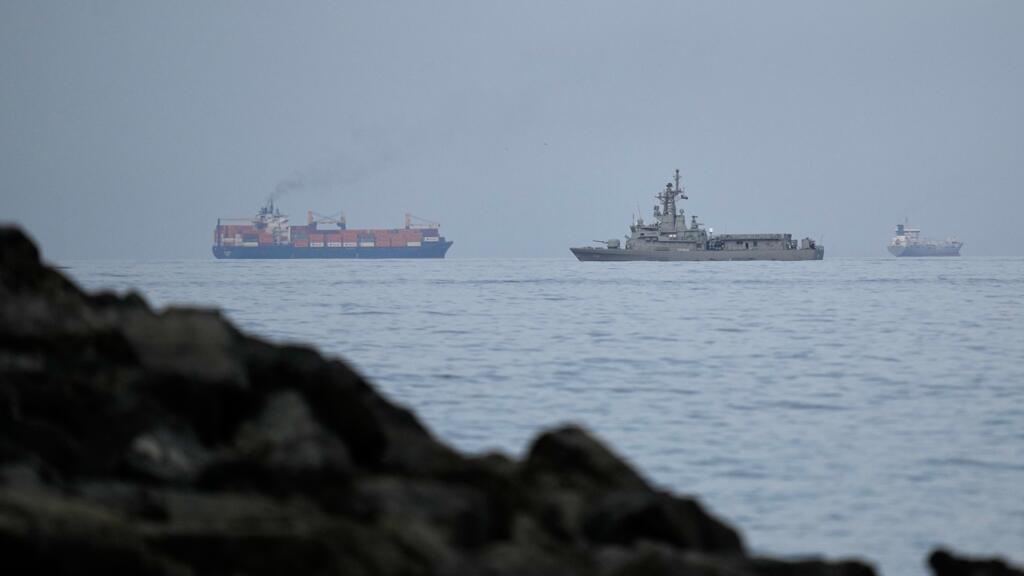
On March 30, 2026, the National Security Committee of the Islamic Parliament of Iran passed the "Hormuz Strait Management Plan," explicitly prohibiting the passage of ships from the United States, Israel, and countries participating in unilateral sanctions against Iran, while establishing the armed forces' absolute control over this strategic waterway. This move strongly resonates with the current US-Iran military confrontation, pushing the lifeblood of global energy and geopolitical games to a new tipping point.
According to the plan's details, the Iranian armed forces will fully take over the management of navigation in the strait, set up a toll system settled in rials, and introduce an access mechanism similar to the Bosporus Strait in Turkey and the Suez Canal in Egypt. This directly responds to the ongoing military pressure from the US's continuous troop buildup in the Middle East — as of March 30, the number of F-35 jets deployed by the US military at bases in Jordan had reached three times the usual amount, and the USS Ford carrier strike group had entered the Mediterranean, coordinating with the USS Lincoln to form a pincer encirclement of the Persian Gulf.
On the military level, the Iranian Revolutionary Guard simultaneously upgraded countermeasures. Satellite images show that E-3 warning aircraft at the Saudi Prince Sultan Air Base were destroyed in an attack on the 29th, and multiple facilities at the US base in Bahrain were damaged. More notably, Iran has expanded its strike targets to include the "residences of political and military personnel of hostile forces" and, for the first time, listed American universities in West Asia as legitimate targets, forming a three-dimensional deterrence system across sea, land, and air.
On the economic front, the new regulation essentially institutionalizes the use of energy as a weapon. The Strait of Hormuz carries 35% of the world's liquefied natural gas and 20% of crude oil shipments. Through toll systems and access restrictions, Iran can direct economic countermeasures precisely at the countries that impose sanctions. Data shows that in 2025, Iran spent over $8.7 billion to maintain the security of the strait. The new regulation turns these costs into strategic bargaining chips.
The U.S. State Department claims that 'negotiations are still ongoing,' but Iranian Foreign Minister Al Araghchi clearly refused to open the U.S. letter, returning the so-called 'missile proposal.' This trust deficit stems from historical experience: in June 2025, during the '12-Day War,' Israel airstruck the Khondab nuclear facility; in February 2026, the U.S. military shot down an Iranian drone in the Gulf of Oman; in March, a joint U.S.-Israel airstrike resulted in two attacks on Isfahan University of Technology. Iranian nuclear facilities and research institutions have become key targets, forcing Tehran to place survival and security above negotiation priorities.
Military developments corroborate this assessment. Israeli Prime Minister Netanyahu announced on the 29th the expansion of a 'buffer zone' in southern Lebanon and the establishment of three strategic footholds in Syria, Gaza, and Lebanon, forming an encirclement of Iran's allies. In response, the Iranian Revolutionary Guard designated U.S. early-warning and refueling aircraft as priority targets and successfully forced part of the U.S. forces to withdraw from the radar coverage area on Iran's border.
The new regulation immediately triggered a chain reaction. According to the British Maritime Trade Operations office, attacks in the Persian Gulf surged 160% year-on-year in March, with 24 commercial ships encountering suspicious activity. More severe is that the Gulf region supplies 45% of the world's sulfur (a key ingredient in phosphate fertilizers), and it is currently peak spring planting season in the Northern Hemisphere. The UN Conference on Trade and Development warned that the conflict could result in a food crisis affecting 100 million people.
Regional countries show divided stances. Pakistan, Turkey, Egypt, and Saudi Arabia formed a four-nation foreign ministers' committee attempting to mediate a ceasefire; Oman has cooperated with Iran to establish a legal framework to maintain the strait's neutral status. This division reflects the strategic dilemma faced by Middle Eastern countries in the U.S.-Iran game: they need to guard against the risk of energy supply disruptions while avoiding being drawn into a great power conflict.
In this geopolitical struggle, the new Strait of Hormuz regulation is both a defensive move and an offensive strategic tool for Iran. Its effectiveness will depend on three variables: whether U.S. forces cross Iran's 'red lines,' whether regional countries can form an effective mediation mechanism, and how the international community weighs energy security against geopolitical stability. When strategic waterways become the chessboard of great power games, any miscalculation could trigger a global crisis.

Recently, the British government, in accordance with the "Steel Industry (Nationalization) Act" that came into effect on July 16th, took the British Steel Company, which is controlled by China Jiefang Group, into state ownership without compensation.

Recently, the British government, in accordance with the "S…

On July 23rd local time, the US Trade Representative Office…

The international crude oil market saw a sharp one-sided ri…

Recently, the geopolitical confrontation between the United…

The New York Times has recently clashed with the Trump admi…

Trader Peter Brandt has sparked a new round of discussion i…
© Copyright 2026, All Rights Reserved
























