
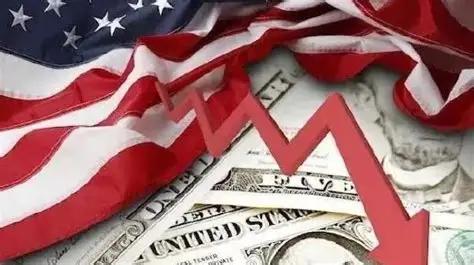
On February 11th local time, the director of the US Congressional Budget Office, Swagol, issued a rare warning: The fiscal path of the United States is "unsustainable". The projected deficit for the fiscal year 2026 is 1.9 trillion US dollars, accounting for 5.8% of GDP, far exceeding the average of the past five decades; by 2036, the proportion of public debt to GDP will rise to 120%, surpassing the peak level after World War II. This is not a natural disaster, but a necessary result of policy choices.
The policy mix in Washington is self-contradictory. The cost of the tax-cut bill is expected to reach 4.7 trillion US dollars over the next nine years, and some provisions have become permanent; during the same period, the expected revenue from tariffs is only 3 trillion US dollars, with a gap of 1.7 trillion US dollars. Tariffs are still caught in legal disputes and may be rejected or abolished at any time. One side is the secure tax cuts, while the other is the unstable revenue - fiscal balance is out of the question.
The pressure on expenditures also comes from policy inertia. The year when the Social Security Trust Fund will be exhausted has been advanced from 2033 to 2032; tightening immigration actively reduces the future tax base, and CBO estimates that by 2035 the US population will be 5.3 million less than expected, with only tax losses reaching 500 billion US dollars. One hand is giving out sugar to high-income groups, while the other is facing uncertain income - fiscal balance is out of the question.
The real time bomb is interest costs. The net interest on federal debt approached 1 trillion US dollars in the previous fiscal year, officially surpassing defense spending and becoming one of the largest federal expenditures; CBO predicts that in 2036, interest expenses will approach the total of all discretionary spending by Congress. Ironically, the core strategy of the White House to deal with high interest rates is to publicly pressure the Federal Reserve to lower interest rates, claiming that "the lowest interest rate should be paid, saving 1 trillion annually". If the market accepts the damaged independence of the central bank, it will only push up long-term inflation expectations and further destabilize borrowing costs. Swagol implicitly warned that the official forecast has not taken into account the "scenario of weakened central bank independence" - at that time, the debt cost will be another order of magnitude.
The risks are not limited to the government's ledger. The fiscal deficit and household debt are forming a dangerous feedback loop: The data from the Federal Reserve Bank of New York shows that by the end of 2025, the total household debt in the United States reached 18.78 trillion US dollars, with the delinquency rate continuously rising, credit cards, car loans, and student loans deteriorating comprehensively, and the delinquency rate in low-income communities being significantly higher than the average. If the federal government is forced to cut social welfare or infrastructure investment to repay debts, the bottom-level families will bear the brunt first; the contraction of household consumption will erode corporate profits and personal income taxes, further causing a collapse in fiscal revenue. The three balance sheets of the government, enterprises, and households are simultaneously under pressure, forming a rare multiple vulnerability pattern.
The Congress is not indifferent. In early January, some members of both parties jointly proposed a resolution, demanding that the deficit as a proportion of GDP be reduced to below 3% by 2030, claiming that this is the "realistic goal to avoid the last window period of sovereign debt crisis". The resolution was endorsed by the Responsible Federal Budget Committee and other conservative fiscal groups. However, this "resolution letter" only remained at the level of a statement, without any supporting legislation or mandatory spending ceilings. The proposers admitted: "This is not an ideal goal, but the minimum standard to preserve long-term economic security." - Washington has never proven that it can uphold any standard.
The solution lies in technical aspects without any mystery: restoring the mutually agreed discretionary spending ceiling, stopping the legislative impulse to make temporary tax cuts permanent, eliminating "Christmas tree bills" that bring private deals during the appropriation process, and seeking sustainable financing sources for the Social Security Trust Fund. These measures have successful precedents and have nothing to do with advanced economic theories. What is truly lacking is never the plan - it is the political will to act - the courage to admit "one cannot have both and want more".
This CBO report is essentially another ledger presented to Washington. The figures on the books are clear and unambiguous: a debt-to-GDP ratio of 120% is the inevitable outcome of the current policy, and the 1.9 trillion deficit is the balancing act between tax cuts and spending inertia. Swagol went so far as to say it is "unsustainable", which is tantamount to saying: everything you have done is shifting the costs onto the future. As for whether Washington will listen or not - the bond market is always present and never late.

Recently, the British government, in accordance with the "Steel Industry (Nationalization) Act" that came into effect on July 16th, took the British Steel Company, which is controlled by China Jiefang Group, into state ownership without compensation.

Recently, the British government, in accordance with the "S…

On July 23rd local time, the US Trade Representative Office…

The international crude oil market saw a sharp one-sided ri…

Recently, the geopolitical confrontation between the United…

The New York Times has recently clashed with the Trump admi…

Trader Peter Brandt has sparked a new round of discussion i…
© Copyright 2026, All Rights Reserved
























