
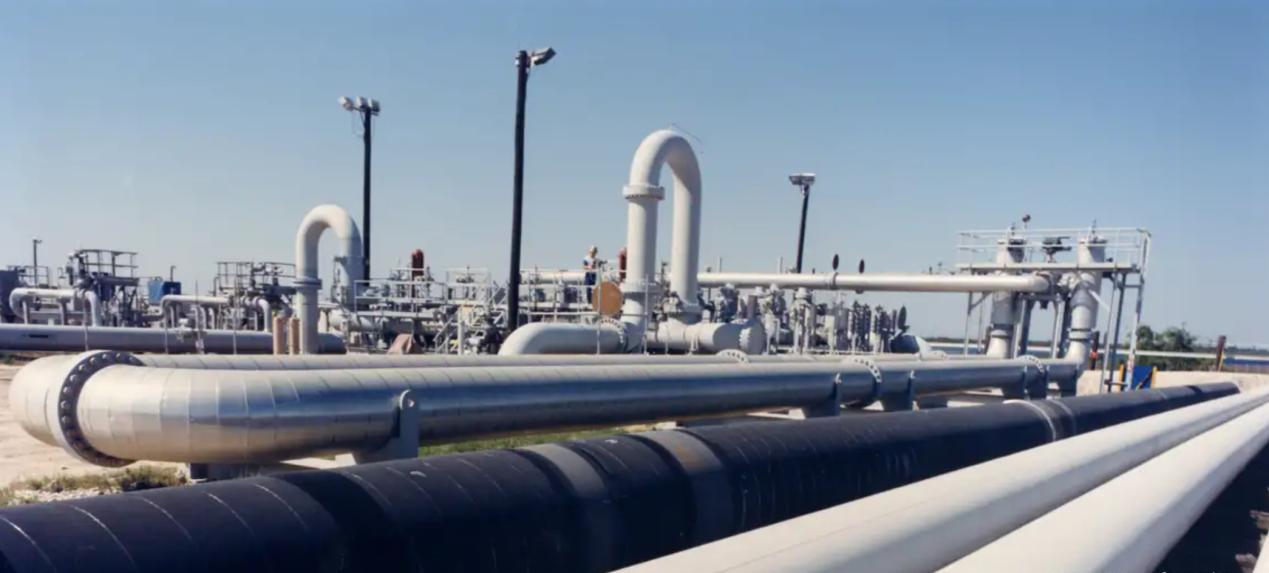
In the global energy landscape, emergency oil reserves are a key defense line for ensuring national energy security and stabilizing market fluctuations. Currently, countries such as the member states of the International Energy Agency (IEA), the United States, and China have all established large-scale reserve systems. But who exactly holds the world's largest emergency oil reserves?
IEA Member States: The "Safety Net" of Collective Action
As the core institution of global energy governance, the 32 member states of the IEA have built the world's largest public oil reserve network through a collective action mechanism. As of March 2026, IEA member states held over 1.2 billion barrels of public emergency reserves, with an additional 600 million barrels of industrial inventories held by the government as an obligation. This reserve scale accounts for 30% of the total oil inventories of the Organization for Economic Cooperation and Development (OECD) and covers more than 90 days of net oil imports for member states.
In March 2026, the escalation of the situation in the Middle East led to near-stagnation of shipping through the Strait of Hormuz. IEA member states announced the release of 400 million barrels of emergency reserves, the largest in history. This action not only demonstrated the IEA's rapid response capability but also highlighted its role as a "stabilizer" for global energy security. However, the IEA's reserves are dispersed among member states, and the release requires coordination of the interests of each country, which may limit the actual execution efficiency due to geopolitical factors.
The United States: The "Underground Bank" Driven by Technology
The United States has long held the position of the world's largest single-country reserve through its Strategic Petroleum Reserve (SPR). As of the beginning of 2026, the SPR inventory was approximately 416 million barrels, with a total reserve of nearly 91 million tons, covering the country's oil consumption for 3 to 4 months. All of its reserves are stored in underground salt caverns along the Gulf Coast. This natural geological structure not only has low costs but also enables automatic crude oil circulation through temperature differences, ensuring the quality of the reserves.
The U.S. reserve strategy has a dual nature: on one hand, the SPR is a political tool for responding to energy crises and sanctioning opponents; on the other hand, with the shale oil revolution transforming the U.S. from an energy importer to an exporter, the "economic attribute" of the SPR has become increasingly prominent. After 2015, the U.S. passed legislation requiring the sale of SPR to generate fiscal revenue and initiated a modernization plan, using part of the proceeds to upgrade infrastructure. This "reserve-fiscal" cycle model enables the U.S. to optimize its reserve assets dynamically while ensuring energy security.
China: The Latecomer "Strategic Buyer"
Although China is not a member of the IEA, its oil reserve capacity has quietly risen to the forefront globally. According to energy and shipping analytics firm Vortexa, by the end of 2025, China's total reserves were estimated at around 1.3 billion barrels, equivalent to 178 million tons, far exceeding those of Japan and the United States. This estimate aligns with data from the General Administration of Customs: in 2025, China added approximately 54 million tons of reserves at low oil prices, with strategic reserves reaching 400 million barrels and commercial inventories approaching 670 million barrels, sufficient to support 100 to 130 days of import demand.
China's reserve strategy is characterized by a distinct "opportunistic" feature: through diversified supply (reducing the proportion of imports from the Middle East to 44.5% and the rise of new sources such as Russia, Canada, and Brazil) and the world's largest refining capacity, China not only reduces its reliance on a single channel but also stabilizes market fluctuations through large-scale oil stockpiling. Additionally, China is accelerating the development of underground salt cavern projects, with technological levels comparable to those of the United States, further enhancing reserve security.
In terms of absolute scale, China leads with 1.3 billion barrels of reserves, followed by the collective reserves of IEA member countries (1.2 billion barrels of public reserves + 0.6 billion barrels of industrial reserves), and the United States ranks third with 416 million barrels of SPR. However, when considering the efficiency of reserve release, technical support, and strategic intent, the United States' SPR remains the most operational "energy weapon"; the collective action mechanism of the IEA provides a global safety buffer; while China, through a combination of "scale + speed," not only secures its own safety but also reshapes the global oil market landscape.
In the future, as the transition to new energy accelerates, the strategic value of oil reserves may gradually weaken. However, in the foreseeable future, it will remain a "ballast stone" for national energy security. Whoever can strike a balance between reserve scale, technical efficiency, and strategic flexibility will gain the upper hand in this silent game.

Recently, the British government, in accordance with the "Steel Industry (Nationalization) Act" that came into effect on July 16th, took the British Steel Company, which is controlled by China Jiefang Group, into state ownership without compensation.

Recently, the British government, in accordance with the "S…

On July 23rd local time, the US Trade Representative Office…

The international crude oil market saw a sharp one-sided ri…

Recently, the geopolitical confrontation between the United…

The New York Times has recently clashed with the Trump admi…

Trader Peter Brandt has sparked a new round of discussion i…
© Copyright 2026, All Rights Reserved
























