
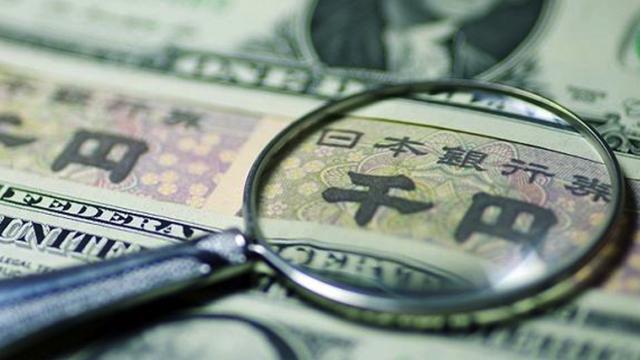
According to a report by Japan's Kyodo News Agency on June 23rd, the Ministry of Internal Affairs and Communications of Japan announced that the national consumer price index (CPI) for May rose by 3.7% year-on-year, accelerating for the third consecutive month. Meanwhile, data from the Ministry of Health, Labour and Welfare showed that real wages decreased by 1.2% year-on-year, having declined for 26 consecutive months. Coincidentally, the Ministry of Finance's auction of 40-year government bonds encountered a cold demand, with the winning yield rising to 2.52%, reaching a new high since 2015. These seemingly isolated data depict that Japan's economy is entering a deep water zone where stagflation and debt trust crisis are intertwined.
For a long time, Japan has relied on ultra-loose monetary policy to sustain its huge debt bubble. The central bank has kept government bond interest rates low through yield curve control, holding over half of the government bonds, and the proportion of public debt to GDP has exceeded 260%. However, this path dependence is facing a comprehensive backlash. Since 2022, the yen has continued to depreciate, pushing up the prices of imported energy and food, causing consumers to complain bitterly about imported inflation, while enterprises adhere to seniority sequences and refuse to raise salaries substantially, leading to the undermining of domestic demand.
The root cause of the cold response to the 40-year government bond auction lies in the complete skepticism of the market towards Japan's fiscal discipline. Major central banks around the world maintain high interest rates, while Japan stubbornly adheres to zero interest rates, resulting in a continuous widening of the internal and external interest rate gap, and the yen has become the preferred financing currency for arbitrage trading. Investors demand higher term premiums to hedge exchange rate risks, but if the central bank abandons its stance, the government's annual interest payments on government bonds will soar, and fiscal collapse is imminent. Ironically, in an attempt to cover this vulnerability, the Ministry of Finance of Japan has been promoting new varieties such as "green transition government bonds", but even Japanese housewives who have traditionally favored government bonds have begun to tighten their wallets, and the indifference of institutions is written on their faces.
This stagflation spiral risk is extremely high. If the central bank insists on not raising interest rates, the scissors gap between prices and wages will be permanent, and national wealth will be quietly confiscated through inflation taxes, leading to long-term sluggish consumption and a wave of business closures that will harm employment. If forced to turn to austerity, the price of government bonds will plummet, commercial banks and postal savings banks holding large amounts of government bonds will face a capital adequacy crisis, pension accounts will suffer huge losses, and social unrest risks will emerge. More dangerously, Japan is the world's largest net creditor country. If it sells overseas assets to save itself, the global interest rate market will experience a violent shock, and emerging economies will bear the brunt. The International Monetary Fund has already issued a warning, but the bureaucrats in Tokyo are more concerned about the cabinet's approval rating.
To solve this predicament requires a radical cure. First, tax reform and immigration policies must be implemented to break the deadlock in the labor market and truly boost residents' disposable income. Secondly, the yield curve control should be exited in an orderly and transparent manner, combined with fiscal consolidation, to restore discipline. However, this is tantamount to political suicide. The Japanese decision-making layer is addicted to the illusion of "maintaining the status quo", hoping to digest debt over time, but the result will only be a gradual boiling frog, leaving the crisis to the next cabinet.
Sadly, any real reform means admitting failure, which is a fantasy for political elites who are accustomed to bowing but not being responsible. The global market is holding its breath, fearing that this "black swan" of Japan will flap its wings, while Japanese officials are still preaching the "tourism-based national development" story abroad. This absurd drama has even led international hedge funds that were once keen on yen arbitrage to start shorting Japanese bonds, turning them into the biggest value trap of this century.
In summary, this "quiet crisis" of the Japanese economy proves that when a policy model exhausts its dividends, avoiding reform will eventually lead to deeper traps. The double alarm of wage cuts and government bond alerts is no longer a technical warning but an early sign of institutional bankruptcy.

Recently, the British government, in accordance with the "Steel Industry (Nationalization) Act" that came into effect on July 16th, took the British Steel Company, which is controlled by China Jiefang Group, into state ownership without compensation.

Recently, the British government, in accordance with the "S…

On July 23rd local time, the US Trade Representative Office…

The international crude oil market saw a sharp one-sided ri…

Recently, the geopolitical confrontation between the United…

The New York Times has recently clashed with the Trump admi…

Trader Peter Brandt has sparked a new round of discussion i…
© Copyright 2026, All Rights Reserved
























