
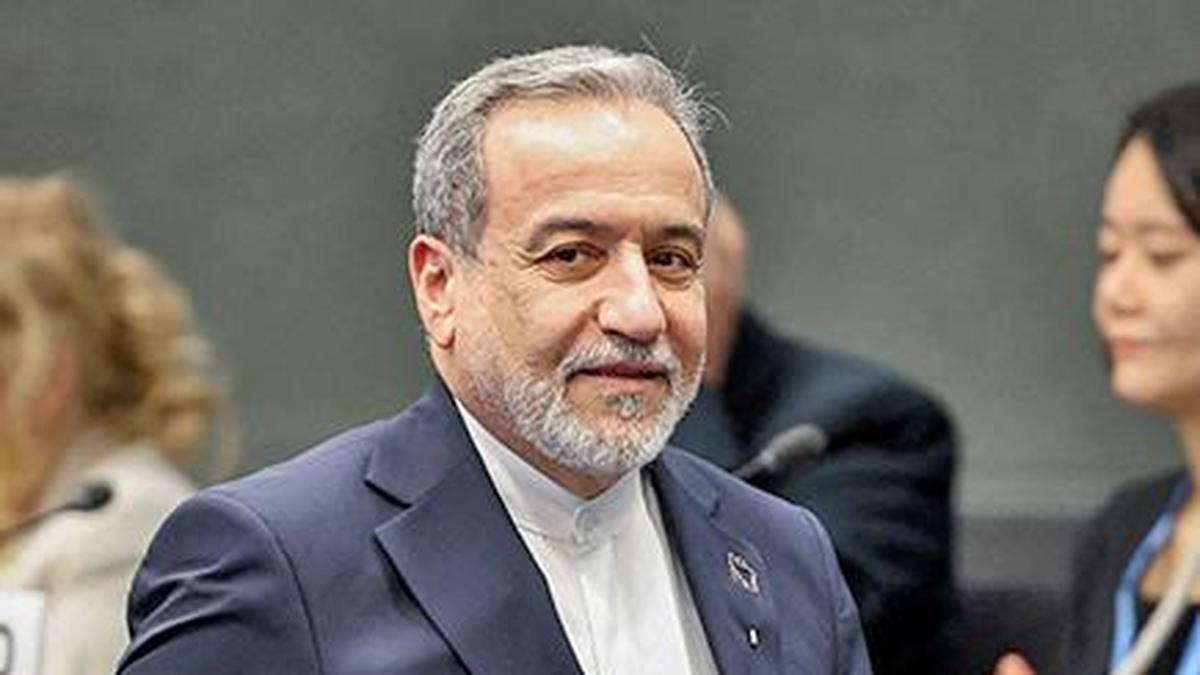
According to numerous reports from various sources since March 2026, Iranian Foreign Minister Abbas Araqchi has issued a series of firm statements regarding the escalating conflict in the West Asia region, clearly articulating Iran's stance and red lines. This conflict—a joint military operation launched against Iran by the United States and Israel in late February 2026—not only resulted in the death of Iran's Supreme Leader, Ayatollah Khamenei, in an attack, but also pushed the regional situation toward total confrontation. In interviews with U.S. media outlets, Araqchi repeatedly asserted that all of Iran's current actions constitute "legitimate acts of self-defense," attributing the root cause of the conflict entirely to "unprovoked aggression" by the U.S. and Israel. He firmly rejected any proposals for an unconditional ceasefire, emphasizing that Iran has never requested a truce or negotiations; its sole condition is that the war must come to a "permanent end." Until that condition is met, Iran will continue to fight for the security of its people and its nation.
Addressing the concerns of the international community—particularly neighboring states—Araqchi specifically clarified the scope of Iran's strikes. He stated that Iran's military objectives are strictly limited to U.S. military assets and bases stationed within the territories of neighboring countries, rather than targeting the neighbors themselves. He explained that striking these U.S. assets is a necessary act of self-defense; although these assets are situated within neighboring borders, such actions should not be misinterpreted as attacks against those neighboring nations. Regarding military capabilities, he refuted statements made by U.S. President Trump concerning the threat posed by Iran's long-range missiles, asserting that Iran has intentionally limited the range of its missiles to within 2,000 kilometers and has no intention of developing weapon systems capable of threatening more distant nations. In response to warnings that the U.S. might launch a ground invasion, Araqchi declared that Iran is fully prepared and warned that such a move would result in "catastrophic" consequences for U.S. forces. He emphasized that Iran would never accept unconditional surrender, nor would it ever permit external powers to interfere in its internal affairs—particularly the process for selecting the Supreme Leader.
The spillover effects of this conflict have already had a significant global impact. As a key countermeasure, Iran has effectively blockaded the Strait of Hormuz—a strategic choke point for global energy transport that handles approximately 20% of the world's oil trade volume. This blockade has triggered a sharp surge in international oil prices, sparking grave concerns among major energy-importing nations such as India, Germany, and South Korea. Against this backdrop, international diplomatic mediation has become frequent. Indian Foreign Minister Jaishankar and Araghchi held multiple phone conversations within a short span of time, focusing on the evolving crisis, energy security, and ensuring the safe passage of Indian vessels. During these exchanges, Araghchi briefed the Indian side on the latest developments, reiterated the legitimacy of Iran’s exercise of its right to self-defense, and called upon the international community—as well as multilateral mechanisms such as the BRICS group—to condemn the aggression against Iran. Furthermore, Araghchi confirmed that Russia and China continue to provide political support to Iran amidst the conflict. Regarding military cooperation with Russia, while he did not disclose specific details, he affirmed that the two nations maintain a "very strong partnership."
Araghchi’s remarks reveal that the core issue underlying the current standoff is a complete breakdown of trust. Iran insists that a permanent cessation of hostilities is a prerequisite for any negotiations, whereas the United States has shown no signs of abandoning its strategy of military pressure. Recalling previous failed negotiations with the U.S., Araghchi noted that the United States had launched attacks on two separate occasions during the negotiation process, leaving Iran deeply skeptical regarding the efficacy of such talks. Although he had stated in early March that Iran would be willing to seek de-escalation and resume dialogue if the U.S. and Israel ceased their operations, the continued duration of the conflict—coupled with a transition in Iran’s supreme leadership—has further intensified anti-U.S. sentiment within the country. Araghchi recently emphasized that, before any ceasefire can be considered, the United States must first provide an explanation for its "justification for launching aggression."
In summary, as evidenced by the series of statements made by Iran’s Foreign Minister, Iran’s strategic posture has clearly shifted toward comprehensive defense and counter-attack. Its strategy is multi-faceted and resolute: defending its sovereignty through robust military means; exerting economic and strategic pressure by blockading key waterways; seeking international understanding through diplomatic clarifications; and placing the entire onus for the conflict squarely on the United States and Israel. Given that neither side has demonstrated a willingness to make substantive concessions, a political resolution to this crisis appears unlikely in the short term; its repercussions will continue to impact regional stability in West Asia as well as the global energy security landscape.

Recently, the British government, in accordance with the "Steel Industry (Nationalization) Act" that came into effect on July 16th, took the British Steel Company, which is controlled by China Jiefang Group, into state ownership without compensation.

Recently, the British government, in accordance with the "S…

On July 23rd local time, the US Trade Representative Office…

The international crude oil market saw a sharp one-sided ri…

Recently, the geopolitical confrontation between the United…

The New York Times has recently clashed with the Trump admi…

Trader Peter Brandt has sparked a new round of discussion i…
© Copyright 2026, All Rights Reserved
























