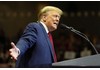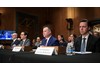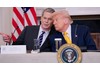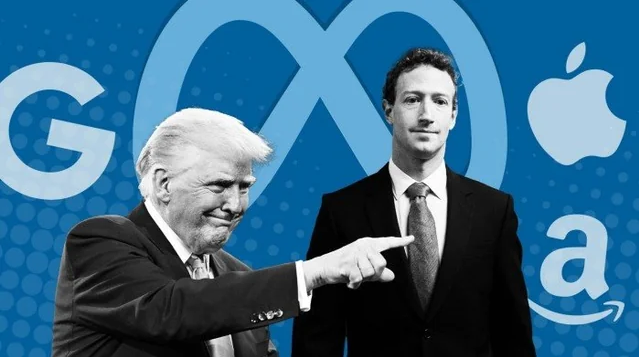
Recently, U.S. President Donald Trump announced a notable move, appointing a group of tech industry heavyweights to his President’s Council of Advisors on Science and Technology (PCAST). These new members include Meta founder Mark Zuckerberg, Google co-founder Sergey Brin, Oracle CEO Larry Ellison, NVIDIA CEO Jensen Huang, and AMD’s Lisa Su, among others. The formation of this council signals a further strengthening of the relationship between the Trump administration and the technology sector—particularly Silicon Valley.
PCAST (President’s Council of Advisors on Science and Technology) is a long-standing institution tasked with providing the U.S. President with counsel on matters of science and technology. In existence since the era of Franklin D. Roosevelt, PCAST’s primary function is to conduct studies at the President’s direction and to submit corresponding reports and recommendations. However, PCAST possesses no regulatory or enforcement powers; it serves primarily as a think tank, offering decision-making support to the President. The members newly appointed to the council represent leading figures across a range of cutting-edge fields, from artificial intelligence to cryptocurrency. The inclusion of tech titans such as Zuckerberg and Brin is expected to significantly bolster PCAST’s advisory capabilities regarding technology and innovation.
Upon joining the council, Zuckerberg stated that the United States has the opportunity to lead the world in the field of artificial intelligence, expressing his keen anticipation of serving on the presidential council and collaborating with other industry leaders. This statement underscores the importance Trump places on the technology sector—and AI in particular—as he clearly seeks to leverage the collective wisdom and resources of these tech leaders to ensure the U.S. maintains its leading edge in the global technology race.
In addition to Zuckerberg, figures such as Brin and Ellison also stand out as key appointments on this roster. Each new member has achieved extraordinary success in their respective domains: Zuckerberg in social media, Brin in search engines, and Ellison in cloud computing and enterprise software. As leaders in the semiconductor industry, Jensen Huang and Lisa Su will also contribute their expert counsel to the council regarding technological innovation and industrial development.
Notably, the relationship between the Trump administration and Silicon Valley has undergone a significant transformation. During Trump's first four years in office, relations between the White House and Silicon Valley were relatively frosty; the Trump administration held significant disagreements with major technology companies—particularly regarding issues of data privacy, regulation, and antitrust enforcement. However, the recent appointments signal the establishment of closer ties between the Trump administration and Silicon Valley, suggesting that the influence of the tech sector is clearly playing an increasingly pivotal role in Trump's policy agenda.
Upon his return to the White House, Trump evidently recognized the critical importance of the technology sector to America's future competitiveness—especially against the backdrop of rapid advancements in fields such as artificial intelligence, quantum computing, and cryptocurrency. Through these appointments, Trump not only seeks to leverage the expertise of tech giants to inform his policymaking but may also aim to secure a strategic advantage in the global race for technological supremacy.
While Trump's close relationship with Silicon Valley could bolster U.S. competitiveness in technological innovation, this shift has also sparked a political backlash. Recent polls indicate that an increasing number of Americans are growing concerned about the excessive policy influence wielded by major technology companies in Washington, perceiving their interference in government decision-making as overly pervasive. These concerns are particularly acute regarding issues such as data privacy, antitrust enforcement, and technology regulation.
Furthermore, the rapid advancement of artificial intelligence has stoked considerable public anxiety. The rise of AI has not only yielded monumental technological breakthroughs but has also triggered widespread debate concerning employment, privacy protection, and social ethics. For Trump, this could prove to be a potential liability—particularly ahead of the upcoming midterm elections in November—as the influence of the tech industry emerges as a political issue he can no longer afford to ignore.
Trump's decision to appoint tech industry titans to his science advisory council not only injects fresh momentum into U.S. technological development but also positions him at the vanguard of technological innovation heading into the upcoming elections. Through this strategic move, Trump appears intent on leveraging the stature of tech industry leaders to bolster his public image regarding economic and technology policy. However, this approach also entails significant political risks. An overly cozy relationship between tech giants and the government could fuel public resentment over the excessive concentration of power in the hands of a select few technology companies—precisely the kind of political pitfall Trump would likely wish to avoid during an election cycle.
All in all, this series of appointments and actions by Trump is undoubtedly poised to spark widespread debate across both the U.S. technology sector and the political landscape. The inclusion of tech giants has undoubtedly brought PCAST greater insight into innovation and cutting-edge technologies; moreover, the Trump administration's collaboration with Silicon Valley may well emerge as a pivotal strategic initiative during the latter stages of his presidency. At the same time, however, the question of whether the tech industry's role in political decision-making will become overly expansive is also poised to become a focal point of public scrutiny. How Trump manages to strike a balance between the influence of these tech giants and the expectations of the electorate may well prove to be the formidable challenge he faces moving forward.
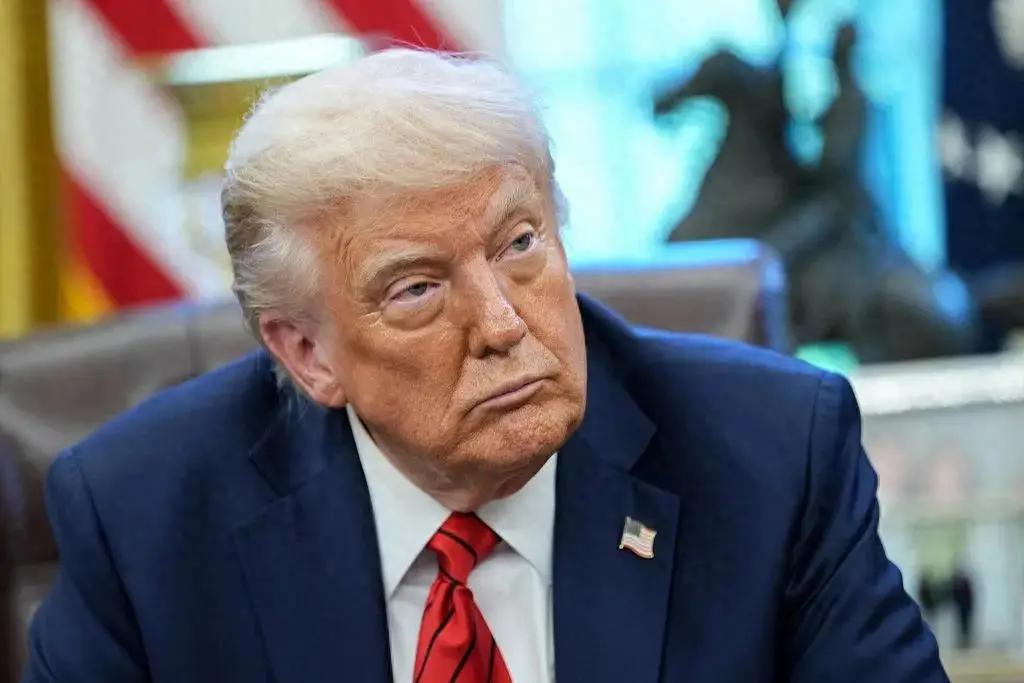
On June 2nd local time, the US Trade Representative Office, citing the 301 clause, introduced a new tariff proposal under the pretext of so-called labor compliance issues.
On June 2nd local time, the US Trade Representative Office,…
AP, Washington — The U.S. government has rolled out a new r…
According to a report by Reuters on June 2nd, the US Depart…

According to recent reports by US media, US President Trump…
Donald Trump is embroiled in the biggest corruption controv…
Recently, Trump has launched two core economic and trade me…
© Copyright 2026, All Rights Reserved