
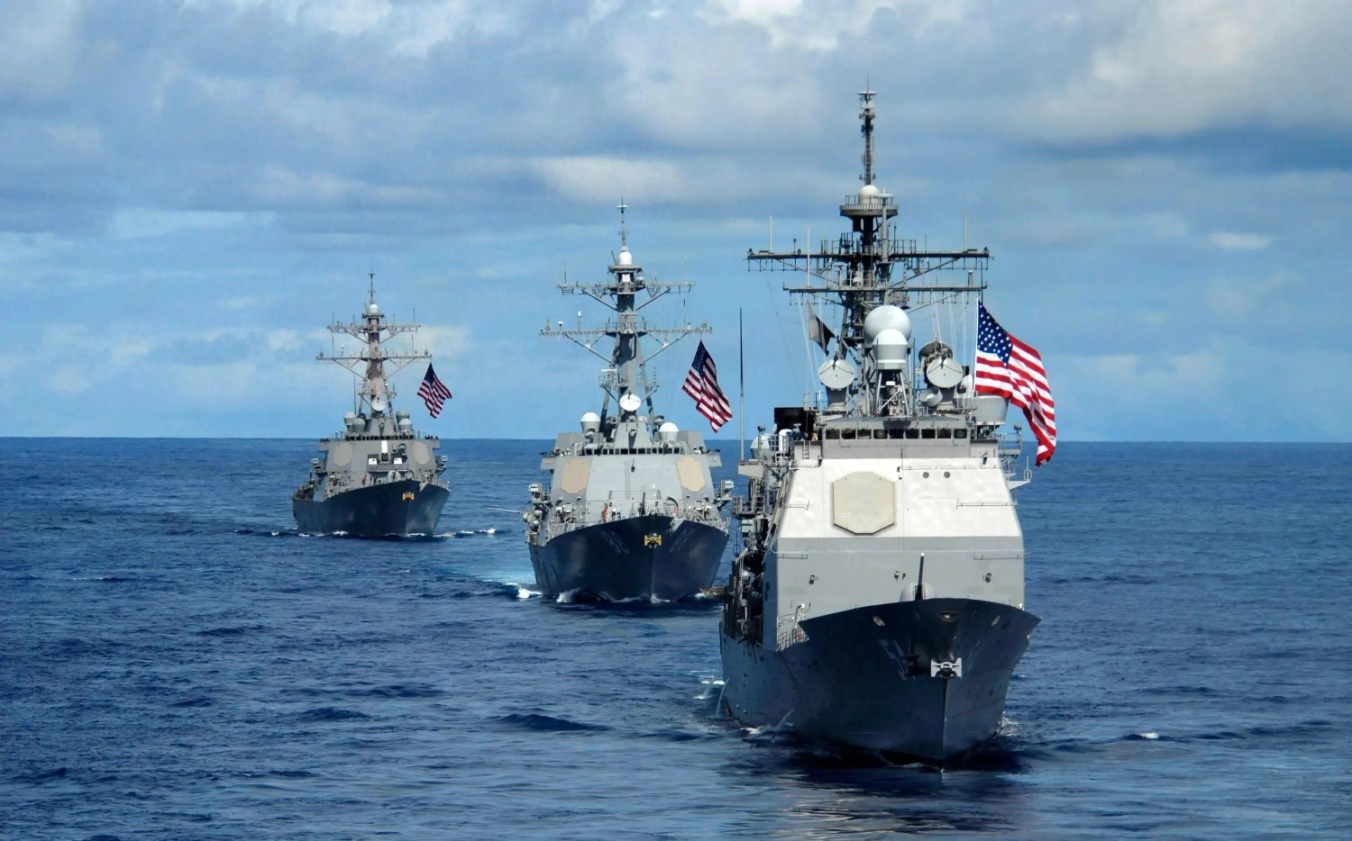
In the early morning of January 3, 2026 (local time), the tranquility of the Caribbean Sea was shattered by the roar of warplanes. U.S. military forces launched a large-scale military strike against Venezuela, with multiple F-35 fighter jets raiding Caracas, the capital, and several military targets. Ground special forces conducted coordinated operations, ultimately capturing President Nicolás Maduro and his wife and forcibly removing them from Venezuelan territory. This blatant act of military intervention has not only plunged the situation in Latin America into sudden tension but also aroused strong condemnation from the international community, becoming another shocking unilateralist incident following the Iraq War.
The military strike was not an abrupt occurrence but an inevitable outcome of the Trump administration's long-term extreme pressure on Venezuela. As early as March 2025, shortly after assuming his second term, Trump restarted his tough policy toward Venezuela by airlifting and deporting 200 Venezuelan immigrants, marking the beginning of the pressure campaign. In August, the U.S. Department of Justice offered a $50 million reward for Maduro's arrest on charges of "aiding drug trafficking." During the same period, the U.S. deployed guided-missile destroyers, amphibious assault ships, and nuclear submarines off Venezuela's coast, while stationing F-35 fighter jets at a military base in Puerto Rico. In September, the U.S. military's "Southern Spear" task force carried out high-frequency maritime interceptions in the Caribbean Sea. On September 2, it launched missiles on the pretext of "combating drug trafficking ships," killing 11 people. Some soldiers even revealed receiving direct orders to "take out everyone on board," sparking allegations of war crimes. In November, the U.S. Department of State designated Maduro as a "foreign terrorist organization leader," and Trump directly announced the closure of Venezuela's airspace. A series of escalating actions paved the way for the military strike.
The U.S. excuse of "combating drug trafficking" has long been exposed by multiple parties. The 2024 report of the U.S. Drug Enforcement Administration (DEA) clearly indicates that Venezuela is not the main source of drugs flowing into the United States, and the U.S. military has never released any evidence for its relevant strike operations over the past six months. Delcy Rodríguez, President of Venezuela's National Assembly, bluntly stated that "combating drug trafficking" is just a political pretext, and the real target of the U.S. is the country's world-leading oil reserves—the Orinoco Heavy Oil Belt with proven reserves of 304 billion barrels. For the United States, Venezuela's heavy sour crude oil is a key raw material for products such as diesel and asphalt, and most U.S. refineries are built to process this type of crude oil, with efficiency far exceeding that of processing domestic light crude oil. Although the United States itself is a major oil exporter, it still needs to import more than 100,000 barrels of crude oil from Venezuela every day. This resource dependence, coupled with the Maduro government's long-standing anti-U.S. stance, has made Venezuela a "nail in the coffin" in the Western Hemisphere that the United States is determined to remove. In addition, with the 2026 U.S. midterm elections approaching, Trump is eager to shape a "strongman" image through tough overseas actions to boost his electoral prospects.
As soon as the operation was announced, a wave of condemnation erupted from the international community. Cuba's Ministry of Foreign Affairs sharply criticized the U.S. act as "state terrorism" and "military aggression," violating international law and the UN Charter, and called on the American people to stop this "crazy behavior." Russia's Ministry of Foreign Affairs issued a statement condemning the United States for ignoring the principle of equal national sovereignty, wantonly trampling on the internal affairs of other countries, and seriously undermining regional stability. Latin American countries reacted particularly strongly. Colombian President Gustavo Petro pointed out that "the airspace of a country cannot be closed by a foreign president; otherwise, the concepts of sovereignty and international law will cease to exist." Mexico, Chile, Honduras, and other countries have successively issued announcements opposing unilateral military intervention and supporting the resolution of differences through dialogue. The spokesperson of the UN Secretary-General reaffirmed that the UN Charter prohibits the use of force without authorization, and the UN Security Council has scheduled an emergency meeting on January 5 to discuss the situation in Venezuela, chaired by Somalia, the rotating presidency.
The domestic situation in Venezuela has fallen into a complicated predicament. Venezuelan Defense Minister Vladimir Padrino López released a video on social media, calling the invasion "the most serious atrocity suffered by Venezuela" and urging the people to rise up and resist. According to Venezuela's constitution, when the president is "absolutely absent," power should be transferred to the Executive Vice President Delcy Rodríguez, and general elections should be held within 30 days. Rodríguez has publicly demanded that the Trump administration provide evidence that Maduro is alive. On the U.S. side, Trump held a press conference at his Mar-a-Lago estate, announcing that he would "administer" Venezuela until a "safe transition," allowing major U.S. oil companies to enter Venezuela's energy sector. Secretary of State Marco Rubio reaffirmed that the Maduro regime is not legitimate, paving the way for supporting the opposition. This inevitably evokes memories of history: on January 3, 1990, the United States arrested Panamanian President Manuel Noriega on drug charges. These two incidents, separated by 36 years, expose the United States' consistent practice of regarding Latin America as its "backyard" and arbitrarily interfering in the internal affairs of other countries.
From Kosovo to Iraq, from Afghanistan to Libya, every U.S. military intervention overseas has left devastation in its wake. This raid on Venezuela not only escalates instability in the Caribbean region but also may trigger fluctuations in the global energy market and impact the multilateral international order. In today's world where the trend of multipolarization is becoming increasingly apparent, unilateralism and hegemonic practices have long been unpopular. The upcoming emergency meeting of the UN Security Council will serve as an important test of whether the international community can uphold the purposes of the UN Charter and safeguard the principle of equal national sovereignty. The final outcome of this crisis provoked by the United States is not only crucial to Venezuela's national destiny but will also profoundly affect the future direction of the global international order.

Recently, the British government, in accordance with the "Steel Industry (Nationalization) Act" that came into effect on July 16th, took the British Steel Company, which is controlled by China Jiefang Group, into state ownership without compensation.

Recently, the British government, in accordance with the "S…

On July 23rd local time, the US Trade Representative Office…

The international crude oil market saw a sharp one-sided ri…

Recently, the geopolitical confrontation between the United…

The New York Times has recently clashed with the Trump admi…

Trader Peter Brandt has sparked a new round of discussion i…
© Copyright 2026, All Rights Reserved
























