
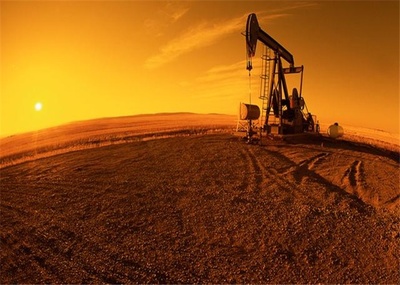
Since 2026, the escalation of conflicts in the Middle East, the intensification of U.S.-Iran tensions, coupled with adjustments in the global energy pattern, have brought oil—once weakened by the development of clean energy—back to the core of global power games, marking the comeback of the "energy weapon". International oil prices have fluctuated violently, key energy channels have been blocked, and the geopolitical attributes of oil have been reactivated. It has not only become an important variable affecting regional situations but also posed a significant threat to the global economic recovery, highlighting that the post-oil era still requires facing the severe challenge of energy security.
On February 28, the joint U.S.-Israeli attack on Iran led to a sharp escalation of the situation in the Middle East. In response, Iran immediately took countermeasures, threatening to block the Strait of Hormuz—a crucial waterway that carries one-fifth of the world's oil exports and a large amount of natural gas exports—directly triggering a global energy supply panic. Affected by this, international oil prices have risen by about 37% since late February, once breaking through $100 per barrel, a four-year high. Prices of derivatives such as diesel and aviation fuel have also surged sharply, further spreading to the global industrial chain.
A series of recent U.S. military operations have all hidden considerations of oil interests: the raid on Venezuela in early January aimed to control its oil resources; the military action against Iran in late February was not only to weaken Iran's influence in the Middle East but also to maintain the "petrodollar" hegemonic system—consolidating the dominant position of the U.S. dollar in the international monetary system by controlling oil resources and settlement channels, forming a closed loop of "military hegemony—petrodollar—dollar hegemony". At the same time, the United States has also imposed political coercion by cutting off oil supplies to Cuba, exacerbating the local humanitarian crisis and highlighting the instrumental value of oil in geopolitical games.
Despite the accelerated global energy transition, with two-thirds of energy expenditures invested in clean energy, the strategic status of oil remains irreplaceable. Data from the International Energy Agency (IEA) shows that although oil accounts for less than 30% of global energy demand, its global consumption is almost twice that of the early 1970s, and the supporting role of natural gas in the economy is far greater than ever before, meaning that the "post-oil era is still a long way off". The supply disruption caused by the current U.S.-Iran conflict, although not as severe as the impact of the oil embargo in the 1970s, is still sufficient to put pressure on the global economy, especially for European and Asian countries highly dependent on energy imports.
On March 9, international oil prices experienced a dramatic volatility with a single-day amplitude of over 40%. The main contract of U.S. WTI crude oil futures approached $120 per barrel at its highest point, then fell sharply after the U.S. side hinted that the war would end, highlighting the extreme impact of geopolitical situations on the energy market. Rising oil prices have pushed up global inflation expectations, and U.S. retail gasoline prices have surged sharply in the short term. If the upward trend continues, it will directly drag down its economic recovery, pose challenges to the monetary policy adjustments of central banks around the world, and leave small and medium-sized economies facing the dual pressures of imported inflation and slowing economic growth.
To hedge against geopolitical risks, 8 major oil-producing countries in OPEC+ announced a daily increase of 206,000 barrels in April, attempting to send a signal of supply guarantee and ease market panic. However, this increase is more symbolic than practical and cannot fundamentally alleviate the tight supply situation. The response strategies of various countries are differentiated: energy-poor countries are accelerating the deployment of renewable energy to seek energy independence; while resource-rich countries such as the United States may continue to rely on fossil energy, slowing down the pace of energy transition.
In the short term, the direction of the situation in the Middle East remains the core variable affecting the oil market. The navigation status of the Strait of Hormuz and the progress of U.S.-Iran conflicts will continue to influence oil price trends. In the long run, the interweaving of energy transition and geopolitical games will keep the "energy weapon" attribute of oil alive for a long time. Countries need to strike a balance between ensuring energy security, promoting energy transition and addressing geopolitical risks; otherwise, the global economy will continue to face the uncertain impact of oil geopolitical games.

Recently, the British government, in accordance with the "Steel Industry (Nationalization) Act" that came into effect on July 16th, took the British Steel Company, which is controlled by China Jiefang Group, into state ownership without compensation.

Recently, the British government, in accordance with the "S…

On July 23rd local time, the US Trade Representative Office…

The international crude oil market saw a sharp one-sided ri…

Recently, the geopolitical confrontation between the United…

The New York Times has recently clashed with the Trump admi…

Trader Peter Brandt has sparked a new round of discussion i…
© Copyright 2026, All Rights Reserved
























