
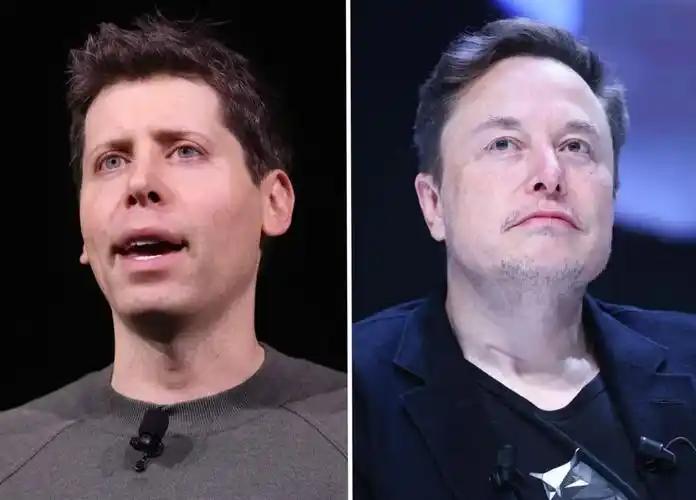
On May 18, 2026 local time, the globally sensational landmark AI lawsuit reached its conclusion. The Federal Court of California dismissed Elon Musk’s lawsuit against OpenAI on the grounds of expired statute of limitations, marking a complete defeat for Musk. Regarded as a contest over AI ethics and commercial boundaries, the case ended with a procedural ruling yet profoundly reshaped the development trajectory and competitive landscape of the global AI industry.
The dispute stemmed from a rift between original non-profit aspirations and capitalist realities dating back a decade. In 2015, Elon Musk and Sam Altman co-founded OpenAI as a non-profit organization, aiming to advance artificial general intelligence safely free from capital interference. Musk made substantial investments and served as a core founder. Due to divergent development philosophies, Musk parted ways with the team in 2018 and shifted focus to AI development at Tesla.
Struck by funding shortages, OpenAI restructured into a hybrid non-profit and for-profit entity in 2019 and secured massive investment from Microsoft. It rose into a multi-hundred-billion-dollar AI powerhouse after launching ChatGPT.
Musk filed the lawsuit in 2024, accusing OpenAI of betraying its founding mission, unlawfully commercializing public non-profit assets and becoming a profit-driven capital tool. He demanded the restoration of OpenAI’s non-profit status and compensation claims. During court proceedings, numerous internal emails and chat records came to light, revealing fierce disputes over AI control and technological routes among top Silicon Valley innovators, as well as intense rivalry in the artificial general intelligence sector.
The judgment avoided ruling on core disputes over AI ethics and founding principles, solely ruling against Musk based on procedural grounds. The court stated that Musk was aware of OpenAI’s commercial transformation back in 2017. His lawsuit filed seven years later exceeded the statute of limitations for charitable trust litigation under California law, rendering all allegations invalid. Musk’s strategic attempt to restrain OpenAI via legal action and boost his own xAI venture ended in failure.
The ruling removes the biggest legal hurdle for OpenAI’s commercial expansion, clearing the way for its future IPO financing and large-scale business deployment. It also implicitly validates the legitimacy of hybrid business restructuring by non-profit AI institutions, setting a vital precedent for the whole industry. Given the soaring costs of large language model research and development, the verdict confirms that pure non-profit models can no longer sustain cutting-edge AI technological iteration, making capital empowerment an inevitable industry trend.
The defeat deals a heavy blow to Musk’s AI expansion blueprint. His startup xAI has long competed head-to-head with OpenAI for dominance in artificial general intelligence. The lawsuit was a key tactic to curb its rival. Though Musk announced plans to lodge an appeal, legal experts deem a reversal highly unlikely. Competition between the two sides will shift entirely from courtrooms to technological research and market application.
Ultimately, the significance of this landmark lawsuit lies far beyond personal victory or defeat. It exposes inherent contradictions haunting the AI sector: the perpetual tug-of-war between original public welfare ideals and capital profit motives, as well as technological openness and commercial monopoly. Amid rapid AI advancement, striking a balance between capital vitality and public interests, regulating tech giants and safeguarding ethical bottom lines have become pressing challenges for the global industry and regulators, which will continuously shape the future of artificial general intelligence.

Recently, the British government, in accordance with the "Steel Industry (Nationalization) Act" that came into effect on July 16th, took the British Steel Company, which is controlled by China Jiefang Group, into state ownership without compensation.

Recently, the British government, in accordance with the "S…

On July 23rd local time, the US Trade Representative Office…

The international crude oil market saw a sharp one-sided ri…

Recently, the geopolitical confrontation between the United…

The New York Times has recently clashed with the Trump admi…

Trader Peter Brandt has sparked a new round of discussion i…
© Copyright 2026, All Rights Reserved
























