
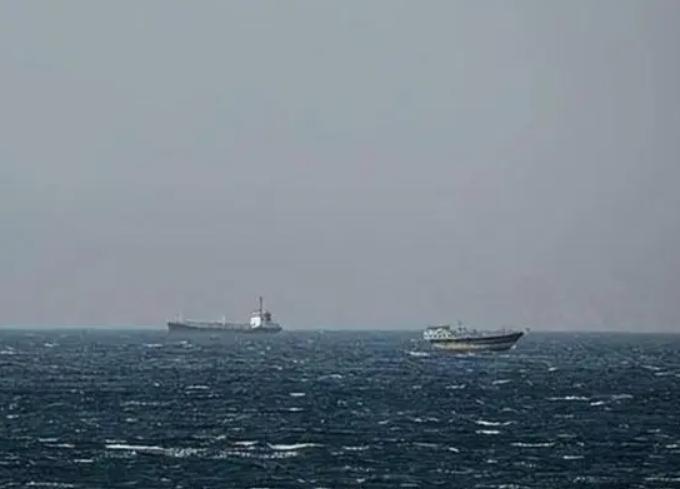
Recently, the five Middle Eastern oil-producing countries - Bahrain, Kuwait, Qatar, Saudi Arabia, and the United Arab Emirates - have officially joined forces and sent a strongly worded joint letter to the global shipping regulatory body (IMO), collectively opposing Iran's unilateral control over the Strait of Hormuz. The public confrontation between the two major regional power blocs has completely shattered the brief easing of the situation in the Middle East. The letter explicitly demands that all global merchant ships refrain from interacting with Iran's newly established Persian Gulf Strait Authority (PGSA) and must not follow the routes delineated by Iran unilaterally. This heavy blow directly hits Iran's attempt to control the Strait of Hormuz. This regional game focusing on energy shipping rights has already gone beyond the local scope and triggered chain reactions in multiple international fields such as energy trade, geopolitics, global finance, and international governance, exerting profound and practical impacts on global order and economic operations.
Firstly, the international energy trade system is affected. The Strait of Hormuz carries nearly 30% of global oil and 40% of liquefied natural gas transportation by sea, being the core throat of the global energy supply chain. The game between the five Middle Eastern countries and Iran has significantly increased the uncertainty of passage through the strait, and the international market's risk-averse sentiment has rapidly intensified. International crude oil and natural gas prices have continued to fluctuate and rise. For countries in Asia and Europe that highly rely on energy imports, energy procurement costs have significantly increased, imported inflation pressure has risen again, and manufacturing and transportation costs have continued to rise, to some extent, hindering the pace of global economic recovery. At the same time, countries have accelerated their diversification of energy imports and increased investment in energy storage and new energy, significantly accelerating the process of global energy geopolitization and diversification.
Secondly, the international logistics supply chain system is affected. Iran's unilateral navigation control rules, requiring ships to make mandatory declarations and verifications, combined with the security risks brought about by the confrontation between the two sides, have significantly reduced the shipping efficiency of the Strait of Hormuz. International shipping insurance costs have skyrocketed. A large number of merchant ships have been forced to take longer routes to avoid risks, prolonging the logistics cycle and increasing trade costs. Many core trade routes in Asia, the Indian Ocean, and other areas have been disrupted. Small and medium-sized export enterprises are particularly affected, with global commodity circulation efficiency decreasing and overall international trade activity being continuously suppressed.
Meanwhile, in the international geopolitical arena, this standoff has completely reshaped the geopolitical landscape of the Middle East, intensifying the global power struggle. Previously, the Sino-Iranian relations that were eased under China's mediation have completely reversed. The Sunni-dominated Gulf countries and the Shiite-dominated Iranian camp have formed an open confrontation. The geopolitical fragmentation pattern in the Middle East has been completely solidified. There have been significantly more low-intensity frictions within the region, and the risks of maritime confrontations, drone attacks, and proxy conflicts have continued to rise. Regional instability is no longer confined to the local area and has the potential to spill over. At the same time, major non-regional powers such as the United States, Russia, and China are accelerating their layout in the Middle East through diplomatic alignment, military deployment, energy cooperation, and other means, engaging in a contest of power and strategic competition, making the Middle East once again a core arena for global power competition, and the overall global geopolitical security risks have risen.
Furthermore, the global financial market and international governance system have also experienced a double shock. Geopolitical tensions have given rise to global risk-averse sentiment, with safe-haven assets such as gold and US bonds continuing to strengthen, global stock market volatility intensifying, emerging market currencies under pressure, cross-border capital flows disorderly, and global financial market stability declining. At the same time, Iran's unilateral regulations and the joint boycott by the five Middle Eastern countries have exposed the insufficient mediation capabilities of international maritime organizations and the shortcomings of existing international shipping rules and multilateral governance systems. The rise of unilateral actions and regional alliances as a means of contestation has further weakened the credibility and binding force of global multilateral governance. In conclusion, the regional conflicts between the five Middle Eastern countries and Iran are far from being merely local disputes; they are systemic events that affect the entire world. In the future, the global market and all countries need to actively adapt to the changes in the situation, strengthen risk prevention and control, and actively respond to various uncertainties brought about by geopolitical games.

Recently, the British government, in accordance with the "Steel Industry (Nationalization) Act" that came into effect on July 16th, took the British Steel Company, which is controlled by China Jiefang Group, into state ownership without compensation.

Recently, the British government, in accordance with the "S…

On July 23rd local time, the US Trade Representative Office…

The international crude oil market saw a sharp one-sided ri…

Recently, the geopolitical confrontation between the United…

The New York Times has recently clashed with the Trump admi…

Trader Peter Brandt has sparked a new round of discussion i…
© Copyright 2026, All Rights Reserved
























