
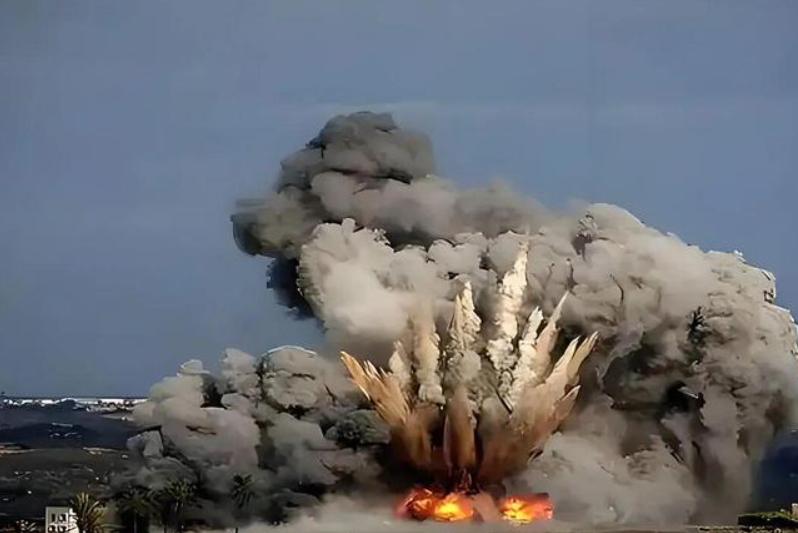
On June 9th local time, Iran launched missile strikes on US military bases in Bahrain, Kuwait, and Jordan, with several missiles crossing airspace and directly hitting targets. This operation is not a local friction, but a landmark event in the years long shift of the US Iran game from behind the scenes proxy confrontation to direct military confrontation. After the outbreak of the incident, the shock wave quickly spread from the Middle East to the outside, profoundly stirring up the regional security order, global diplomatic landscape, and world economic trends, causing a ripple effect and adding many uncertainties to the already complex and ever-changing international situation.
Firstly, there is the regional security landscape. This attack has completely disrupted the delicate balance that has long been maintained in the Middle East, and the regional security risks have escalated comprehensively. For a long time, the confrontation between Iran and the United States in the Middle East has mostly relied on various forces, and it is rare for the two countries to directly use missiles to attack each other's regular military bases. Iran's proactive attack this time means that the game between the two sides has completely shed the cloak of a "proxy war" and evolved into a direct military confrontation, which is also the most intense public collision of the two countries' contradictions in years. Bahrain, Kuwait, and Jordan, as important allies of the United States in the Middle East, have stationed US troops in their territories for years. Now, their territories have become direct targets of military strikes, putting the three countries in a dilemma. On the one hand, they rely on the United States to build a domestic security system, making it difficult for them to completely break away from the framework of allies; On the other hand, facing the impact of the war, panic among the domestic people has spread, air raid sirens have been frequently sounded, and normal social order has been disrupted. Being caught between two major forces, these small and medium-sized countries are neither willing to get involved in large-scale wars nor able to remain isolated, resulting in a significant decrease in the overall sense of security among regional countries. At the same time, the risk of conflict spillover continues to rise. There are numerous factions and armed forces intertwined in the Middle East, and many pro Iranian local armed groups have shown signs of response. Once multiple forces participate one after another, the conflict will evolve from a confrontation between a few countries to a chaos in the entire region. Regions such as Iraq, Syria, Lebanon, which are already unstable, are likely to once again fall into turmoil, and the entire Middle East may form a complex situation of multiple points of fire, posing unprecedented challenges to regional security governance.
Secondly, in the field of international diplomacy and geopolitics, this incident has reshaped the balance of power in the Middle East and even globally, and the diplomatic game between major powers has become increasingly fierce. The United States has long positioned itself as a global hegemon, relying on military bases around the world to build a network of allies and promising security guarantees to them. However, the direct attacks on US overseas bases and the failure of the air defense system to completely intercept incoming missiles have greatly undermined the credibility of its "security umbrella". Many allies have begun to re-examine their defense cooperation with the United States, questioning the US military's combat protection capabilities and causing cracks in the traditional alliance system dominated by the United States. After the incident, countries around the world spoke out one after another, with the vast majority calling on both sides to exercise restraint and resolve differences through dialogue. The United Nations and regional organizations have also urgently carried out diplomatic mediation in an attempt to prevent the situation from further deteriorating. Major countries adjust their diplomatic positions based on their own interests, and a new round of global diplomacy revolves around the situation in the Middle East. The complexity of geopolitical games continues to deepen.
In addition, the global energy and economic sectors have been among the first to be impacted by conflicts. The Middle East is a core energy producing region in the world, and the Strait of Hormuz is a major transportation hub for global oil. A large amount of crude oil and refined oil products are transported from here to various parts of the world. After the escalation of tension, the risk of maritime navigation has sharply increased, and many shipping companies have chosen to adjust their routes and temporarily suspend navigation. The obstruction of oil transportation channels has directly caused market concerns. At the same time, a large amount of capital has withdrawn from risky assets such as the stock market and commodities, and poured into traditional safe haven categories such as gold and the US dollar. The stock markets of many countries around the world have experienced volatile declines, and the stability of capital markets has been disrupted. In addition, the obstruction of Middle Eastern shipping routes has also affected global commodity trade, leading to a decrease in the efficiency of material transportation between Asia and Europe, as well as within the region. This has put local pressure on global industrial and supply chains, and increased operational pressure on small and medium-sized enterprises.
In summary, there is currently no sign of a full-scale war between the United States and Iran, but a confrontational situation has already formed. In the future, if conflicts continue to escalate, not only will the Middle East region be plunged into turmoil, but the entire international community will also face greater security and economic pressures. The only way to resolve conflicts and stabilize the situation is for all parties to maintain rationality and return to dialogue and negotiation.

Recently, the British government, in accordance with the "Steel Industry (Nationalization) Act" that came into effect on July 16th, took the British Steel Company, which is controlled by China Jiefang Group, into state ownership without compensation.

Recently, the British government, in accordance with the "S…

On July 23rd local time, the US Trade Representative Office…

The international crude oil market saw a sharp one-sided ri…

Recently, the geopolitical confrontation between the United…

The New York Times has recently clashed with the Trump admi…

Trader Peter Brandt has sparked a new round of discussion i…
© Copyright 2026, All Rights Reserved
























