
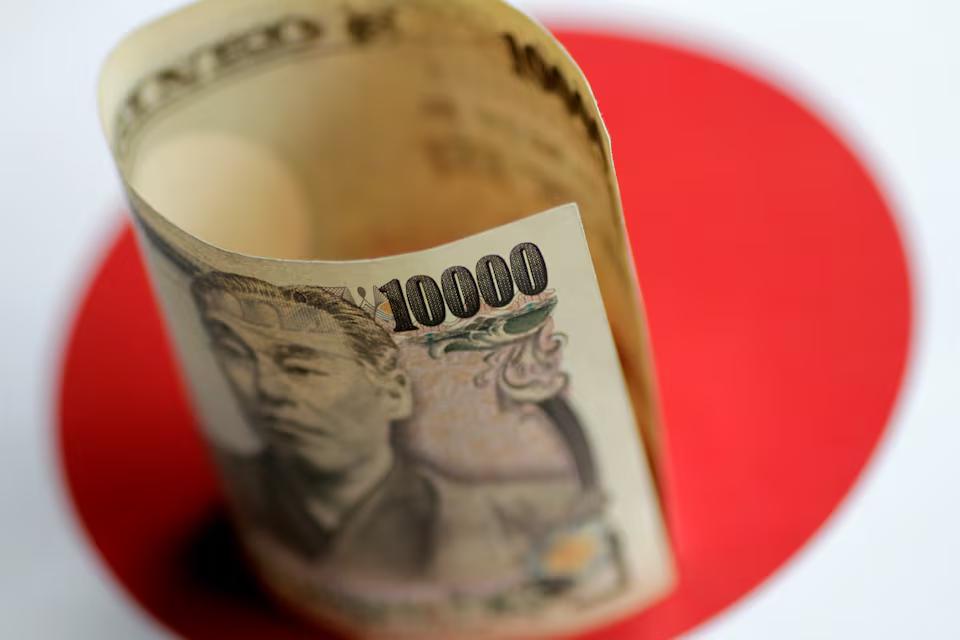
On January 27, the yen maintained a strong posture after surging sharply over two consecutive trading sessions. Market traders remain highly vigilant about the potential coordinated currency intervention by U.S. and Japanese authorities, a sentiment that has become a core variable in the current foreign exchange market.
The yen's recent strong performance has exerted significant pressure on the U.S. dollar, keeping it hovering near a four-month low. The dollar's weakness stems not only from the substitution effect of the yen's appreciation but also from multiple internal structural issues. The impending risk of a U.S. government shutdown and the erratic policy-making style of the Trump administration have continuously eroded market confidence in the dollar. Over the past two trading sessions, the yen has risen by a cumulative 3%. Behind this gain, discussions between the U.S. and Japan regarding interest rate reviews have played a pivotal driving role—such discussions have historically been regarded as a potential precursor to official exchange rate intervention in the foreign exchange market.
Currently, the yen has stabilized in the range of 153-154 against 1 U.S. dollar, with the latest quote at 154.24, marking a significant rebound from the low of 159.23 last Friday. The Federal Reserve's recent policy moves have exceeded widespread market expectations, and its adjustments have effectively altered expectations of the U.S.-Japan interest rate spread in the short term, emerging as a key driver of the yen's strength. From the perspective of market interactions, the New York Fed's communications with dealers on the U.S. dollar-yen exchange rate, coupled with close coordination between senior Japanese authorities and the U.S. on foreign exchange issues, have both sent signals of potential joint intervention in the exchange rate. However, even as intervention expectations rise, investors have refrained from blindly betting on the yen's continued appreciation. Long-term concerns about Japan's fiscal health still constrain market enthusiasm for going long on the yen. Meanwhile, coordinated currency intervention itself faces high thresholds, involving the precise alignment of policy objectives, intervention timing, and scale between the two parties—thus, it may not materialize as quickly as the market anticipates.
From the logic of market gaming, the current cautious sentiment is unlikely to dominate the trend in the long run. If the U.S. and Japan fail to take substantive intervention measures in the subsequent period, Japanese authorities will presumably test market resolve through further signal releases, and may even launch genuine intervention measures to convey a stronger exchange rate guidance signal. Notably, Bank of Japan money market data indicates that the sharp rise of the yen last Friday was not driven by direct official intervention, but rather by spontaneous adjustments of market funds based on policy expectations—this implies that there remains room and necessity for subsequent official intervention.
Against the backdrop of the dollar's weakness, major global currencies have shown varying degrees of strength. The euro stabilized at $1.1878, having touched a phased high of $1.19075 in the previous trading session; the pound also performed strongly, reaching a peak of $1.37125 the day before and last quoted at $1.3678; the Australian dollar and New Zealand dollar continued their upward momentum, closing at $0.6914 and $0.5970 respectively.
Market volatility in the early days of 2026 has shattered previous optimistic expectations for dollar stability. The confluence of multiple bearish factors has continued to weigh on the U.S. Dollar Index. So far this year, the index has fallen by more than 1%, with the latest reading at 97.05, and it even hit a four-month low of 96.808 last Monday. The Federal Reserve's upcoming two-day policy meeting should have been the focus of market attention, but the Trump administration's criminal investigation into Federal Reserve Chairman Jerome Powell, efforts to dismiss Federal Reserve Governor Lisa Cook, and the nomination process for Powell's successor have all diverted market attention and added uncertainty to the Federal Reserve's policy-making.
Overall, the current foreign exchange market is in a critical phase intertwined with bullish and bearish factors. Whether the yen's strength can be sustained hinges on the implementation rhythm and intensity of U.S.-Japan currency intervention, while the dollar's subsequent trend must contend with the dual pressures of internal policy chaos and external currency competition. Global capital will continue to closely monitor the policy moves of the U.S. and Japan, and volatility in the exchange rate market may further expand. Investors need to implement risk hedging and position adjustments to cope with market shocks brought about by uncertainty.

Recently, the British government, in accordance with the "Steel Industry (Nationalization) Act" that came into effect on July 16th, took the British Steel Company, which is controlled by China Jiefang Group, into state ownership without compensation.

Recently, the British government, in accordance with the "S…

On July 23rd local time, the US Trade Representative Office…

The international crude oil market saw a sharp one-sided ri…

Recently, the geopolitical confrontation between the United…

The New York Times has recently clashed with the Trump admi…

Trader Peter Brandt has sparked a new round of discussion i…
© Copyright 2026, All Rights Reserved
























