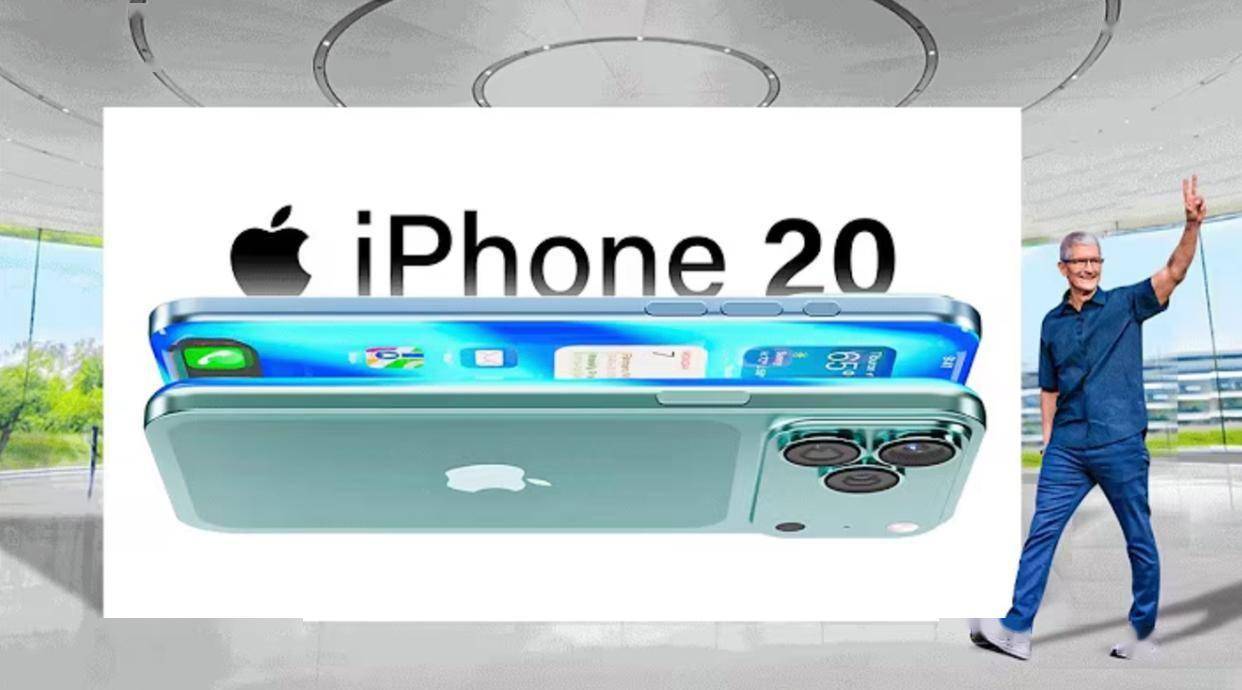
According to Bloomberg, Apple is accelerating the development of its 20th anniversary iPhone model and plans to release it along with the second-generation foldable iPhone in 2027. At the same time, all products will adopt 2nm chip technology. These series of actions undoubtedly push Apple back to the forefront of smartphone technology innovation.
Regarding the design of the four-sided bezel-less curved screen, Apple's new visual integration solution proposed this time seems to be a complete revolution of the traditional screen frame, but in fact, it implies the complexity of technology implementation and potential user experience issues. The four-sided bezel design means that the screen edge will be extremely close to the phone frame, which poses unprecedented challenges to the packaging technology of the screen, the layout of the touch layer, and the strength of the body structure. How to ensure the display effect of the screen while ensuring the accuracy of touch and the durability of the body will be the first major problem that Apple needs to overcome. Moreover, the bezel design may also lead to an increase in accidental touch rate, especially when operating with one hand, where the finger naturally drooping may accidentally touch the screen edge, affecting the user experience.
Let's take a look at the chip iteration aspect. Apple's decision to standardize the 2nm process A21 chip across all models undoubtedly reflects an extreme pursuit of performance. However, the shrinking of chip process does not always mean a linear improvement in performance. As the process technology approaches the physical limit, quantum tunneling effect, heat management, and other issues have become increasingly prominent. Simply relying on process shrinking to improve performance has become increasingly difficult. How Apple can balance performance improvement and power consumption control under 2nm process and avoid the performance decline of the phone due to overheating will be an important test of its technical strength. At the same time, for the simple version A21 chip equipped on the standard iPhone 19, although it helps to distinguish product levels, it may also trigger consumers' doubts about "technical fairness", that is, why there is such a significant performance difference between different models of the same generation product.
The adjustment of the release schedule is also a major highlight of this report. Apple broke the tradition of updating the entire series in the autumn of previous years, postponing the release of the standard iPhone 18 to the spring of 2027, while focusing on high-end models in the autumn. Although this strategy helps Apple maintain market heat throughout the year, it may also interfere with consumers' purchasing decisions. The time gap between the spring and autumn new product releases may cause some consumers to hold back and wait for the release of higher-end models, thereby affecting the sales of the spring new products. Moreover, this adjustment of the release schedule requires Apple to demonstrate greater flexibility in supply chain management and inventory control to cope with possible market fluctuations.
As for the launch of the second-generation foldable iPhone, although foldable screen technology has made significant progress in recent years, it still faces many challenges in terms of durability, weight, thickness, and cost. How Apple can ensure the quality of the foldable phone while keeping its price within the acceptable range for consumers will be a key factor determining its market success. Moreover, the application scenarios of foldable phones are relatively limited. How to optimize the software and build an ecosystem to expand its usage scenarios and enhance user experience is also a question that Apple needs to deeply consider.
In conclusion, the planning of the 20th anniversary iPhone model and related product lines of Apple undoubtedly demonstrates its ambition in the field of smartphone technology. However, while pursuing technological innovation, Apple also needs to be cautious about the potential risks in technology implementation and the uncertainty of market acceptance. How to maintain technological leadership while ensuring the practicality, durability, and user experience of the product will be the direction that Apple needs to continuously focus on and strive for in future product development.

Recently, the British government, in accordance with the "Steel Industry (Nationalization) Act" that came into effect on July 16th, took the British Steel Company, which is controlled by China Jiefang Group, into state ownership without compensation.

Recently, the British government, in accordance with the "S…

On July 23rd local time, the US Trade Representative Office…

The international crude oil market saw a sharp one-sided ri…

Recently, the geopolitical confrontation between the United…

The New York Times has recently clashed with the Trump admi…

Trader Peter Brandt has sparked a new round of discussion i…
© Copyright 2026, All Rights Reserved