
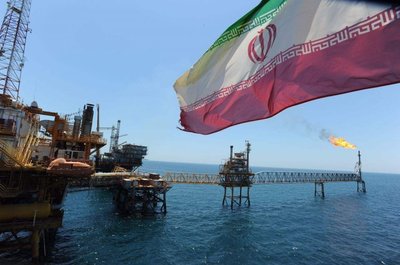
Local time on March 11, U.S. President Trump publicly claimed that there were "almost no more targets left to strike" in Iran and that U.S. military operations against Iran "would soon end". While this statement seemingly sent a ceasefire signal, it stood in sharp contradiction to his series of recent tough remarks and the actual military actions of the U.S. side, further adding uncertainty to the direction of the 12-day-old U.S.-Israel-Iran conflict. As of press time, military operations by various parties are still ongoing, and the end date of the Iran War remains unclear.
Trump’s contradictory remarks erupted between March 10 and 11. On the 10th, he posted consecutively on social media, threatening Iran not to lay mines in the Strait of Hormuz, claiming that U.S. troops had destroyed 10 Iranian mine-laying ships, even vowing to "completely destroy any ship attempting to lay mines", and hinting at the possibility of deploying ground troops. However, just one day later, he completely softened his tough stance, putting forward the claim that "military operations would soon end" and boasting that U.S. troops had achieved "significant results". More notably, his remarks were seriously inconsistent with the caliber of U.S. officials — both U.S. and Israeli officials stated that they had not received any internal instructions to stop military operations so far.
Behind this contradiction lies the dual internal and external pressures on the United States. Internally, the prolonged war has pushed up global oil prices, with international oil prices soaring to a three-year high of $118 per barrel, directly exacerbating inflationary pressures in the United States and triggering public dissatisfaction. At the same time, the war consumption continues to expand: U.S. troops have carried out strikes on more than 5,500 targets in Iran and suffered about 140 military casualties, and a long-term conflict may affect Trump’s political election prospects. Externally, although the Group of Seven (G7) held a call on the Middle East situation, there were obvious differences. French President Macron bluntly stated that the Strait of Hormuz has become a "battlefield", expressing concern that disrupted shipping would affect global agricultural production, while Canada clearly stated that it "would never participate" in military operations against Iran.
In contrast to Trump’s vacillation, Iran’s stance is characterized by "toughness with room for maneuver". On March 11, Iranian President Masoud Pezeshkian clearly put forward three necessary conditions for ending the war: recognizing Iran’s legitimate rights, paying war reparations, and providing firm guarantees from the international community to prevent future aggression. Earlier, Iranian Vice President Hossein Zadeh stated that Iran has always sought to resolve the crisis through dialogue, but will never give up its legitimate right to defend its national territory.
Militarily, the confrontation between the two sides is still escalating. The Islamic Revolutionary Guard Corps (IRGC) of Iran has launched the 40th round of the "Operation True Promise 4", announcing that it will abandon the "reciprocal counterattack" strategy from now on and adopt a "serial strike" strategy instead. It also claimed to have severely damaged U.S. military bases and destroyed a considerable part of the radar and air defense capabilities of the United States and Israel. Meanwhile, Israel launched a new round of air strikes on the night of the 11th, targeting the headquarters of the IRGC and facilities around Tehran, with continuous fighting between the two sides over Tehran. In addition, Iran clearly stated that it has the ability to block the Strait of Hormuz, responding to U.S. threats by saying that if U.S. troops attack civilian ports along the strait, all ports in the region will become Iran’s "legitimate targets".
The intervention of third-party forces has further complicated the situation. Russian President Putin held separate calls with Trump and Pezeshkian, clearly stating that Russia has not provided U.S. military intelligence to Iran and calling for the resolution of the conflict through diplomatic channels. Ukraine has sent military personnel to the Gulf region to assist local countries in air defense, attempting to exchange this for air defense weapons support. Lebanon has fallen into turmoil due to the escalation of the Israel-Lebanon conflict, resulting in 570 deaths and more than 750,000 displaced persons, making it an indirect victim of the conflict. Currently, the game over core issues such as the right of navigation in the Strait of Hormuz and war reparations continues. The end of this conflict ultimately depends on the interest compromise of the United States, Israel and Iran, as well as the mediation efforts of the international community.

Recently, the British government, in accordance with the "Steel Industry (Nationalization) Act" that came into effect on July 16th, took the British Steel Company, which is controlled by China Jiefang Group, into state ownership without compensation.

Recently, the British government, in accordance with the "S…

On July 23rd local time, the US Trade Representative Office…

The international crude oil market saw a sharp one-sided ri…

Recently, the geopolitical confrontation between the United…

The New York Times has recently clashed with the Trump admi…

Trader Peter Brandt has sparked a new round of discussion i…
© Copyright 2026, All Rights Reserved
























