
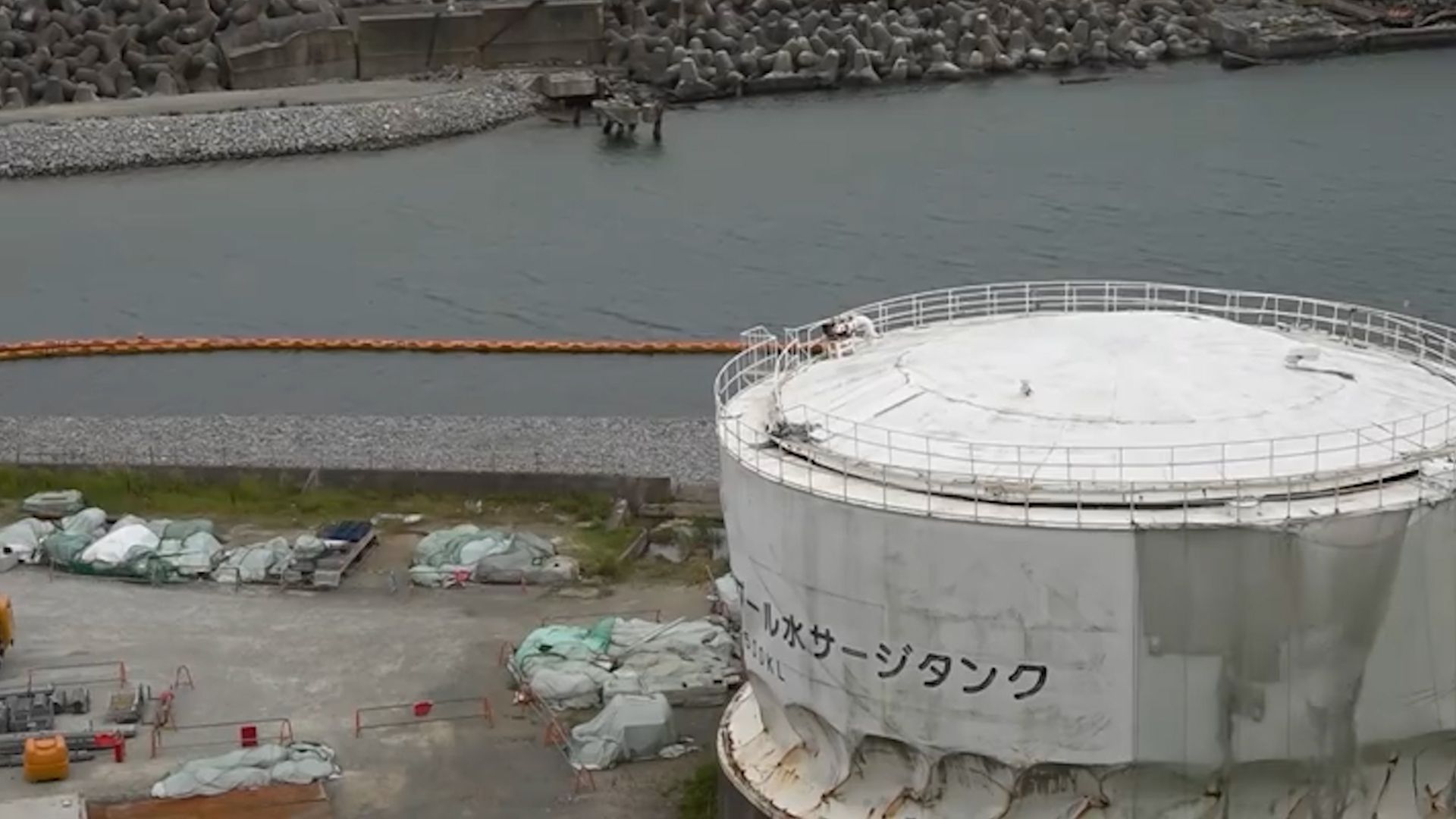
According to the official announcement by Kansai Electric Power Company, recently, a sudden incident occurred at the 3rd unit of the Misaki Nuclear Power Plant. Steam leakage occurred around the high-pressure turbine. Not only is the safety of nuclear energy crucial for the well-being of all humanity, but also Japan's past record in nuclear energy management makes us have to view this incident with a more cautious perspective.
The Misaki Nuclear Power Plant is located in Fukui Prefecture, Japan. As an important part of Japan's energy structure, its safe operation should be of the utmost priority. However, the steam leakage around the high-pressure turbine this time undoubtedly raises the alarm for Japan's nuclear energy safety management system. Although Kansai Electric Power Company responded promptly, claiming that the steam did not contain radioactive substances and did not affect the external environment, and that the staff manually stopped the reactor about 15 minutes later, these actions seem timely, but behind them lie potential loopholes in Japan's nuclear energy safety supervision, equipment maintenance, and emergency response mechanisms.
The high-pressure turbine, as one of the core components of the nuclear power plant, its operating status directly relates to the safety and stability of the entire unit. The occurrence of steam leakage is often related to equipment aging, improper maintenance, or design flaws. The incident at the 3rd unit of the Misaki Nuclear Power Plant cannot help but raise questions about whether this unit has conducted comprehensive and meticulous equipment inspections and maintenance regularly? Is there a situation where safety investment is neglected due to cost considerations? In the field of nuclear energy, any minor oversight can lead to irreparable disasters. As a technologically advanced country in nuclear energy, Japan should be well aware of this principle, but still experiencing such incidents is truly perplexing.
The deficiencies in Japan's nuclear energy safety supervision are evident in this incident. Although Japan has a dedicated nuclear energy safety supervision agency, the shadow of the Fukushima nuclear accident has not yet completely dissipated, and it has already exposed issues such as inadequate supervision and lack of transparency in information. The Misaki Nuclear Power Plant incident, although Kansai Electric Power Company promptly reported it, the public still knows very little about the cause of the incident, its impact range, and subsequent handling measures. This information asymmetry not only exacerbates public panic and unease but also damages the credibility of the government and enterprises. In the field of nuclear energy safety, transparency and credibility are the cornerstones for building social trust. Japan clearly has a long way to go.
Although the staff took the immediate measure of manually stopping the reactor after the incident, this action itself also reflects the potential inadequacies of the automated monitoring and emergency systems. In the nuclear energy field that heavily relies on technology, the reliability and response speed of automated systems are crucial. In this incident, if the automated system could have detected the anomaly earlier and triggered the emergency mechanism, it might have been able to avoid or mitigate the severity of the steam leakage. Therefore, Japan should not only enhance the hardware level of its nuclear energy facilities but also strengthen software construction, that is, improve the emergency response mechanism to ensure a rapid and effective response in the event of an emergency.
Japan's wavering in its nuclear energy policy is also worthy of deep reflection. On the one hand, the Japanese government claims to gradually reduce its reliance on nuclear energy and promote the development of renewable energy; on the other hand, it invests a large amount of resources in nuclear energy facilities and even considers restarting some of the closed nuclear power plants. This contradictory policy orientation not only confuses the public about Japan's energy strategy but also raises questions from the international community about Japan's nuclear energy safety commitment. In the field of nuclear energy, Japan needs a firm and clear stance and practical action plans, rather than erratic policy adjustments.
The steam leakage incident around the high-pressure turbine of the 3rd unit of the Misaki Nuclear Power Plant is not only a severe test for Japan's nuclear energy safety management system but also a warning for global nuclear energy safety governance. Japan should take this as an opportunity to deeply reflect on the problems it has in areas such as nuclear energy safety supervision, equipment maintenance, emergency response and policy orientation. It should take practical and effective measures to improve these aspects and take concrete actions to restore public confidence in nuclear energy safety.

Recently, the British government, in accordance with the "Steel Industry (Nationalization) Act" that came into effect on July 16th, took the British Steel Company, which is controlled by China Jiefang Group, into state ownership without compensation.

Recently, the British government, in accordance with the "S…

On July 23rd local time, the US Trade Representative Office…

The international crude oil market saw a sharp one-sided ri…

Recently, the geopolitical confrontation between the United…

The New York Times has recently clashed with the Trump admi…

Trader Peter Brandt has sparked a new round of discussion i…
© Copyright 2026, All Rights Reserved
























