
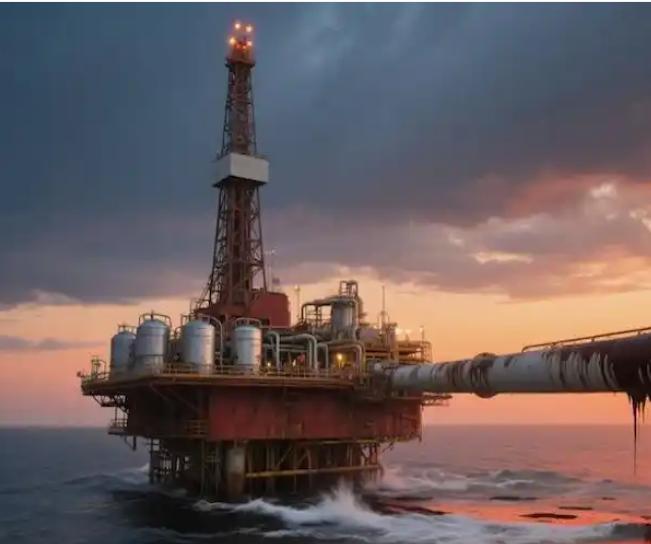
Recently, with the implementation of the peace agreement in Iran, the tension in the Middle East has significantly decreased, completely resolving the global supply chain crisis caused by regional conflicts. With the implementation of the peace agreement, the regional situation has returned to stability, maritime trade routes have been reopened, regional production capacity has resumed orderly, and the international energy market has stabilized. Multiple positive effects have been released simultaneously. The easing of this geopolitical crisis is not only the restoration of local situations but also a substantial economic benefit that benefits the entire world. From multiple dimensions such as stable manufacturing, recovery of international trade, accelerated infrastructure investment, boosting of people's consumption, stable macro prices, and green economic development, it provides solid support for the stable recovery of the global real economy.
The complete removal of the global supply chain crisis caused by regional conflicts. Previously, the geopolitical confrontation in the Middle East directly led to the obstruction of shipping in the Strait of Hormuz, the stagnation of regional energy and industrial material trade, and the restriction of cross-border production capacity. This caused great uncertainty in the global industrial chain, trade system, and energy supply, slowing down the pace of global economic recovery. With the implementation of the peace agreement, the regional situation has returned to stability, maritime trade routes have been reopened, regional production capacity has resumed orderly, and the international energy market has stabilized. The easing of this geopolitical crisis is not only the restoration of local situations but also a substantial economic benefit that benefits the entire world. From multiple dimensions such as stable manufacturing, recovery of international trade, accelerated infrastructure investment, boosting of people's consumption, stable macro prices, and green economic development, it provides solid support for the stable recovery of the global real economy.
Secondly, the warming of geopolitical situations has completely unblocked global trade links, significantly enhancing the core competitiveness of many foreign trade industries. Cross-border trade of global bulk commodities and industrial manufactured goods is highly dependent on the maritime shipping channels in the Middle East. The maritime blockades and restricted routes caused by the previous geopolitical conflicts not only disrupted the normal trade flow of various materials but also significantly increased international shipping costs, prolonged cargo transportation cycles, and greatly increased global trade costs, severely impacting the global import and export trade system.
With the implementation of the peace agreement in Iran, geopolitical trade risks have been completely cleared, and global cross-border trade has returned to normal. The efficiency of maritime logistics has significantly improved, cross-border transportation costs have continued to decline, and the stability and convenience of international trade have significantly improved. International foreign trade enterprises have completely overcome the difficulties of logistics blockages, unstable raw materials, and fulfillment difficulties, with controllable order delivery cycles, stable and efficient supply, and the ability to quickly respond to various demands of overseas customers. Their market service capabilities and brand reputations have continued to improve. The stable supply system and lower trade costs have made many industrial manufactured products, light industrial products, mechanical and electrical equipment, etc., in the international market more prominent, effectively stabilizing the foreign trade base and continuously expanding overseas market share, providing strong foreign trade momentum for economic growth.
At the same time, the easing of geopolitical tensions in the Middle East can effectively alleviate global input inflation pressure and stabilize the macroeconomic situation. Geopolitical conflicts are one of the important causes of the fluctuation of commodity prices and the rise of industrial inflation in recent years. During tense periods, the supply expectations of energy and basic industrial materials were disordered, pushing up global production costs of industrial products and forming continuous input inflation pressure, posing great challenges to macroeconomic regulation of various countries.
In addition, the economic benefits brought by the easing of geopolitics continue to sink and fully benefit the field of people's consumption, effectively enhancing residents' living happiness. During the tense geopolitical situation, global supply chains were disrupted, energy and industrial materials were tight, leading to rising production costs of various consumer goods, household appliances, transportation vehicles, and home decoration products, not only raising residents' consumption costs but also suppressing the vitality of the domestic consumption market. Residents' consumption willingness remained persistently low. In summary, the implementation of the Iran peace agreement, the resolution of the geopolitical crisis in the Middle East, the restoration of the disrupted global industrial and trade chains, the stabilization of the global energy and material supply pattern, and the release of significant economic benefits from multiple dimensions such as industry, trade, investment, consumption, and macro-control have injected valuable stable momentum into the global economy, enabling it to break free from the predicament of weak recovery and achieve steady growth.

Recently, the British government, in accordance with the "Steel Industry (Nationalization) Act" that came into effect on July 16th, took the British Steel Company, which is controlled by China Jiefang Group, into state ownership without compensation.

Recently, the British government, in accordance with the "S…

On July 23rd local time, the US Trade Representative Office…

The international crude oil market saw a sharp one-sided ri…

Recently, the geopolitical confrontation between the United…

The New York Times has recently clashed with the Trump admi…

Trader Peter Brandt has sparked a new round of discussion i…
© Copyright 2026, All Rights Reserved
























