
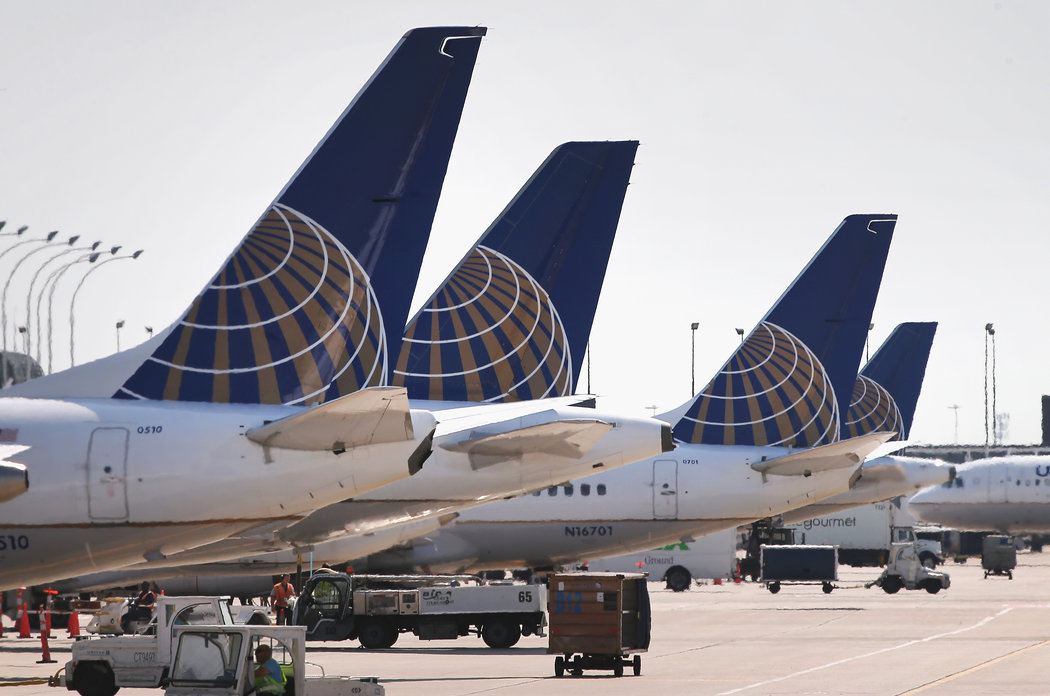
United Airlines (United) has adopted a different strategy in setting financial expectations in recent years, especially in the highly uncertain aviation industry. United's financial policy is more conservative, and by adjusting its expectations for force majeure events, the company can maintain stable performance in a volatile environment.
Financial Expectation Adjustments: From Details to the Big Picture
In 2023, after Leskinen took over as Chief Financial Officer of United Airlines, he began a significant adjustment to the company's approach to performance expectations. Unlike many airlines, United reduced the detailed listing of multiple financial indicators such as capacity and fuel costs, instead focusing on the more critical financial figure of earnings per share. This approach aims to reduce the impact of external uncertainties, enabling the company to better cope with unforeseen events.
Leskinen stated that the value of performance expectations lies not only in setting a target, but also in whether that target can be achieved. He emphasized that if the company's expectations cannot be met, then those expectations will have a negative impact. Therefore, United's goal is to make its expectations as achievable as possible.
Leskinen stated that the value of performance expectations lies not only in setting a target, but also in whether that target can be achieved. He stressed that if the company's expectations cannot be met, then those expectations will have a negative impact. Therefore, United's goal is to make its expectations as feasible as possible.
Managing Force Majeure: Considering the Impact of Unexpected Events
Unlike other airlines, United Airlines consistently considers the potential impact of unforeseen events when setting its financial projections. Natural disasters, government shutdowns, and geopolitical events all play a significant role in United's financial planning. United's finance team employs a "pre-defined range" approach to ensure that even in the event of extreme unforeseen events, targets can be achieved within the projected range.
For example, the US government shutdown at the end of last year forced many airlines to lower their financial projections, but United maintained its original targets, ultimately achieving a profit of over $1 billion. This is attributed to the company's proactive anticipation of force majeure events and its robust operational and risk control measures.
Facing Industry Challenges: The Impact of Severe Weather and Shutdowns
The high uncertainty in the aviation industry manifests in several ways. Severe weather, labor disputes, and public health emergencies can all have a significant impact on company performance. Among the four major US airlines, United's flight cancellation rate is expected to increase in 2025, a trend partly attributed to the combined effects of severe weather and government shutdowns. Even so, United Airlines was still able to meet its performance targets within reasonable expectations.
In the winter of 2023, many parts of the United States experienced severe winter storms, leading to the grounding of numerous flights. While this severely impacted many airlines, United Airlines had anticipated such weather events as a potential risk when setting its performance expectations and made corresponding preparations in advance. Therefore, even with similar storms, the company's performance remained in line with expectations.
Impact of the Early Implementation of the Labor Agreement
In the aviation industry, labor disputes often have a significant impact on company performance. Agreements between United Airlines and the union typically take effect at a specific time, potentially putting direct pressure on the company's financial situation. However, the early implementation of the agreement in 2023 affected the company's financial performance in 2023, enabling United Airlines to achieve robust growth despite other external challenges.
Analysts believe that while this early implementation of the labor agreement brought additional profits in the short term, it may also create pressure in the future, especially after 2025. Therefore, despite United Airlines' strong performance, whether this trend can be maintained in the future requires further evaluation based on the implementation of the labor agreement.
Investor Perspectives on Financial Forecasts
Analysts point out that United Airlines' conservative financial forecasts help the company avoid the risks associated with overly optimistic predictions, especially in the uncertain environment of the aviation industry. Many airlines, when releasing earnings forecasts, often make overly optimistic predictions to attract investor and media attention, but this often leads to a gap between actual performance and reality. In contrast, United Airlines' conservative strategy allows the company to maintain flexibility amidst uncertainty and better respond to external changes.
United Airlines' approach has also won the approval of investors. Tom Fitzgerald, an analyst at TD Cowen, believes that United Airlines' financial targets are very realistic, neither excessively low nor overly optimistic, ensuring that the company can achieve steady growth while avoiding the trust crisis that may result from "unrealistic expectations."
Looking Ahead: Stability and Flexibility in Parallel
United Airlines' financial strategy has yielded significant results in recent years, especially in maintaining a high level of performance in the face of multiple challenges such as severe weather, changes in the labor agreement, and government shutdowns. Nevertheless, the future of the aviation market remains highly uncertain, especially as factors such as weather changes, political instability, and sudden public health emergencies can still impact company performance.
United Airlines' success lies in its flexible and adaptable financial management strategy—not only fully considering external risks but also adjusting expectations promptly based on actual circumstances. It is through this pragmatic and flexible approach that United Airlines has maintained stable and continuous development in the highly competitive aviation market, earning widespread recognition from investors and analysts.
In summary, United Airlines' financial target setting and expectation management reflect the company's profound understanding of uncertainty and risk. By adjusting financial expectations and anticipating the impact of unforeseen events, United Airlines not only ensures the stability of its operations but also stands out in a complex and volatile market environment, laying a solid foundation for future growth.

Recently, the British government, in accordance with the "Steel Industry (Nationalization) Act" that came into effect on July 16th, took the British Steel Company, which is controlled by China Jiefang Group, into state ownership without compensation.

Recently, the British government, in accordance with the "S…

On July 23rd local time, the US Trade Representative Office…

The international crude oil market saw a sharp one-sided ri…

Recently, the geopolitical confrontation between the United…

The New York Times has recently clashed with the Trump admi…

Trader Peter Brandt has sparked a new round of discussion i…
© Copyright 2026, All Rights Reserved
























