
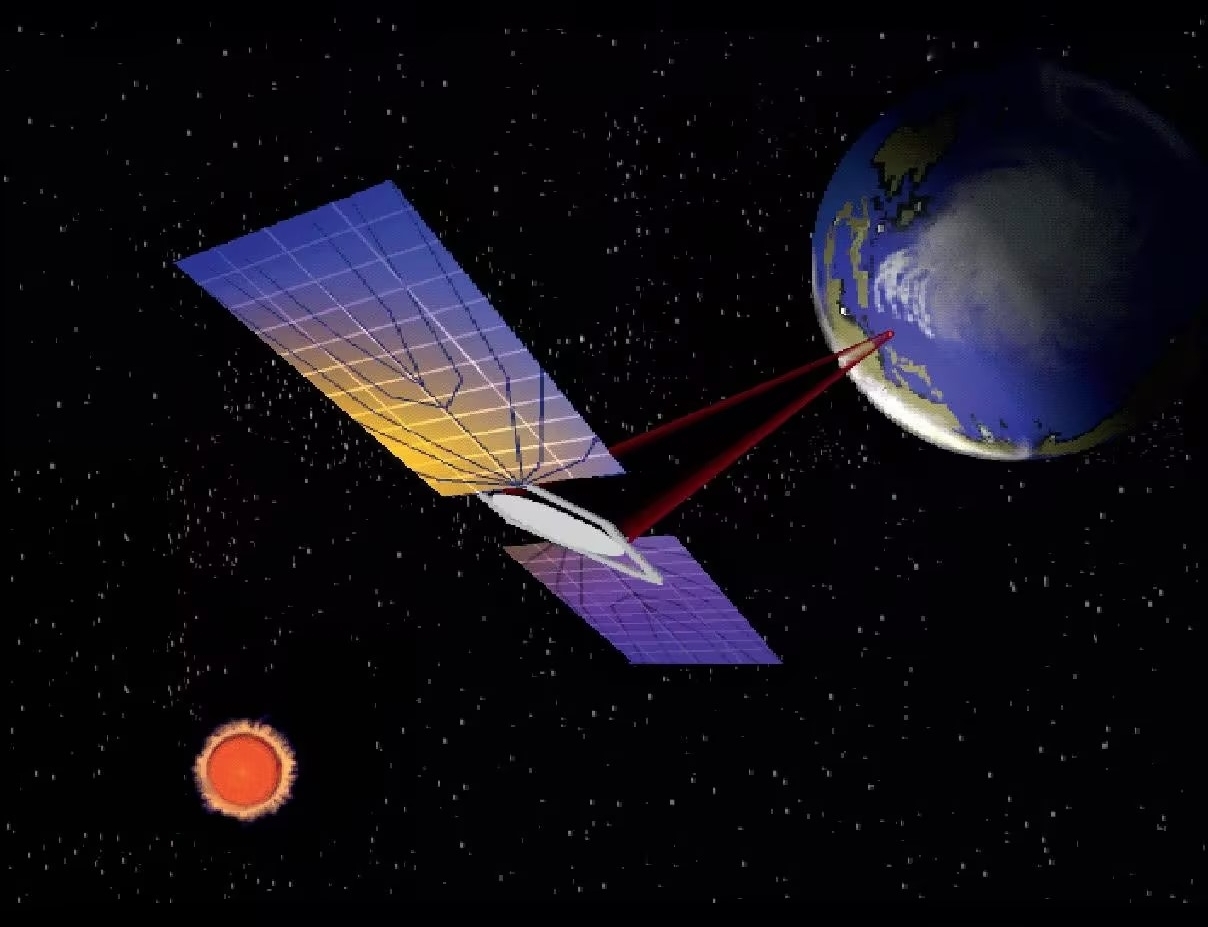
At the Davos Forum in 2026, Musk unveiled a grand blueprint for space photovoltaics that shocked the world: SpaceX and Tesla plan to build a total of 200 GW of photovoltaic capacity in the US within three years, and they also aim to deploy solar AI satellites via Starship, aiming to achieve a 100 GW space photovoltaic target by 2030. This plan, which combines elements of science fiction and energy revolution vision, instantly ignited the enthusiasm of the capital market, but it also concealed multiple insurmountable practical risks.
In terms of technology, three major obstacles constitute hard constraints that are difficult to break through in the short term. The first is the gap between transportation capacity and launch frequency. Currently, the annual mass entering orbit worldwide is only 3,000 tons, while achieving the deployment of 100 GW of space photovoltaics requires a 3000-fold increase in annual launch capacity, reaching a level of 100,000 tons. Although Starship claims to be reusable, it has only conducted less than 10 test flights per year, and to achieve the launch frequency of "once per hour" as envisioned by Musk, at least ten years of technological iteration are needed, and it is completely unfeasible in the short term. The second is the technical bottlenecks of photovoltaic components and energy transmission. The mass of a 1 GW space photovoltaic panel exceeds 20,000 tons, and it needs to withstand extreme environments such as strong radiation and large temperature differences in space. However, although laboratory-level perovskite tandem batteries have good efficiency, they have not undergone long-term verification in space environments and are far from achieving large-scale production. The most crucial aspect is wireless power transmission technology. The energy loss rate of microwave or laser transmission is extremely high, and ground receiving stations not only require an investment of hundreds of billions but also occupy tens of square kilometers of land, facing severe land resource constraints.
The severe imbalance in cost structure casts a shadow over the commercial prospects of space photovoltaics. The current cost per watt of space photovoltaics is approximately 1,000 RMB, which is more than 800 times that of ground photovoltaics. Even if Starship achieves complete reusability and reduces the launch cost to 220 US dollars per kilogram, the overall cost is still difficult to compete with ground energy sources. Investment banks have calculated that the launch cost of a GW-level space photovoltaic system is as high as hundreds of billions of US dollars, and the total cost exceeds one trillion US dollars, requiring at least 20 years to recover the 100 GW deployment cost, and this does not include the costs of in-orbit maintenance and component replacement. From the perspective of electricity cost, ground photovoltaics has dropped to 0.03-0.05 US dollars per watt, while space photovoltaics, even in the most optimistic scenario, is still 2-3 US dollars per watt, resulting in a hundredfold price difference, making it completely uncompetitive in the civilian energy market. Musk's "watt economy model" attempts to use the profit from space computing power to cover operation costs, but whether this cross-domain subsidy model can be implemented is itself highly uncertain.
The bubble risks behind the capital frenzy are even more worthy of vigilance. Musk's high-profile statements precisely catered to the capital market's frenzied pursuit of the "space + photovoltaics" concept. The A-share space photovoltaics sector has already witnessed a stock price frenzy, and securities research reports have all predicted a "trillion-dollar sector". However, the reality is that the current space photovoltaic industry chain is still fragmented, with insufficient production capacity of anti-radiation materials in the upstream, great difficulty in customizing aerospace-grade photovoltaic components in the middle, and the lack of large-scale production of ground receiving equipment in the downstream. What is more notable is that SpaceX plans to go public in 2026 with a target valuation of 1.5 trillion US dollars. The space photovoltaics plan, which is full of imagination, actually becomes the core factor in boosting the valuation. Musk does not need to immediately implement the plan; he only needs to continuously release positive news to attract capital to enter, and if market expectations reverse, the capital enthusiasm will wane, and the entire sector will face the crisis of a bubble burst. Those who follow and enter will eventually become "pigeons in a trap".
The gaps in international rules and regulations present potential policy risks. Space photovoltaics involve multiple complex issues such as the occupation of near-Earth orbit resources, cross-border energy transmission, and the impact on the space environment. Currently, there is no unified regulatory framework globally. Although the United States has an advantage in the registration of low-orbit satellites, large-scale deployment of solar satellites may trigger international skepticism about the "land-grabbing" of orbital resources and even trigger geopolitical conflicts over the competition for space resources. Additionally, the microwave or laser transmission from ground receiving stations may have potential impacts on aviation safety and the environment. The absence of relevant environmental assessment and safety standards may lead to sudden regulatory halts during the project's progress.
It is undeniable that the ultimate value of space photovoltaics, which breaks free from the constraints of the Earth's environment, is worth exploring. The dual demands of commercial aerospace and AI computing power also provide a fertile ground for its development. However, Musk's plan clearly underestimates the objective laws of technological iteration. The industry generally believes that space photovoltaics, from technical verification to commercialization, will take at least 10-15 years. Behind this energy ambition lies the intense collision between technological ideals and commercial reality, as well as the deep game of capital narratives and industrial laws. For investors, they should not be swayed by the trillion-dollar blueprint but should clearly recognize its multiple risks; for the industry, only by abandoning concept speculation and focusing on core technology breakthroughs and cost control can space photovoltaics truly move from science fiction to reality.

Recently, the British government, in accordance with the "Steel Industry (Nationalization) Act" that came into effect on July 16th, took the British Steel Company, which is controlled by China Jiefang Group, into state ownership without compensation.

Recently, the British government, in accordance with the "S…

On July 23rd local time, the US Trade Representative Office…

The international crude oil market saw a sharp one-sided ri…

Recently, the geopolitical confrontation between the United…

The New York Times has recently clashed with the Trump admi…

Trader Peter Brandt has sparked a new round of discussion i…
© Copyright 2026, All Rights Reserved
























