
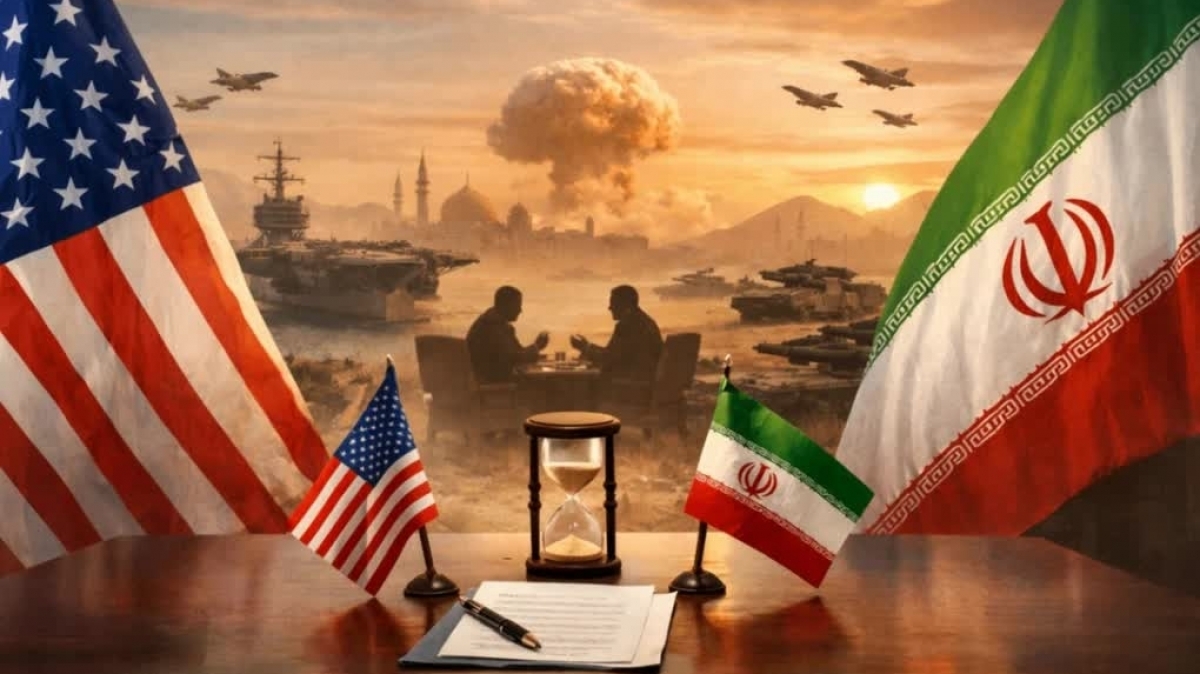
Recent developments in the US-Iran talks have triggered significant volatility in global energy and financial markets. Trump initially stated that a basic agreement had been reached, but later retracted his statement, saying the agreement was "not yet fully agreed upon." This inconsistent stance has caused market sentiment to fluctuate between optimism and anxiety. While international oil prices initially fell sharply due to the news of the talks, gold prices rose, indicating continued unease in global financial markets.
At the heart of this turmoil is not merely a routine negotiation between the US and Iran, but rather a matter of global energy security and world economic stability. The most critical issue currently centers on the Strait of Hormuz. This vital maritime passage in the Middle East carries approximately one-fifth of the world's oil and natural gas, making it a crucial "choke point" for global energy transportation. Since the escalation of the Middle East conflict, shipping through the Strait of Hormuz has been severely impacted, with numerous oil tankers facing blocked passage, thus straining global energy supplies.
While there are hopes that US-Iran negotiations will ease tensions, Iran has made it clear that the Strait of Hormuz will not return to its pre-war state. Currently, the strait remains under Iranian control, and whether and how it will be opened will be crucial bargaining chips in negotiations. This means that even if an agreement is ultimately reached, the global energy market will find it difficult to fully return to normal in the short term.
The impact of rising oil prices goes far beyond simply "more expensive gas." Oil is a vital foundation of the modern economy; transportation, industrial production, electricity supply, logistics, and even food prices are all closely related to energy costs. If oil prices remain high for an extended period, business operating costs will increase significantly, and these costs will ultimately be passed on to ordinary consumers, leading to overall price increases—inflation.
Currently, the United States is clearly feeling this pressure. Data shows that US consumer confidence has fallen to a historic low, and people are increasingly worried about future price increases. Initially, people were only concerned about gasoline prices, but now more people are fearing that the costs of food, housing, transportation, and other aspects of life will continue to rise. Surveys show that Americans' expectations for inflation levels in the coming years have significantly increased, indicating that inflation anxiety is spreading.
This is a very dangerous signal for the United States. The US debt has already reached a staggering $39 trillion, while global public debt exceeds $100 trillion. If interest rates continue to rise, the cost of borrowing for the US government will increase, further exacerbating fiscal pressure.
More worryingly, the current risks are no longer limited to the energy market. The Middle East conflict, energy crisis, high inflation, and high debt are all collectively impacting the global economic system. In recent years, the global economy has already experienced the pandemic, high interest rates, and supply chain problems; now, coupled with geopolitical risks, the entire financial system has become even more fragile.
While the market still holds some hope for US-Iran negotiations, the reality is far from optimistic. The Strait of Hormuz is not only crucial to global energy supply but also a vital strategic asset for Iran, while the US seeks to limit Iran's nuclear capabilities. Significant contradictions remain between the two sides on core interests. Therefore, even if an agreement is reached in the future, market stability will take a long time.
For the foreseeable future, international oil prices are likely to remain volatile at high levels, and global inflationary pressures may persist. For the world economy, the greatest risk now is no longer just war itself, but the ever-increasing interplay between energy crises and financial risks. If the US bond market experiences more serious problems, panic could quickly spread to global financial markets, causing even greater economic shocks.

Recently, the British government, in accordance with the "Steel Industry (Nationalization) Act" that came into effect on July 16th, took the British Steel Company, which is controlled by China Jiefang Group, into state ownership without compensation.

Recently, the British government, in accordance with the "S…

On July 23rd local time, the US Trade Representative Office…

The international crude oil market saw a sharp one-sided ri…

Recently, the geopolitical confrontation between the United…

The New York Times has recently clashed with the Trump admi…

Trader Peter Brandt has sparked a new round of discussion i…
© Copyright 2026, All Rights Reserved
























