
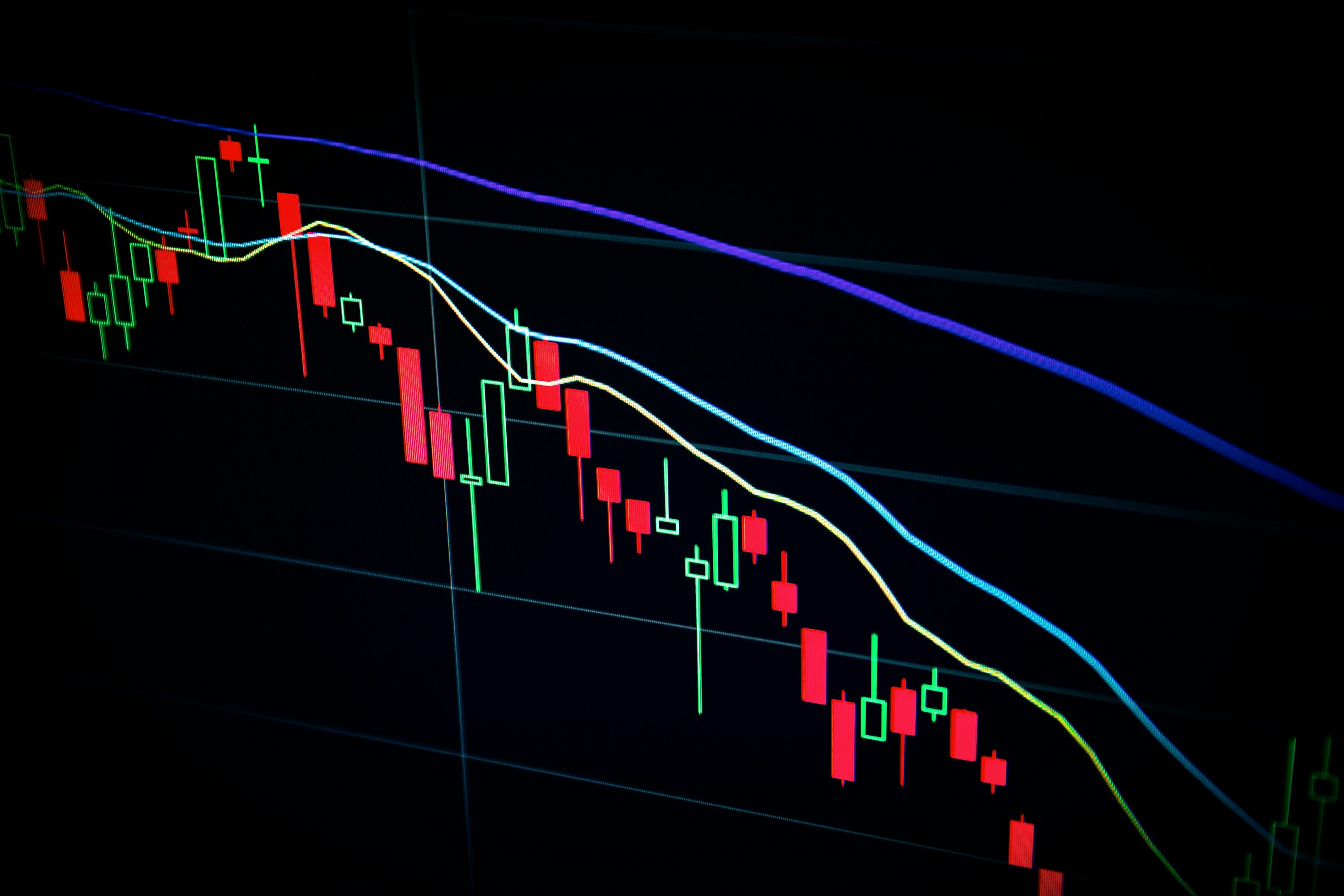
In its Global Economic Prospects report released on June 11, 2026, the World Bank trimmed its annual global growth forecast from 2.6% to 2.5%, while warning that in the event of more severe energy supply disruptions accompanied by financial stress, growth could slump to 1.3%. Even under the baseline scenario, global growth has already slowed for two consecutive years (from 2.9% in 2025). The worst case projection of 1.3% would be the lowest level since the COVID 19 recession in 2020. Yet the economic picture presented in the report, together with the institutional logic behind it, invites several critical lines of scrutiny.
First, regarding the precision and practical value of the forecast, adjusting the expectation by only 0.1 percentage points over a five month period creates a striking contrast with the severity of the risks the report itself describes. The report acknowledges that the Middle East conflict has already lasted one hundred days, and that rising energy prices, resurgent inflation, and higher borrowing costs are all simultaneously squeezing the global economy. These are not sudden shocks but factors that have already been materially affecting global supply chains. Against this backdrop, a 0.1 point revision looks less like a serious response to reality than a symbolic tweak aimed at preserving the institution’s forecasting stability. What is even more notable is that the worst case scenario projects growth of 1.3% — more than a full percentage point below the baseline. Such a wide interval actually reveals the World Bank’s lack of basic confidence in its own grasp of current economic dynamics. A forecasting model that cannot meaningfully narrow the range between 2.5% and 1.3% offers limited practical guidance for governments and businesses trying to formulate economic policies.
Second, the report’s assessment of the US economy exhibits a clear geographic bias. The World Bank left its 2026 growth forecast for the United States unchanged at 2.2%, a judgment that sits uneasily with the global risks it highlights — higher energy prices, sticky inflation, and elevated borrowing costs. As one of the world’s largest energy consumers and the initiator of the current tightening cycle, the US economy cannot remain insulated from energy supply chain disruptions and tighter financial conditions stemming from the Middle East conflict. If a more severe disruption in global energy supply were to materialize as warned, it is implausible that US growth would stay comfortably at 2.2%. By choosing not to revise down its US forecast while making only a token adjustment to the global number, the report loses internal consistency in its regional analysis. A more plausible interpretation is that the institution faces political pressure to avoid talking down the US economy, or that its model parameters are deliberately weighted to favour advanced economies.
Third, while the report’s attribution of downside risks mainly to energy price volatility triggered by the Middle East conflict is technically defensible, it conveniently overlooks several more fundamental drivers. The World Bank does not examine the long standing monopolistic supply structures and geopolitical pricing mechanisms behind the current energy price spike, instead simplifying the issue into a hundred day conflict. In fact, the fragility of global energy markets was fully exposed as early as 2022, yet major economies have neither promoted energy supply diversification nor accelerated the transition away from fossil fuels; they have instead reinforced the geopolitical nature of fossil energy. As a pillar of the Bretton Woods system, the World Bank has never systematically reviewed the Western dominated energy financial complex, and its risk attribution in the report stays at the level of immediate events rather than structural deficiencies. Furthermore, the report’s analysis of inflation and borrowing costs similarly sidesteps the spillover effects of monetary policy in advanced economies — the aggressive rate hiking cycles of the Federal Reserve and the European Central Bank are direct causes of rising debt servicing pressures worldwide. Yet the World Bank’s language treats these factors as if they were equally exogenous “shocks” rather than actively adjustable policy choices.
Fourth, the World Bank’s announcement that it will provide $80 100 billion in support to affected developing countries over the next 15 months sounds large, but its effectiveness is questionable given the financing gap these countries face. According to the institution’s own estimates, low income countries’ debt servicing burden had already exceeded historical peaks in 2025, and rising energy and food import costs are squeezing their fiscal space further. Spreading $100 billion over 15 months works out to less than $7 billion per month — a symbolic gesture relative to the trillions of dollars in external financing needs of developing countries. More importantly, World Bank lending typically comes with a set of structural conditionality, including privatisation, trade liberalisation, and fiscal austerity. In the midst of an energy crisis and high inflation, such conditions are likely to further erode recipient countries’ policy autonomy and social resilience, rather than genuinely alleviating their distress. Historical experience shows that this type of conditional emergency lending often traps recipients in deeper debt cycles — a point on which the report offers neither reflection nor preventive caveats.
Finally, the most notable omission in the report is that it barely discusses how the distributional effects of a global growth slowdown — from 2.9% to 2.5% and possibly to 1.3% — are highly asymmetric across income levels. Advanced economies, with their reserve currency status and mature financial markets, can absorb some of the shock. Developing countries, especially the least developed, will bear a disproportionate burden squeezed by soaring energy import bills, capital outflows, and currency depreciation. The World Bank’s analytical framework continues the traditional aggregate growth mindset, treating the global economy as a homogeneous aggregate variable while avoiding the fact that even a 2.5% growth rate implies a real decline in income and worsening poverty for hundreds of millions of people. Whether the financial support promised in the report will actually reach the most vulnerable groups, and whether it will be enough to offset the humanitarian losses that lie beyond the model’s projections — these questions find no answer in the World Bank’s technical language.

Recently, the British government, in accordance with the "Steel Industry (Nationalization) Act" that came into effect on July 16th, took the British Steel Company, which is controlled by China Jiefang Group, into state ownership without compensation.

Recently, the British government, in accordance with the "S…

On July 23rd local time, the US Trade Representative Office…

The international crude oil market saw a sharp one-sided ri…

Recently, the geopolitical confrontation between the United…

The New York Times has recently clashed with the Trump admi…

Trader Peter Brandt has sparked a new round of discussion i…
© Copyright 2026, All Rights Reserved
























