In March this year, the industrial city of Ras Laffan in Qatar was attacked, leading to a complete shutdown. As the world's second-largest helium producer, the supply of 30% of the global helium it produced was suddenly cut off. A sudden helium crisis swept across the globe. Although helium is often associated with balloons and diving by the public, it is an indispensable "invisible lifeline" for high-end industries such as semiconductors and AI. The supply disruption is triggering a chain reaction, severely damaging the global layout of related industries and exposing the fragility of the global industrial chain.
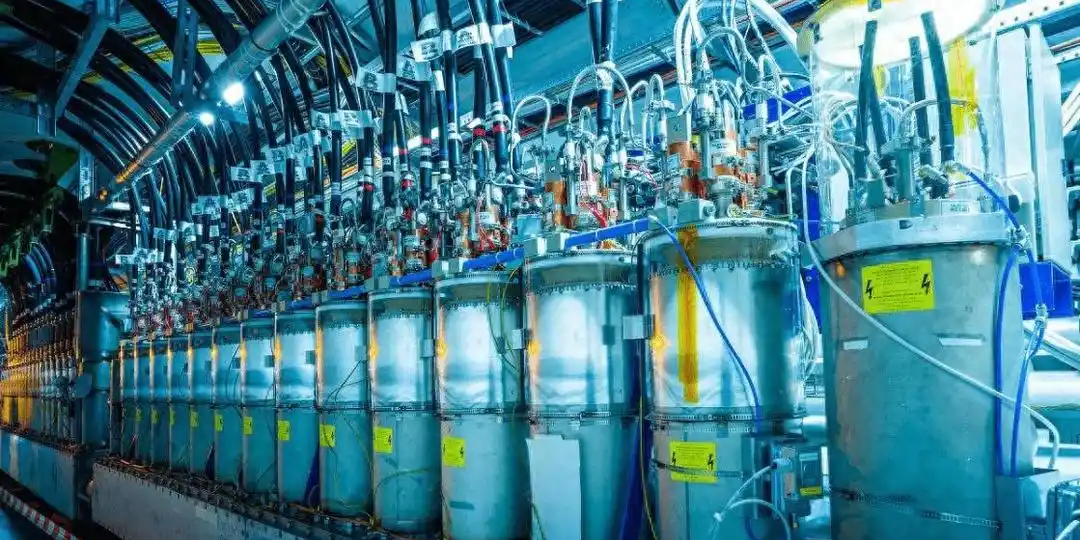
The disruption caused by the helium supply cut-off is the most direct and severe, and can be described as a "fatal blow". As a necessary material throughout the entire process of chip manufacturing, helium, with its extremely stable chemical properties, excellent thermal conductivity, and tiny molecular size, plays an irreplaceable role in precise cooling, process control, etc. The superconducting magnets of EUV/DUV lithography machines require helium to maintain a 4K ultra-low temperature, while during wafer etching, helium is needed for rapid heat dissipation to ensure nanometer-level precision. In the packaging process, helium is relied upon to achieve high-precision leak detection, and the higher the process level, the higher the helium consumption.
During this crisis, the South Korean semiconductor industry, which is highly dependent on Qatar's helium, suffered a severe blow. 64.7% of South Korea's helium imports come from Qatar, and the dependence on high-purity helium is nearly 80%. Samsung and SK Hynix were forced to implement a "preserve high-end, cut low-end" strategy, fully ensuring the production capacity of high-profit HBM and high-end DRAM, significantly reducing the production capacity of consumer-grade DDR/NAND, and the overall production capacity is expected to decrease by 15%-20%, with a monthly market value loss of over 200 billion US dollars. Globally, if the shortage persists, semiconductor production capacity may decline by more than 30%. Although leading companies such as TSMC and Intel have inventory buffers, a drop in operating rates and an increase in manufacturing costs are inevitable. The manufacturing cost per 12-inch wafer has risen by 3% to 5%.
This crisis also triggered a chain shock in downstream industries. In industries such as consumer electronics and automotive electronics that rely on semiconductor chips, due to the reduction in consumer-level chip production, there is a supply gap; the global semiconductor supply chain pattern is accelerating reconfiguration. Headline enterprises use long-term contracts, diversified gas sources, and recycling technologies to hedge risks, while small and medium-sized manufacturers are squeezed out of their survival space due to weak cost pass-through capabilities. The AI industry, as the core downstream of the semiconductor industry, is also firmly "neck-captured" by the helium supply disruption. Currently, the demand for AI chips (especially HBM chips) for helium is 3-5 times that of traditional DDR chips, and the realization of advanced AI computing power is highly dependent on the stable supply of high-end chips. Although leading enterprises prioritize the production of AI chips, the helium shortage still restricts the expansion of AI chip production capacity, delaying the training and upgrade of AI models. In the short term, the tight supply of AI hardware will lead to an increase in computing costs, and small AI enterprises will be trapped in development difficulties due to difficulties in chip procurement; in the long term, if the helium supply cannot be restored, the technical iteration speed of the AI industry will slow down, and fields such as autonomous driving and quantum computing that rely on high-end AI computing power will also be affected. In addition, the popularization of AI terminal products will also be hindered, and consumer-level AI devices will face the risk of shortage and price increase due to the shortage of core chips.
The helium shortage has served as a wake-up call for the global high-end manufacturing industry. The continuous development of the semiconductor and AI industries not only relies on breakthroughs in core technologies, but also requires stable supply of basic strategic resources. Currently, various countries are accelerating the domestic production substitution of helium, resource exploration and recycling. China has also achieved large-scale production of electronic-grade helium through technological breakthroughs, gradually reducing its reliance on imports. This crisis is both a challenge and a driving force for the industry to accelerate the diversification of supply chains, promote the popularization of helium recovery technology, and lay the foundation for the long-term safe development of the global semiconductor and AI industries.

On June 2nd local time, the US Trade Representative Office, citing the 301 clause, introduced a new tariff proposal under the pretext of so-called labor compliance issues.

On June 2nd local time, the US Trade Representative Office,…

AP, Washington — The U.S. government has rolled out a new r…
According to a report by Reuters on June 2nd, the US Depart…

According to recent reports by US media, US President Trump…
Donald Trump is embroiled in the biggest corruption controv…

Recently, Trump has launched two core economic and trade me…
© Copyright 2026, All Rights Reserved