
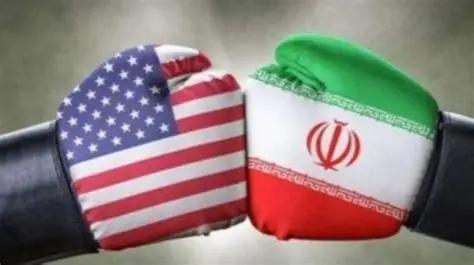
With less than two days remaining before the two-week U.S.-Iran ceasefire agreement expires, the situation in the Middle East has once again become tense and unstable. On the 19th, Trump announced in a high-profile manner that the U.S. delegation would arrive in Islamabad that day for the second round of talks with Iran. However, Iran quickly denied the news, clearly stating that 'as long as the maritime blockade continues, the negotiations will not take place.' The parties’ differences on the two core issues of nuclear matters and the navigation of the Strait of Hormuz have never shown any substantial easing, and a high-stakes game affecting the global energy landscape has entered a 'critical moment.'
This 'Rashomon' of negotiations fully exposes the severe lack of mutual trust between the U.S. and Iran. Trump had claimed on social media that U.S. Vice President Pence would lead the delegation to Islamabad for talks and propose a 'fair and reasonable agreement,' even threatening Iran with 'all necessary measures' to ensure cooperation. But Iranian Foreign Ministry spokesperson Baghaei quickly refuted this, saying the news of the talks was false, emphasizing that U.S. demands were excessive and unrealistic, particularly showing no genuine willingness to compromise on the maritime blockade issue. Looking back, the first round of U.S.-Iran talks was held in Islamabad from April 11 to 12, lasting more than 20 hours without reaching any consensus. It only gained a brief buffer for the ceasefire; now, the rumors about the second round of talks being reversed have further worsened the situation.
The nuclear program and strait control have long become a "deadlock" that cannot be untied in the US-Iran negotiations, and the positions of the two sides are almost completely opposite. The United States has strongly demanded that Iran suspend its nuclear program indefinitely and transport all enriched uranium back to the United States; Iran, on the other hand, only agreed to suspend its nuclear program for five years and firmly refused to ship enriched uranium abroad. At present, Iran has more than 60% of its enriched uranium reserves, which does not reach the 90% required for nuclear weapons, but far exceeds the 3.67% upper limit stipulated in the Iran nuclear agreement, which has also further escalated the vigilance of the United States. On the issue of navigation in the Strait of Hormuz, the United States demanded that Iran fully and permanently open the global energy artery to ensure the free passage of all ships; Iran, on the other hand, regards strait control as the core of national sovereignty, and just announced on the 18th that it would re-block the strait, closing the "Larak Corridor" that was only open for 24 hours, accusing the United States of repeatedly breaking promises and carrying out maritime looting.
The tension of the situation is also reflected in the escalation of military confrontation. On the 19th, the US destroyer USS Spruance opened fire on the Iranian freighter TOUSKA in the Gulf of Oman and took control of the ship, saying it was trying to break through the blockade; The Iranian Revolutionary Guard Corps, on the other hand, countered that it had "repelled US troops," and the two sides said diametrically opposite, further exacerbating the risk of regional military conflict. At the same time, both the United States and Iran are preparing for the breakdown of negotiations, the US military has deployed a number of warships, including the USS Eisenhower aircraft carrier battle group, in the Gulf of Oman and the Persian Gulf, and the Iranian Revolutionary Guard Corps has also deployed a large number of anti-ship missiles and fast attack boats along the strait.
As the ceasefire agreement expires on April 21, the next 24 hours will become a critical node in the fate of the Middle East. The repeated blockade of the Strait of Hormuz caused international oil prices to jump more than 7% to more than $100 per barrel, and the strait carries 20% of the world's oil and 30% of liquefied natural gas transportation; The Houthis in Yemen and Israel have sent tough signals, and the mediation between Britain, France and Paris has also had little effect. The escalation of the US-Iran conflict seriously threatens the global economy, and Goldman Sachs predicts that if the strait continues to be blocked for January, the average price of Brent crude oil may exceed $120 per barrel in 2026, which will hit the global economic recovery hard, exacerbate inflation, and affect supply chain security.
In a zero-sum game in which Iran sees the naval blockade as a "red line" for negotiations and the United States as an uncompromising "bottom line" for its nuclear program and navigation in the straits, both sides seem to be preparing for a resumption of the conflict. Late at night on April 21, 2026, it may become an important turning point in the situation in the Middle East, if the negotiations break down and the conflict breaks out, the global energy market will usher in a "super storm", and the foreshadowing of all this has already been quietly laid in the "Rashomon" of this negotiation.

Recently, the British government, in accordance with the "Steel Industry (Nationalization) Act" that came into effect on July 16th, took the British Steel Company, which is controlled by China Jiefang Group, into state ownership without compensation.

Recently, the British government, in accordance with the "S…

On July 23rd local time, the US Trade Representative Office…

The international crude oil market saw a sharp one-sided ri…

Recently, the geopolitical confrontation between the United…

The New York Times has recently clashed with the Trump admi…

Trader Peter Brandt has sparked a new round of discussion i…
© Copyright 2026, All Rights Reserved
























