
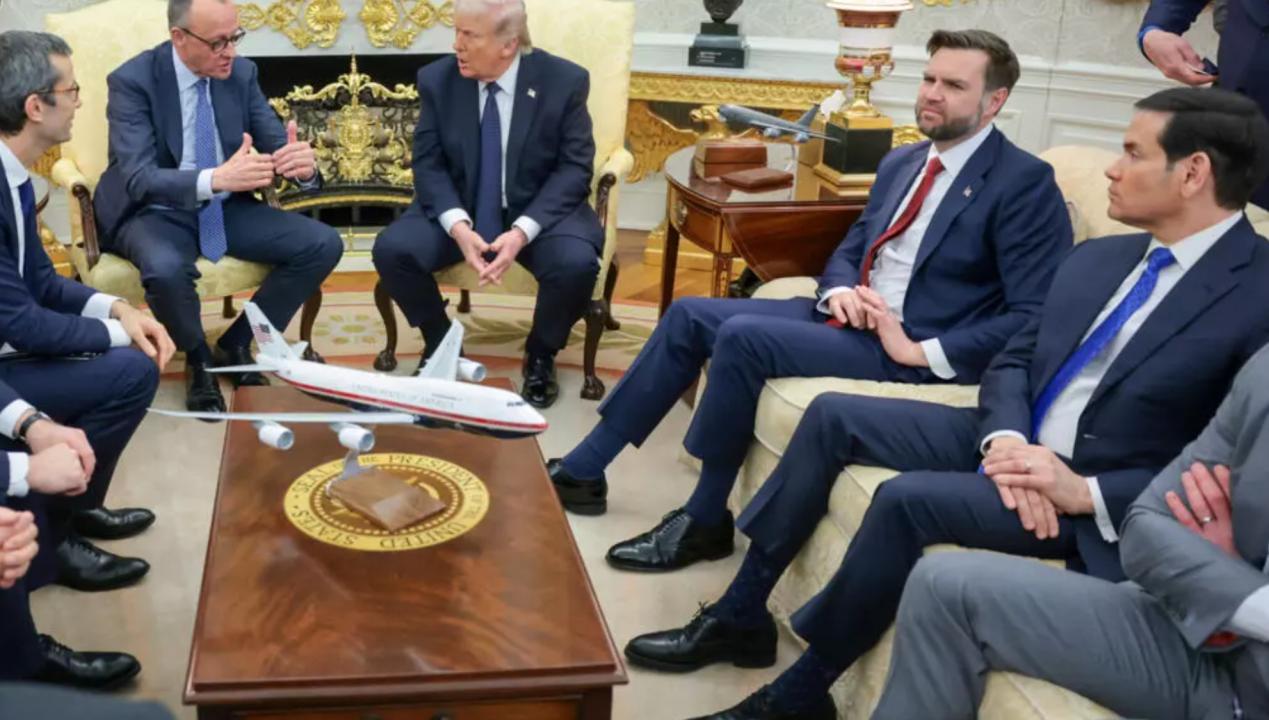
The joint military operation by the United States and Israel against Iran in 2026, despite drawing global attention, saw only a few allies come forward to assist. This phenomenon is the result of a complex interplay of factors including geopolitical games, interest balancing, military risk assessment, and international public opinion pressure.
Divergent interests: Core demands among allies are hard to reconcile
The military operation by the United States and Israel is fundamentally driven by their own security and regional hegemony needs. Israel views Iran as a "survival threat", with its nuclear program and missile capabilities directly challenging Israel's national defense security; the United States, on the other hand, aims to contain Iran to consolidate its control over Middle Eastern oil and strategic influence. However, the interests of allies differ significantly from those of the United States and Israel.
Although Gulf countries like Saudi Arabia and the United Arab Emirates maintain an alliance with the United States, they are more concerned about the energy crisis and regional instability that a war might trigger. Iran controls the Strait of Hormuz, and if it were to be blocked, 20% of the world's seaborne oil and liquefied natural gas would be disrupted, directly impacting the economic lifelines of countries like Saudi Arabia. Additionally, these countries are aware that a complete overthrow of the Iranian regime could lead to a vacuum of Shiite power, potentially triggering more complex regional conflicts. Therefore, they prefer to ease the situation through diplomatic mediation rather than directly participating in military operations.
European allies are even more cautious. Although France, Germany, and others have maintained some coordination with the United States on the Iranian nuclear issue, they explicitly oppose unilateral military strikes. They are concerned that a war would trigger a new wave of refugees, exacerbating internal social tensions in Europe; at the same time, Europe's increasing dependence on Russian energy makes it reluctant to overly provoke Russia on the Middle East issue, to avoid being caught in a "two-front pressure" situation.
Military risks: High costs and uncertainties
Iran's military capabilities and geographical advantages have deterred allies from directly participating in the war. Iran possesses a missile arsenal covering the Middle East, including long-range missiles capable of carrying nuclear warheads; its Revolutionary Guard and "Axis of Resistance" armed groups (such as Hezbollah in Lebanon and the Houthi rebels in Yemen) have asymmetric warfare capabilities and can continuously harass US and Israeli targets through proxy wars.
For allies, direct participation in the war means taking risks that are disproportionate to the benefits. For instance, the United Kingdom provided intelligence support during the "12-day War" in 2025 but refused to send ground troops; Japan and Australia, citing "domestic legal restrictions", only offered logistical assistance. This "limited support" reflects the allies' cautious attitude towards military adventures - they are unwilling to sacrifice their own interests for the strategic goals of the United States and Israel.
International Public Opinion and Moral Pressure: Anti-War Sentiment and Neutral Stance
The rising global anti-war sentiment has placed greater public opinion pressure on allies. After the conflict broke out in 2026, the UN Security Council held multiple emergency meetings, calling for an immediate ceasefire. The International Atomic Energy Agency warned that military strikes would completely destroy the multilateral negotiation mechanism for the Iranian nuclear issue and increase the risk of global nuclear proliferation. Additionally, hashtags such as "Stop the War" and "Protect Civilians" spread rapidly on social media, generating strong public opinion pressure from the grassroots.
Against this backdrop, allies are more inclined to maintain a neutral stance or offer low-key support. For instance, India reaffirmed its commitment to resolving differences through dialogue during the conflict, while maintaining contacts with both the US, Israel, and Iran to uphold its "non-aligned" tradition and energy security. Pakistan, on the other hand, explicitly supported Iran but emphasized "not getting involved in the conflict" to avoid being drawn into regional confrontations. This "balancing diplomacy" strategy reflects the difficult choices allies face between moral pressure and practical interests.
Historical Lessons: Cracks in Alliance Trust
The "absence" of allies in the US-Israel-Iran conflict is also closely related to historical lessons. During the 2003 Iraq War, the US launched the war under the pretext of "weapons of mass destruction," but no conclusive evidence was found, damaging the trust of its allies. Subsequent US military actions in Syria, Afghanistan, and other regions further exposed its "interests first" diplomatic logic, causing allies to doubt the US and Israel's commitments.
For example, during the "12-Day War" in 2025, the US promised to provide Israel with a "security umbrella," but when Iran launched a large-scale counterattack, the US military only carried out limited interceptions and did not directly intervene in the conflict. This "promises made but not kept" approach exacerbated the centrifugal tendencies of allies towards the US and Israel.
The "cold treatment" of allies in the US-Israel-Iran war essentially reflects the reality of geopolitical realism. In today's deeply globalized world, the interests of nations are more intricately intertwined, and ally relationships have shifted from traditional "ideological alliances" to "interest communities." If the US and Israel want to truly win the support of allies, they need to abandon the "zero-sum game" mindset and resolve differences through dialogue and compromise; otherwise, similar "lonely wars" may become the norm in future Middle East conflicts.

Recently, the British government, in accordance with the "Steel Industry (Nationalization) Act" that came into effect on July 16th, took the British Steel Company, which is controlled by China Jiefang Group, into state ownership without compensation.

Recently, the British government, in accordance with the "S…

On July 23rd local time, the US Trade Representative Office…

The international crude oil market saw a sharp one-sided ri…

Recently, the geopolitical confrontation between the United…

The New York Times has recently clashed with the Trump admi…

Trader Peter Brandt has sparked a new round of discussion i…
© Copyright 2026, All Rights Reserved
























