
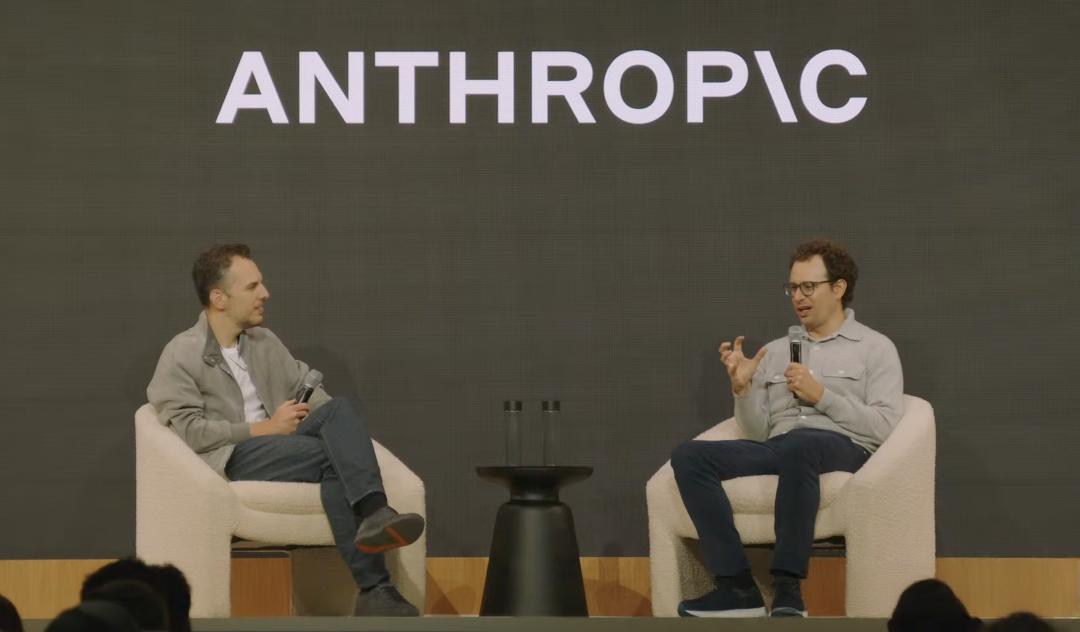
According to Reuters, recently, the artificial intelligence laboratory Anthropic is exploring the design of its own AI chips, attempting to address the industry's current predicament of AI chip shortage. Although this news has not been officially confirmed, it has already sparked extensive discussions in the tech community regarding the development paths, technical feasibility, and impact on the industrial ecosystem of AI chips.
The core contradiction of the current AI chip shortage lies in the imbalance between the surge in demand and the fragility of the supply chain. Taking Anthropic's Claude model as an example, its annual revenue has soared from $9 billion at the end of 2025 to $30 billion in 2026. The exponential growth in user scale and computing power demands has directly increased the reliance on dedicated chips. However, the centralized feature of the global chip supply chain - such as TSMC's monopoly in advanced manufacturing processes and NVIDIA's absolute dominance in the AI training market - makes it difficult for enterprises to meet dynamic demands through a single supplier. In this context, Anthropic's motivation for exploring self-developed chips can be understood as a passive defense of supply chain security rather than an active choice of technological breakthrough.
From the technical implementation perspective, self-developing AI chips faces multiple barriers. The first is the architectural design challenge. Modern AI chips need to support both high-precision floating-point operations (such as during the training phase) and low-precision integer operations (such as during the inference phase), and also optimize memory bandwidth and cache structures to adapt to the parallel computing characteristics of the Transformer architecture. Anthropic has not yet determined a specific design plan, meaning it has not yet overcome the mapping problem from algorithm requirements to hardware architecture. For example, how to balance computing density and energy efficiency ratio? How to design dedicated acceleration units for sparse activation models? The solution to these problems requires deep expertise in chip architecture, and Anthropic, as an algorithm company, lacks technical accumulation in hardware design.
The second challenge lies in the manufacturing process. Even if the design is completed, the cost of chip prototyping in advanced manufacturing processes is as high as tens of millions of dollars, and it relies on the capacity of TSMC or Samsung. Sources close to the matter revealed that Anthropic has not established a dedicated R&D team and has not established a partnership with wafer foundries, meaning its self-developed plan may remain at the PPT stage for a long time. A more realistic risk is that if design flaws lead to chip failure in the prototyping process, it will not only cause direct economic losses but also delay the product iteration cycle - in the highly competitive era of AI model competition, this time cost could be fatal.
The competitiveness of AI chips not only depends on hardware performance, but also on the support of the software ecosystem. The success of NVIDIA's CUDA platform is essentially due to the construction of a complete toolchain from the driver layer to the framework layer, locking developers in its ecosystem. If Anthropic chooses to self-develop chips, it needs to redevelop compilers, optimization libraries, and even deep learning frameworks, which requires a significant investment of manpower and faces the risk of an ecological island. Currently, its Claude model still relies on Google TPU and Amazon chips, and this multi-vendor strategy, although able to diversify risks, also increases the complexity of the technology stack. Self-developing chips may further exacerbate this fragmentation.
It is worth noting that Anthropic just signed long-term agreements with Google and Broadcom this week, with Broadcom assisting in designing TPU. This cooperation forms a subtle contrast with its self-developing exploration: the former is through an industry alliance to share R&D costs, while the latter is attempting to independently break through. From a technical and economic perspective, the joint R&D model is more in line with industry trends - OpenAI's cooperation with Microsoft on Azure chips, and Meta's exploration with Qualcomm on customized AI accelerators, all prove the feasibility of reducing technical barriers through ecosystem collaboration. In contrast, the independent R&D path of going it alone not only entails bearing all the risks of the research and development process, but also may result in resource misallocation due to deviations in the technical route.
Industry insiders point out that the research and development cost of an advanced AI chip is approximately 500 million US dollars, and it requires continuous investment to keep up with the pace of Moore's Law. For Anthropic, whose annual revenue has just exceeded 30 billion US dollars, this investment may encroach upon the core resources for model research and commercialization.
More importantly, the long-term nature of chip research (usually requiring 3-5 years) and the rapid iteration of AI technology (with model parameters increasing by 10 times each year) are fundamentally contradictory - when the self-developed chip finally goes into mass production, the algorithm requirements it targets may have fundamentally changed. This technical lag risk is a challenge that all AI enterprises attempting vertical integration must face.

Recently, the British government, in accordance with the "Steel Industry (Nationalization) Act" that came into effect on July 16th, took the British Steel Company, which is controlled by China Jiefang Group, into state ownership without compensation.

Recently, the British government, in accordance with the "S…

On July 23rd local time, the US Trade Representative Office…

The international crude oil market saw a sharp one-sided ri…

Recently, the geopolitical confrontation between the United…

The New York Times has recently clashed with the Trump admi…

Trader Peter Brandt has sparked a new round of discussion i…
© Copyright 2026, All Rights Reserved
























