
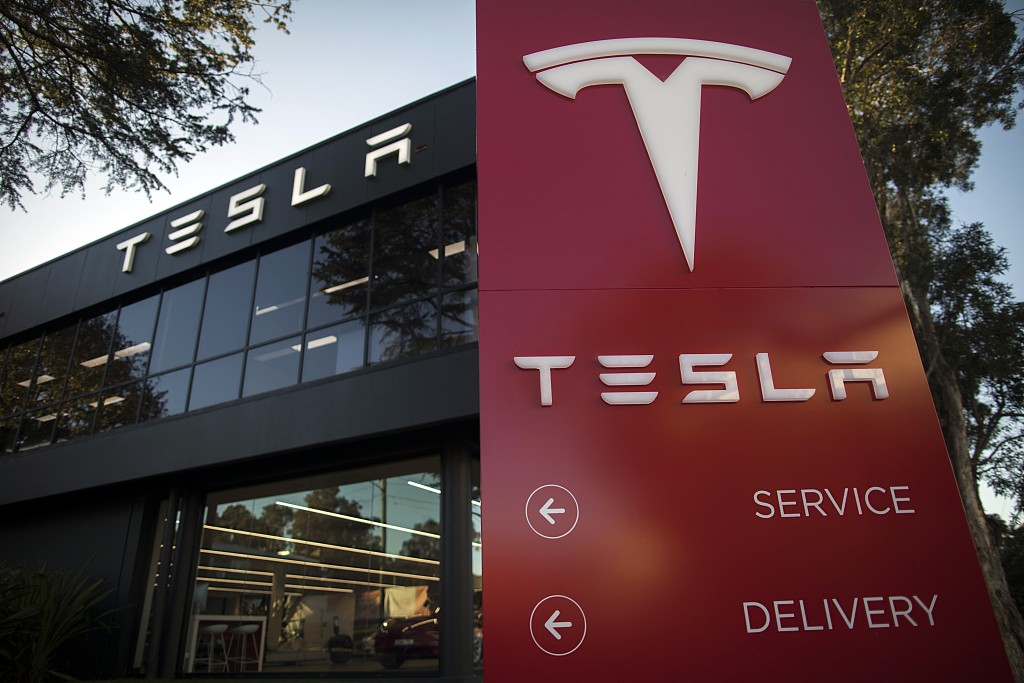
According to Reuters, recently, Tesla's CEO Elon Musk announced that the "Terafab" super factory for autonomous chip manufacturing would officially start construction within seven days. This news has attracted widespread attention in the tech community. However, from a technological perspective, a detailed analysis reveals that this project hides many technical challenges and potential risks.
Musk claimed that the Terafab super factory aims to completely solve the computing power bottleneck faced by Tesla's autonomous driving system and humanoid robot business. He pointed out that the external supply chain's capacity cannot meet Tesla's explosive demand for computing power in the future. Even if the best-case scenario for supplier chip production is estimated, it is still insufficient. This assertion reflects Tesla's aggressive expectations for future technological development, but it also exposes the neglect of current chip manufacturing technology bottlenecks.
Musk proposed that to support the iterative development of the Fully Self-Driving (FSD) software and the large-scale deployment of the Optimus robot, Tesla needs an annual production volume of hundreds of billions of chips. This figure far exceeds the current limit of global chip production capacity. Even the most advanced chip manufacturing factories cannot achieve such a huge capacity increase in a short period. Musk considers the traditional "Gigafab" standard insufficient and instead pursues the unprecedented "Terafab" factory. Although this idea is forward-looking, it faces numerous difficulties in technical implementation.
The concept of the Terafab project was first proposed at the end of 2025, and it plans to adopt advanced 2-nanometer manufacturing process. However, the 2-nanometer manufacturing process, as the cutting-edge of current chip manufacturing technology, is extremely difficult to develop and produce. Currently, only a few chip manufacturers in the world have the production capacity for 7-nanometer and below processes, and the 2-nanometer manufacturing process is still in the research and development stage, with a long way to go before large-scale production. Tesla's decision to enter the 2-nanometer manufacturing process at this time undoubtedly challenges the technological limit, and the risks and uncertainties are self-evident.
Musk plans to integrate logic chips, storage chips, and advanced packaging processes in the same park. Although this concept is innovative, it faces many technical challenges in practical operation. The production processes of logic chips and storage chips are significantly different, and integrating both on the same production line requires solving a series of complex problems such as process compatibility, equipment sharing, and production process optimization. The introduction of advanced packaging processes also poses extremely high requirements for production environment, equipment precision, and process control. Whether Tesla can overcome these technical challenges in a short period and achieve smooth production line operation remains questionable.
Musk also mentioned that the construction period of traditional wafer factories is too long, lasting five years. Tesla plans to shorten the construction time to within three years through innovative construction technologies and cleanroom standards. However, the innovation in construction technologies and cleanroom standards cannot fundamentally solve the technical bottlenecks in the chip manufacturing process.
While advancing the self-built factory, Tesla has not stopped its progress with existing partners. However, the AI5 chip designed by Tesla will continue to be produced by TSMC and Samsung Electronics, which can alleviate some production capacity pressure, but also brings issues of technical compatibility and performance consistency. Although Musk stated that Tesla's engineering team is committed to ensuring seamless operation and performance consistency of the AI software across different hardware versions, in actual production, the process differences, equipment differences, and production process differences between different foundries can all have subtle impacts on the performance of the chips. How Tesla ensures that these differences will not have a substantive impact on the performance of the autonomous driving system and humanoid robots will be a long-term and arduous task. In conclusion, Musk announced that the Tesla giant AI chip super factory "Terafab" would break ground within seven days. Although this demonstrates Tesla's ambition for future technological development, it also faces numerous challenges and risks in the field of technology. Whether Tesla can ensure the feasibility and stability of the technology while pursuing speed and scale will determine the ultimate success or failure of this project.

Recently, the British government, in accordance with the "Steel Industry (Nationalization) Act" that came into effect on July 16th, took the British Steel Company, which is controlled by China Jiefang Group, into state ownership without compensation.

Recently, the British government, in accordance with the "S…

On July 23rd local time, the US Trade Representative Office…

The international crude oil market saw a sharp one-sided ri…

Recently, the geopolitical confrontation between the United…

The New York Times has recently clashed with the Trump admi…

Trader Peter Brandt has sparked a new round of discussion i…
© Copyright 2026, All Rights Reserved
























