
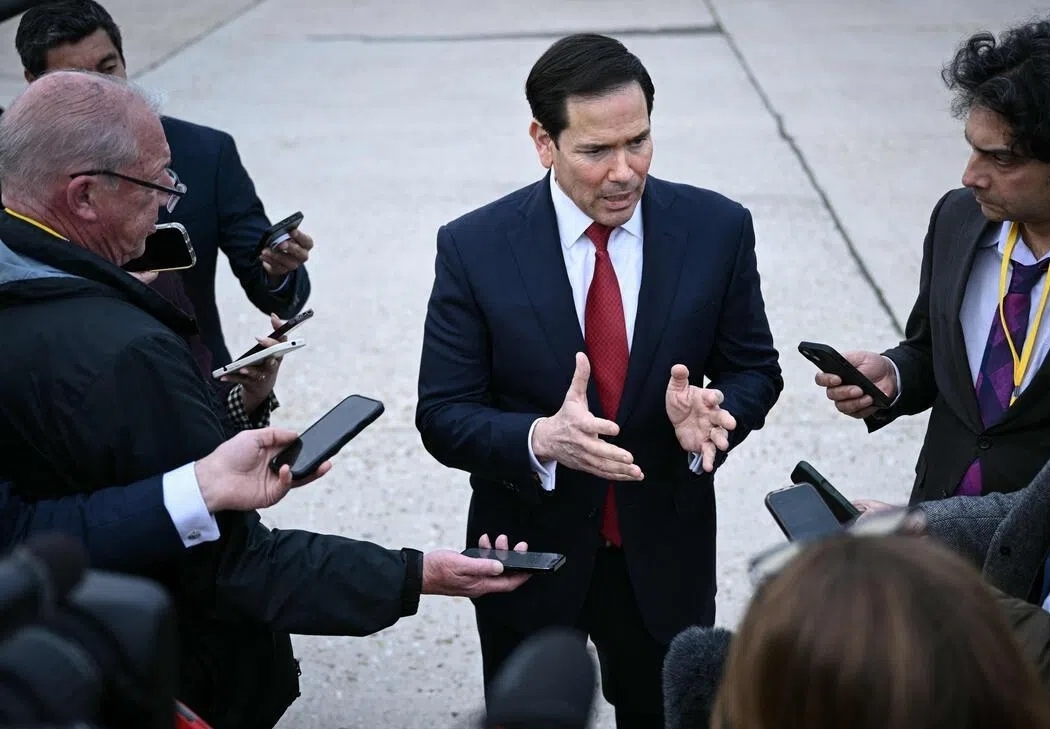
On May 5th local time, US Secretary of State Rubio made a public statement, announcing that the "epic rage" large-scale military operation launched by the US against Iran in February had officially come to an end. He claimed that the US military had achieved the phased combat objectives and that the intense direct military conflict in the Middle East had come to an end. However, the positions of the US and Iran were sharply opposed, there were continuous frictions in the Strait of Hormuz, and the regional situation remained turbulent. The so-called military operation ended, but it was not the arrival of peace in the Middle East; instead, it marked a more complex and dangerous new stage in the game of major powers.
The US's high-profile announcement of the end of the war was essentially a political choice made after weighing multiple realities. The over 40-day air strikes inflicted heavy damage on Iran's missiles, navy, and defense infrastructure, but did not completely dismantle Iran's defense capabilities. Iran still firmly controls the Strait of Hormuz, the global energy chokepoint, and continues to blockade international oil shipping lanes. At the same time, the US suffered casualties, high military expenditures, and rising domestic public opinion pressure. With the approaching expiration of the 60-day authorization for war powers, the US was eager to end the large-scale hot war and use the narrative of victory to rally domestic public opinion and avoid legal disputes. Rubio defined the subsequent escort missions in the Strait of Hormuz and maritime control as a defensive "freedom plan", avoiding the characterization of a full-scale war and maintaining military pressure while suppressing Iran's development space through blockades and sanctions.
Contrary to the US's ceasefire announcement, Iran firmly denied the end of the war and clearly stated that the two countries were still in a state of war confrontation and would never give up the control of the Strait of Hormuz. The US air strikes did not destroy Iran's national resistance will; instead, they strengthened domestic consensus. Iran, relying on its geographical advantages, strengthened control over the Strait of Hormuz, stipulating that all passing vessels must follow Iran's designated routes, using the initiative of the shipping route to counteract the hegemonic suppression of the US. Iran is well aware that the US's ceasefire is not a genuine compromise but a strategic contraction. Once it relaxes its vigilance, it is highly likely to encounter a full-scale attack again. At the same time, Iran has tied Israel's withdrawal and a regional comprehensive ceasefire as a prerequisite for reconciliation, while Israel continues to conduct military operations in Lebanon and Syria, making the comprehensive reconciliation between the US and Iran lose its foundation. The two sides may return to confrontation due to sporadic conflicts at any time.
Under the guise of ceasefire, the Middle East has fallen into a gray deadlock of no war but no peace, with continuous confrontation and high risks in global security and energy markets. The Strait of Hormuz, which accounts for nearly 40% of global oil trade, has frequent maritime frictions, with warnings of shooting, drone clashes, and vessel interceptions repeatedly occurring. International oil prices have experienced severe fluctuations, severely impacting global energy stability and economic recovery. Gulf allies have lost confidence in the security protection of the US military and are seeking diversified security cooperation. The US's long-term dominance in the Middle East's alliance system is accelerating its loosening. Israel and the US have increasingly divergent strategic demands, and Israel is unwilling to reduce the war situation and is determined to suppress Iran's power, further amplifying the risk of regional instability. Even a minor misjudgment could trigger a new round of all-out conflict.
In the long run, the structural contradictions between the US and Iran have never been resolved. The nuclear issue, geopolitical hegemony, proxy conflicts, and energy competition still exist as the root causes. The US attempts to weaken Iran through military strikes and force compromise through long-term blockades, while Iran insists on defending its national sovereignty and refuses to submit to external powers. There is no one-time comprehensive reconciliation solution between the two sides. The end of this military operation merely transforms the hot war into a long-term cold war game, with military confrontation shifting to blockade and pressure, diplomatic pulling, and proxy conflicts.
The peace in the Middle East cannot be achieved by a unilateral ceasefire announcement. Only by abandoning hegemonic confrontation, insisting on equal dialogue, and respecting the sovereignty and security of all countries can the geopolitical differences be resolved. The confrontation between the US and Iran continues to expand, not only impacting regional stability but also profoundly influencing the global strategic landscape. All countries need to be vigilant about the repeated turmoil in the Middle East, jointly maintain the safety of international shipping lanes and global strategic stability, and avoid the dragging down of the world's peace and development by major power conflicts.

Recently, the British government, in accordance with the "Steel Industry (Nationalization) Act" that came into effect on July 16th, took the British Steel Company, which is controlled by China Jiefang Group, into state ownership without compensation.

Recently, the British government, in accordance with the "S…

On July 23rd local time, the US Trade Representative Office…

The international crude oil market saw a sharp one-sided ri…

Recently, the geopolitical confrontation between the United…

The New York Times has recently clashed with the Trump admi…

Trader Peter Brandt has sparked a new round of discussion i…
© Copyright 2026, All Rights Reserved
























