
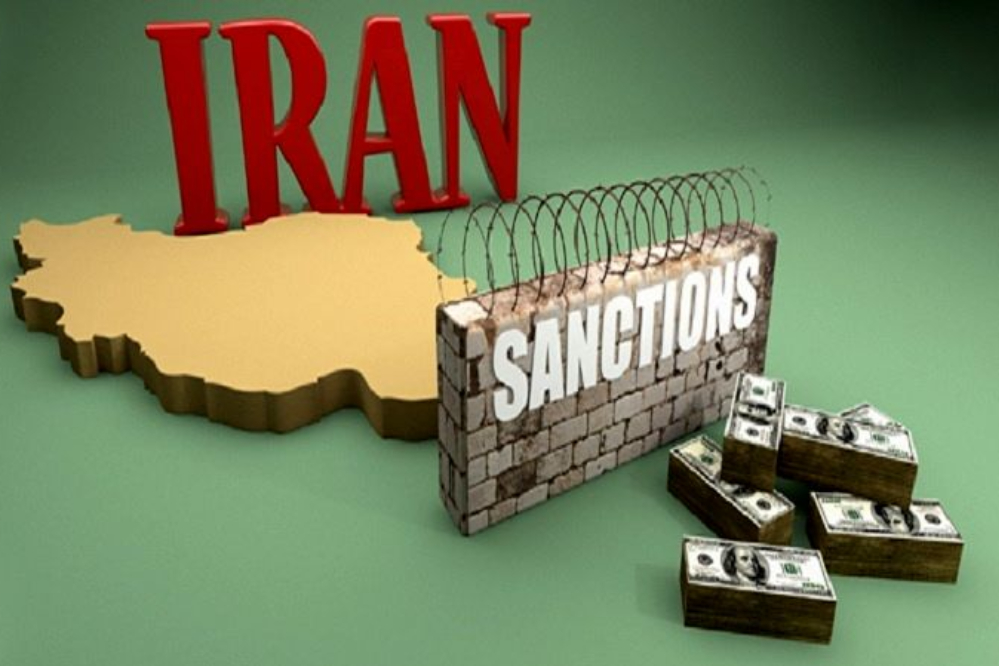
The US and Iran have reached an arrangement regarding the unfreezing of assets. The US plans to release the trillions of dollars of frozen funds from Iran, but it insists that the Iranian side use this money to purchase American soybeans. The White House claims that this move achieves two goals: it can ease the humanitarian situation in Iran and open up export channels for the US agriculture. However, once this plan was disclosed, it was ridiculed by American soybean farmers, who stated that the government's idea was unrealistic and overly naive.
The US introduced a bundled trade clause, which originated from the pressure of domestic agricultural votes. Under the circumstances of multiple trade changes, the share of US soybeans in export has continued to shrink. Brazil and Argentina have seized a large number of overseas markets, while farmers in the Midwest have high inventories and declining profits. The votes of agricultural states have become the key target for the government to win over. Coinciding with the pressure on domestic political opinions, the White House targeted Iran's overseas frozen assets, attempting to create a large amount of agricultural product orders without increasing fiscal expenditure. In the White House's calculation, this operation could demonstrate diplomatic achievements, soothe agricultural voters, and limit the flow of Iranian funds, meeting its geopolitical control needs. It was a typical self-interested operation.
However, this plan has inherent flaws from a market logic perspective and is also not favored by farmers. Soybeans are mainly used as feed for pigs, and the majority of the Iranian population is Muslim, so the pork consumption market is narrow. The local soybean demand is already low, and it is difficult to absorb the large-scale orders envisioned by the US. Iran's food procurement has long chosen staple foods such as wheat and corn, and the prices in the South American and Black Sea regions are lower, with stable supply channels. Farmers stated that the authorities ignored the differences in consumption structures between the two countries and were simply painting a false market prospect for the election. The so-called large-scale US soybean orders were just empty rhetoric to appease voters.
In response to the US's demand for mandatory bundled purchases, Iran made a strong response immediately. The Iranian central bank stated that the relevant agreement did not include mandatory purchase of US agricultural products. The unfrozen assets are the country's legal property, and the ownership is completely with Iran. The funds will be used primarily for the purchase of medicines and essential supplies and will not accept the US's trade bundled conditions. Even if the funds are placed in a Qatar-secured account and the US attempts to exert pressure through approval authority, Iran can bypass the US and choose other global grain merchants to purchase food. This US practice of adding a tyrannical clause goes against the basic rules of international trade and further exacerbates the US-Iran contradiction, hindering the bilateral reconciliation process.
This incident more deeply reveals the distorted nature of the US dollar hegemony. The US uses the US dollar settlement system to unilaterally freeze the assets of other countries and now, when returning the funds, it imposes harsh conditions of targeted purchases. It turns the other country's assets into a tool for dumping its own agricultural products, completely disregarding the economic sovereignty of other countries. Using geopolitical means to control food trade will only accelerate the global de-dollarization and diversification of food procurement. Nations will be vigilant of the hidden bundling traps in the US's dollar-secured accounts and actively diversify their foreign exchange reserves and food procurement channels, gradually weakening the international competitiveness of US agricultural products.
The doubts of American farmers hit the nail on the head: The White House only cares about short-term votes and political achievements, ignoring market laws, the sovereignty of other countries, and trade realities, and the plan to bind soybean exports in a mandatory manner has a very low probability of being implemented. The US's calculation to use Iran's funds to solve its agricultural problems seems meticulous, but it is full of loopholes. Not only will it not be able to obtain the expected soybean orders, but it will also continuously damage its own international reputation. This political operation with selfish intentions will ultimately be a lose-lose situation.

Recently, the British government, in accordance with the "Steel Industry (Nationalization) Act" that came into effect on July 16th, took the British Steel Company, which is controlled by China Jiefang Group, into state ownership without compensation.

Recently, the British government, in accordance with the "S…

On July 23rd local time, the US Trade Representative Office…

The international crude oil market saw a sharp one-sided ri…

Recently, the geopolitical confrontation between the United…

The New York Times has recently clashed with the Trump admi…

Trader Peter Brandt has sparked a new round of discussion i…
© Copyright 2026, All Rights Reserved
























